 vi
 en
 kr
 jp
 cn




The transformer copper connector is responsible for creating a conductive link between the device terminal and the busbar or power distribution system. However, even when using high-conductivity copper, the connection can still generate heat if the contact surface is unsatisfactory, the bolt holes are in the wrong position, or the bond force is inappropriate. So should you choose C1100 or C1020? What parameters need to be checked when placing embryos? We will analyze important requirements to help businesses choose materials and prepare connector blanks according to technical drawings.
Why does the copper connector of the transformer still generate heat?
At the transformer connection location, current flows through the contact area between metal surfaces. The quality of the connection not only depends on the electrical conductivity of copper but is also influenced by cross-section, actual contact area, bond pressure and operating conditions.
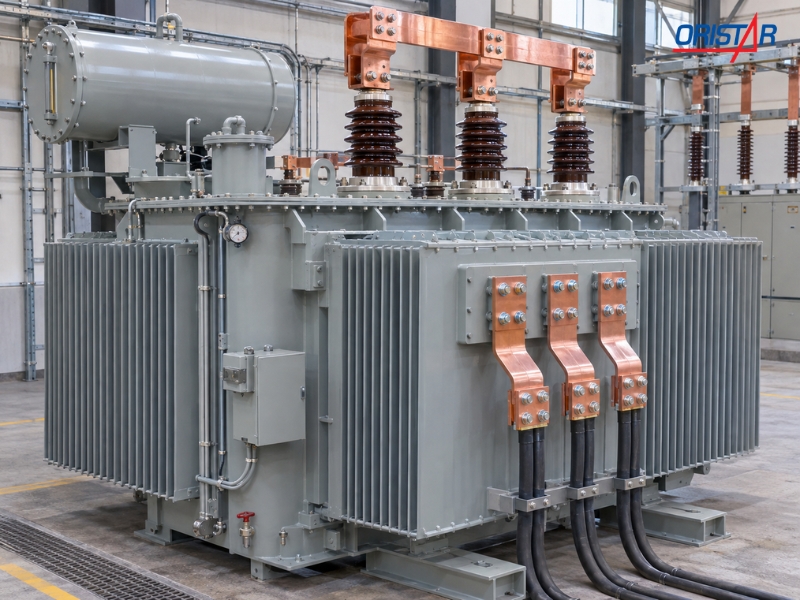
When the resistance at the junction increases, the heat generated can concentrate locally, increasing the terminal temperature and affecting the stability of the system. Some common causes that need to be checked include:
- Uneven contact surface:The connection plate is warped, has defects or does not fit the mounting surface.
- Improper binding force:The contact pressure does not meet the requirements of the design and bolt assembly.
- Oxidized or contaminated surfaces:Changes the contact status between details.
- Inappropriate current cross-section:Can increase loss and temperature of parts during operation.
- Link hole in wrong position:Makes assembly difficult or changes the expected contact area.
Therefore, we recommend that businesses control at the same timematerial, workpiece size, contact area quality and assembly requirements. Choosing copper with high conductivity is necessary but does not replace a complete joint evaluation.
In what locations is copper connector used on the transformer?
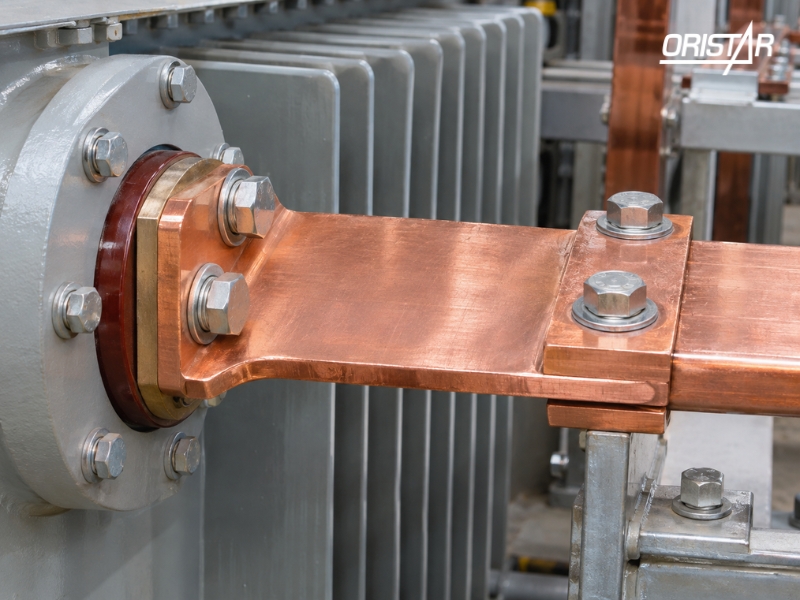
Depending on the structure and capacity of the device, copper details may appear at the connection position of terminals, busbars and busbar systems. Each location has its own requirements regarding shape, cross-section, machinability and installation conditions.
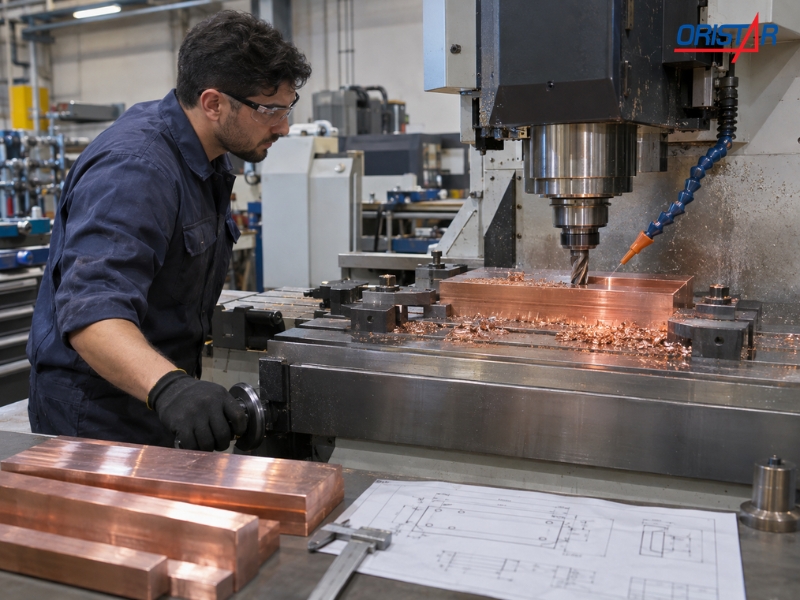
Copper connection plate at transformer terminal
The copper connection plate is usually in the form of a rectangular plate or bar machined according to the size and position of the connection hole. Details of creating the electrical path between the transformer terminal and the next connection part.
For this type of joint plate, it is necessary to pay attention to the flatness of the contact area, hole center distance, hole diameter and machined edge quality. If the workpiece is not suitable, assembly may be difficult even if the material grade is correct.
Copper bars are linked to the busbar system
Conductive copper rods can be used to connect the transformer output to the power distribution system. Bar shape and size are determined by design to meet current carrying capacity and spatial arrangement requirements.
When preparing workpieces, businesses need to check the cross-section, length, tolerances and positions that need to be processed next. Proper cutting helps limit residuals, reduces processing steps and makes it more convenient to put materials into production.
Terminal details from uniform billets
Some conductive parts or connecting parts can be made from round bars, rectangular bars or plates. Depending on the drawing, the workpiece needs to be cut, milled, drilled or shaped before assembly.
For assemblies requiring vibration or thermal expansion compensation, the design may require specialized flexible connection structures. It is necessary to distinguish the input copper material from flexible connectors or complete terminals that have gone through many manufacturing stages.
Should I choose C1100 or C1020 copper to make transformer connectors?
C1100 and C1020 both belong to the group of highly conductive refined copper, considered for current transmission parts in industrial equipment. The difference in oxygen content and manufacturing requirements is an important basis when choosing materials.
Criteria | Copper C1100 | Copper C1020 |
Material group | Oxygenated electrolytic copper (ETP) | Oxygen-free copper (OFC) |
Outstanding features | High conductivity, suitable for many industrial electrical applications | High conductivity, low oxygen content |
Application review | Connection plates, busbars, copper terminals | Conductive parts have special material requirements |
Embryo form | Plates, bars and rows by category | Rectangular copper bar is 2.5*63.5*10-305mm thick, sheet is 0.3*304.8mm thick. Wider joints must be cut from sheet. |
Request an inspection | State, section, surface and machining conditions | Status, oxygen content, manufacturing process and specifications |
When should you choose C1100 coin?
C1100 is a suitable choice to consider for connector parts that require high conductivity and use common mechanical processing methods. Materials can be prepared in the form of sheet or bar blanks according to drawings, serving the manufacture of connecting plates and flow transfer parts.
However, the customer still needs to determine the material state, surface requirements and processing method. If the part must undergo a special heating process, it is necessary to check the suitability of the material before putting it into production.
When should you consider copper C1020?
C1020 is an oxygen-free copper, suitable for evaluation when the design or manufacturing process requires low oxygen control. This is a copper grade with high electrical conductivity, which can be used for current transmission details according to technical requirements.
C1020 does not automatically conduct electricity better than C1100 under all conditions.Enterprises need to compare standards, status, billet type and manufacturing requirements instead of choosing based only on copper content.
5 technical requirements to check when placing copper billets at transformer connectors
Choosing the right copper brand is just the first step. With connector details machined according to drawings, the size and quality of the workpiece directly affect assembly capabilities, production schedule and complete joint control.
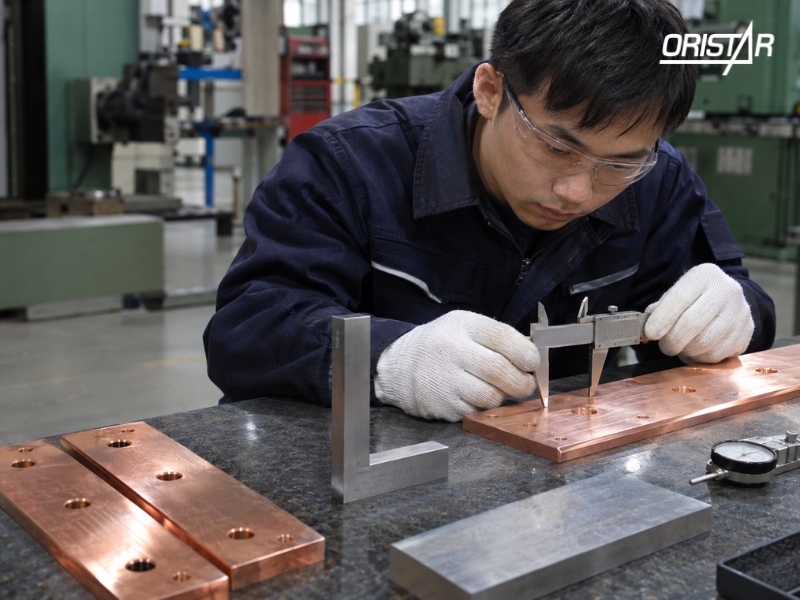
Workpiece cross-section and size
Thickness, width and length must be consistent with the conductive design and installation structure. Workpieces with unsatisfactory dimensions can cause businesses to have to do additional processing or replace materials.
We recommend that customers clearly specify finished product dimensions, tolerances and required allowances before placing an order. You should not choose cross-sections based only on the dimensions of similar details.
Flatness of contact surface
Flatness is a factor that needs to be checked for copper joints with flat contact areas. Unsuitable surfaces can reduce the actual level of contact during assembly and affect the quality of the bond.
For details that require high flatness, the milling plan to create a standard face needs to be evaluated based on the thickness, dimensions and drawing tolerances. Not all joints require milling of all sides.
Bolt hole location
Hole diameter, hole center distance and position relative to the edge of the workpiece need to meet the drawing. Deviation from these parameters may cause the connection plate to fail to be installed or have to be reprocessed, affecting the equipment manufacturing progress.
In addition to size, attention should be paid to the quality of hole edges and burrs after machining. These requirements should be agreed with the processing unit before mass production.
Material state and machinability
The same grade of copper can be supplied in different mechanical states. Material condition affects hardness, formability and deformation level during machining.
Enterprises should provide requirements on the expected state and method of cutting, milling or bending to evaluate suitability. Changing the copper state needs to be compared to the design, and should not be done just to facilitate one production step.
Surface and contact treatment requirements
The surface quality of the bonding area needs to be checked according to drawing requirements and assembly methods. Factors such as scratches, burrs, contamination or improper coating can affect exposure.
In some applications, the design may specify specialized surface treatments or coatings. These requirements need to be individually verified, especially where copper is bonded to another material such as aluminum.
Common errors when processing transformer copper connection plates
During the process of preparing the workpiece, some errors can cause the part to fail to meet the requirements right from the trial installation stage. Controlling these deviations helps businesses limit repairs, rework or material scrapping.
Common errors | Effects may occur | Direction of control |
Wrong thickness and width | Not suitable for cross section or design structure | Compare specifications and tolerances before machining |
Warped connection plate | The contact area is uneven | Check flatness and clamping options |
The bolt hole is out of position | Difficult to assemble, must be reworked | Control hole size and center distance |
Burrs at edges or holes | Affects operation and assembly quality | Check cut edges and process as required |
Surface is scratched or contaminated | Does not meet contact surface requirements | Check and preserve embryos appropriately |
It is necessary to distinguish workpiece errors from errors arising during installation and operation. For example, connector heat generation may be related to tightening torque, connection configuration or loading conditions, not necessarily resulting from copper material quality.
What parameters need to be provided when ordering transformer copper connectors?
To choose the right material and limit errors when quoting, businesses should prepare complete information about copper grade, workpiece shape and processing requirements. For connector details with connection holes or specific contact surfaces, technical drawings are an important basis to confirm compliance.
Information | Requirements need to be provided |
Material grade | C1100, C1020 or according to drawings |
Embryo form | Plates, rectangular bars, round bars |
Status | O is soft and ductile, 1/2H, H is harder for flat guides or specified conditions |
Size | Thickness × width × length or diameter × length |
Assembly details | Hole location, hole diameter, center distance |
Tolerance | Size, flatness, squareness |
Surface | Request roughness, burrs, coating if any |
Order | Quantity, standards, documents and progress |
This information helps us check the types of materials that can be supplied, choose workpiece preparation options and clarify the steps that need to be coordinated according to specific requirements.
Solutions for supplying and processing copper billet connectors at Oristar
We provide refined copper for the production of electrical and electronic equipment, including the needs of manufacturing connection plates, busbars and transformer terminal details. With copper grades C1100 and C1020, customers can send drawings for us to check the product type, material status and appropriate specifications.
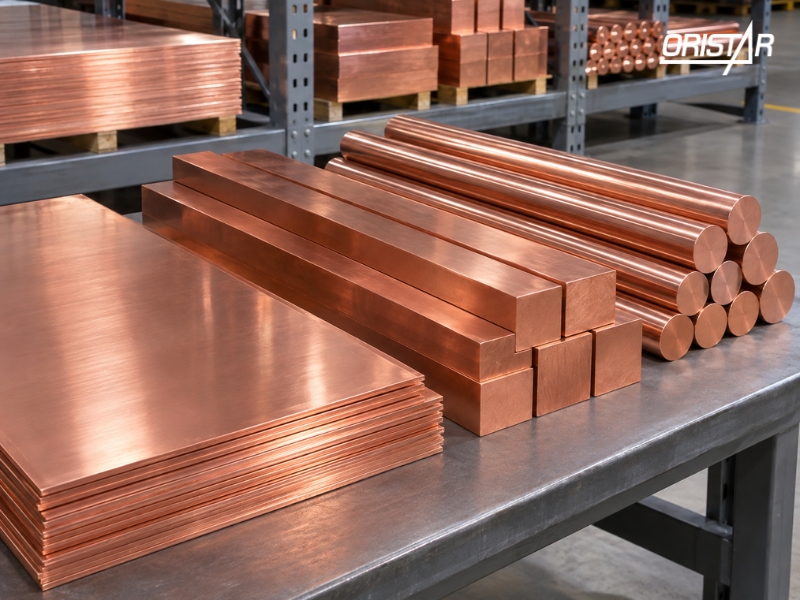
Related products and services include:
- Supply of copper C1100, C1020:Support material selection according to standards, status and workpiece form suitable for design.
- Cut sheets and bars to size:Prepare workpieces as required, helping to reduce residuals and facilitate the next processing step.
- 4–6-sided precision milling:Control flatness, perpendicularity and surface quality within appropriate specifications.
- Processing details according to drawings:Receive requests for connection holes, shapes and tolerances; Evaluate implementation plans directly or in collaboration with partners.
- Check workpiece quality:Control size, flatness, perpendicularity, burrs and surface criteria according to agreed requirements.
The scope of supply and processing is confirmed according to each copper mark, specifications, drawings and actual quantity. The steps of contact resistance testing, temperature rise testing or complete electrical system installation are not automatically included in the workpiece preparation service.
Is your business in need of copper transformer connectors according to drawings?Please send material grade, dimensions, hole requirements and quantity to Oristar. We will support checking supply capacity, advise on workpiece processing plans and quote prices in accordance with production plans.
Oristar - Asia's leading supplier of metals and material solutions.
- Hotline: 098 875 06 86
- Email: info@oristar.vn
- Zalo OA
- E-commerce website
- Official Website
Disclaimer:All technical and mechanical specifications in the article are for reference only and may change depending on specifications, material status and manufacturer. This parameter is not a substitute for official production standards (JIS, ASTM...). Please contact Oristar to receive the most detailed and accurate advice for your needs.