 vi
 en
 kr
 jp
 cn




Stainless steel industrial sensor housings are used to protect and position sensor components in manufacturing environments where equipment is frequently exposed to moisture, dust, vibration or chemicals. However, using stainless steel does not necessarily mean that the sensor housing will resist corrosion well or meet assembly requirements. Choosing the wrong material grade, inaccurate thread processing, or inadequate surface control can all affect component quality. So should you choose SUS303, SUS304 or SUS316 to make the sensor housing? Oristar will analyze important requirements regarding materials, usage environment and workpiece specifications, helping businesses choose the appropriate solution before putting it into production.
Why can stainless steel industrial sensor housings still corrode or be damaged?
Stainless steel is used in many mechanical parts thanks to its corrosion resistance and durability suitable for industrial environments. However, rust resistance is not the same between stainless steel grades and depends on temperature, humidity, chemicals, surface condition as well as actual operating conditions.
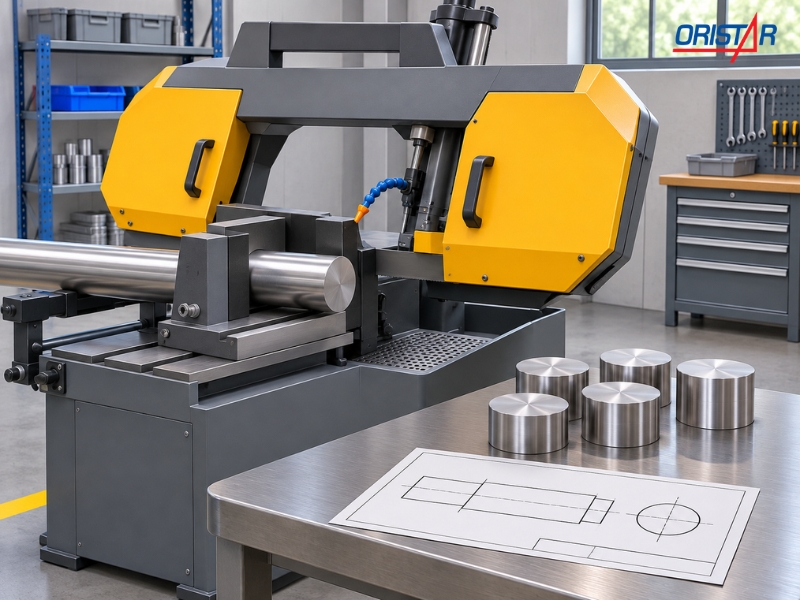
For example, a sensor housing used in a dry workshop may not need the same type of stainless steel as a housing that is exposed to frequent cleaning fluids, chloride-containing solutions or corrosive environments. If the material is not properly selected, pitting or corrosion may appear on the surface at contact joints, especially at threads and joints.
Besides materials, deviations in machining can also affect the quality of the sensor housing. Mismatched threads, out-of-tolerance diameters, or improper gasket mounting surfaces can cause assembly difficulties. Therefore, we recommend that businesses consider it at the same timeStainless steel grade, detailed structure, processing requirements and usage environment, instead of choosing solely based on rust resistance.
What types of industrial sensor housings often use stainless steel?
Depending on the operating principle and installation location, the sensor housing can be made in many different shapes. Some use a threaded cylinder body to secure it to the machine, while others need a protective sleeve, container body or box cover to protect the internal components.
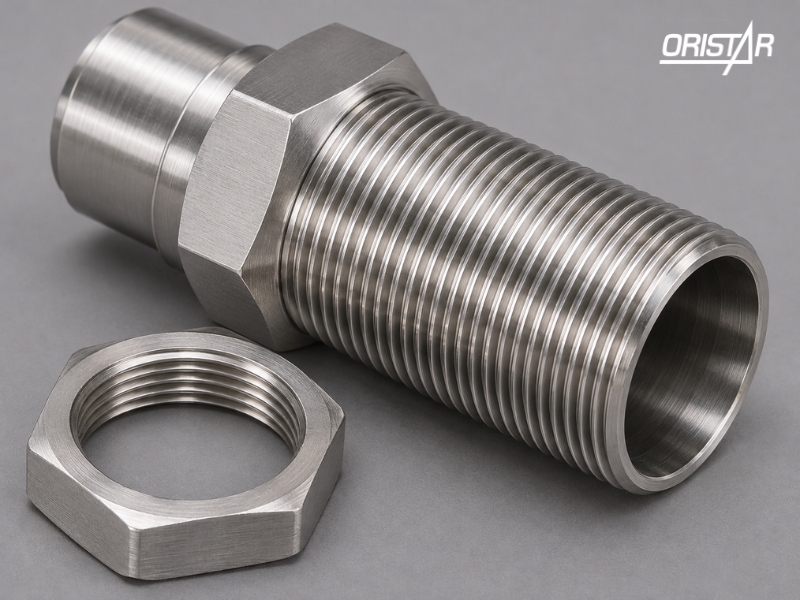
The body of the proximity sensor is threaded cylindrical
Industrial proximity sensors often have a cylindrical body structure with common thread sizes such as M8, M12, M18 or M30. The body helps fix the sensor on the mount, while protecting the internal parts from environmental impacts and machine operation.
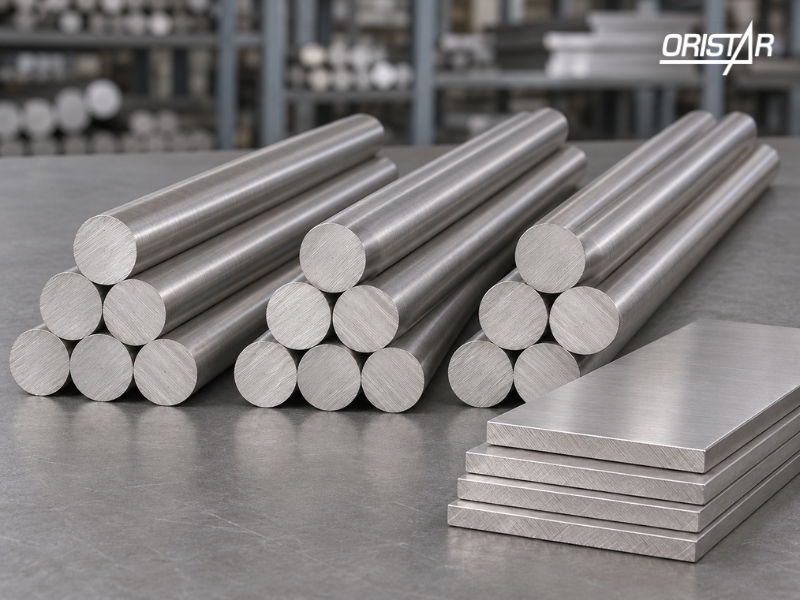
With this type of detail, round bar stainless steel billet is a material worth considering for cutting and machining. Requirements for outside diameter, length, thread position, assembly tolerance and surface quality should be clearly defined according to the drawings. The detection side of the sensor can use a different material than the body, depending on the design and principle of the sensor.
Protective cover for temperature sensor probe
Some temperature sensors use a stainless steel protective cover or tube to prevent the measuring part from direct contact with the outside environment. These components can work in pipelines, tanks or industrial equipment systems, where temperature, chemical conditions and corrosion resistance need to be considered simultaneously.
When choosing materials, businesses need to determine shell structure, wall thickness, bonding method and operating conditions. For protective components subject to high pressure or temperature, material evaluation must be accompanied by mechanical design and corresponding testing requirements.
Box and sensor protection cover
In addition to the cylinder body, some sensor assemblies also use protective boxes or covers to arrange circuit boards, connectors and related electronic parts. This group of parts can be made from stainless steel plates or block billets, depending on the structure and processing method.
For enclosures, notable requirements include mounting surface flatness, hole location, dimensional accuracy and corrosion resistance. If the design uses sealing gaskets, it is necessary to separately check the quality of the contact surface to ensure compliance with the assembly structure.
Should I choose SUS303, SUS304 or SUS316 stainless steel as the sensor cover?
Each stainless steel grade has its own advantages in terms of machinability, corrosion resistance and usage conditions. At Oristar, we recommend that customers choose materials based on the detailed shape, working environment and drawing requirements, and check the workpiece form that can be supplied before starting production.
Criteria | SUS303 | SUS304 | SUS316 |
Outstanding features | Easy to process and cut | Balances corrosion resistance and applicability | Better resistance to pitting corrosion in many chloride containing environments |
Machining ability | Convenient for turning, drilling and threading | Need to control cutting mode | Need to control cutting mode |
The environment is suitable for consideration | Normal factory, few corrosive agents | Industrial environment, humidity within appropriate range | Environments with higher corrosion resistance requirements |
Application details | The cylinder body has threads, covers, and mechanical details | Shell body, box lid, protective details | Body shell, protective parts in harsher environments |
Important note | Corrosion resistance is worse than SUS304, welding is limited | Not suitable for all chemicals | Not immune to corrosion, need to evaluate actual conditions |
SUS303 stainless steel
SUS303 is supplemented with sulfur to improve chip formation and mechanical machining ability. This is a beneficial feature when manufacturing parts that require turning, drilling or threading, especially with products that require many cutting operations.
However, the advantages of processing do not mean that SUS303 is suitable for all environments. Compared to SUS304, this grade has lower pitting corrosion resistance and is not a priority choice when parts are frequently exposed to strongly corrosive environments or require welding.
SUS304 stainless steel
SUS304 has corrosion resistance suitable for many common production environments, and is widely used in manufacturing industrial equipment and components. This stainless steel grade can be considered for the body, box lid or sensor protection details when corrosion resistance requirements are not too harsh.
When machining SUS304, it is necessary to pay attention to the phenomenon of hardening during cutting and tool conditions. Preparing the correct workpiece type, residual amount and machining sequence helps the production unit to be more proactive in controlling size and surface quality.
SUS316 stainless steel
SUS316 has added molybdenum, which improves pitting corrosion resistance in many chloride containing conditions compared to SUS304. This is a material that can be considered for sensor housings working in humid environments, in contact with cleaning solutions or corrosive agents according to specific technical requirements.
However, SUS316 is not an absolutely anti-corrosion material and cannot automatically replace SUS316L in all designs. If the drawing requires SUS316L, businesses need to confirm the correct material grade instead of switching to SUS316 themselves.
5 technical requirements to check when placing stainless steel sensor shell blanks
Choosing the right stainless steel grade only solves part of the manufacturing requirements. For sensor housings with small sizes, precision threads or multi-position mounting structures, workpiece and machining deviations can affect assembly quality, protection and production schedule.
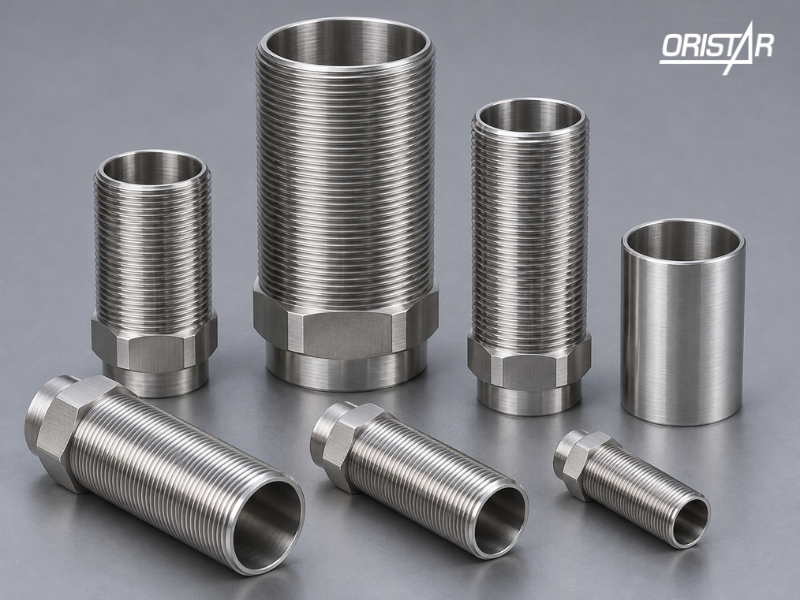
Diameter, length and shell wall thickness
The size of the workpiece must be determined according to the shape of the finished product and the amount of residual required for processing. With a cylindrical shell, the outer diameter and length of the workpiece are the basic parameters; If the part has holes or cavities inside, additional consideration should be given to the wall thickness after machining.
An unsuitable stock can increase the amount of material that must be removed or cause the part to be undersized for finishing. Enterprises should provide finished product drawings and tolerance requirements so that we can evaluate the appropriate workpiece specifications.
Thread dimensions and mounting tolerances
The thread is an important position for a cylindrical sensor body, because this part is often used to fix the sensor to a rack or device cluster. Thread diameter, thread pitch, thread length and tolerance requirements must match the corresponding assembly details.
During machining, burrs at the thread end or dimensional deviations can make assembly difficult. Therefore, the drawing needs to show complete thread information and inspection requirements, instead of just stating the nominal dimensions of the sensor.
Concentricity and internal dimensions
For housings with axial holes or component compartments, concentricity between the outer diameter and the inner surfaces can affect assembly capabilities. If the deviation exceeds the allowable level, the sensor or fixture may not be in the correct design position.
These requirements need to be determined by suitable geometric tolerances, especially when the shell is machined through multiple mounting passes. Workpiece selection and machining sequence should be evaluated at the outset to limit reprocessing.
Surface quality and burrs after machining
The surface of the sensor housing needs to be controlled according to the location of use. Mounting areas, gasket grooves or seating surfaces may have specific roughness requirements, while external surfaces need to avoid defects that affect installation and corrosion resistance.
Burrs, deep scratches or post-processing contamination should also be evaluated according to finished product requirements. For parts working in corrosive environments, cleaning and appropriate surface treatment may be part of the finishing process.
Sealing structure and equipment protection requirements
For sensors that need to be dust or water resistant, stainless steel material is just one component of the protective structure. Sealing ability also depends on the gasket, mounting location, cable connector and method of assembling the entire device assembly.
Therefore, it cannot be concluded that a sensor housing meets IP67, IP68 or IP69K just because it uses SUS304 or SUS316. These levels of protection must be determined and tested on the complete structure according to applicable requirements.
Common errors when processing stainless steel sensor housings
In manufacturing, small dimensional or surface errors can increase the rate of rework, especially with parts with threads, holes, and multiple mounting locations. We recommend that customers distinguish errors in the workpiece from errors arising during turning, drilling, milling or assembly to choose the appropriate treatment plan.
Common errors | Effects may occur | Direction of control |
Wrong diameter or length | Details do not match the installation structure | Check workpiece dimensions and finished product tolerances |
The lace does not meet the requirements | Difficult to install or incompatible with connection details | Control thread parameters, tools and post-machining quality |
The inner hole is not concentric | Components are difficult to install or in the wrong design position | Control of mounting and geometric tolerances |
Burrs, scratches at the mounting area | Affects assembly and contact surfaces | Check and process edges as required |
Corrosion after use | Reduces surface quality and part stability | Environmental assessment, stainless steel marking and surface treatment |
An issue that needs special attention is that not all damage to the sensor housing originates from choosing the wrong stainless steel. For example, water seepage may be related to the gasket or cable end, while wrong threads may come from the machining process. Correctly checking the cause helps businesses avoid unnecessary material changes and control costs more effectively.
What parameters should be provided when ordering stainless steel billets to make sensor housings?
To prepare suitable materials, customers should clearly determine the stainless steel grade, workpiece shape, finished product size and subsequent processing requirements. For threaded parts, hollow cavities or special structures, technical drawings are an important basis for us to check supply capabilities and propose workpiece preparation options.
Information | Requirements need to be provided |
Stainless steel grade | SUS303, SUS304, SUS316 or according to drawings |
Embryo form | Round bar, plate or specified form of material |
Size | Diameter, length, thickness, internal cavity size |
Machining details | Threads, holes, grooves, seats and connection positions |
Tolerance | Dimensional and geometrical tolerances according to drawings |
Surface | Roughness, deburring and finishing requirements |
Usage environment | Humidity, temperature, chemicals, hygiene conditions |
Quantity and records | Order volume, standards and required documents |
When we have enough information, we can evaluate the shape of the workpiece in accordance with production requirements, limiting the purchase of too much excess material or choosing the wrong mark. For stages with special requirements, the scope of processing and inspection will be confirmed before deploying the order.
Solution for supplying and processing stainless steel billets at Oristar
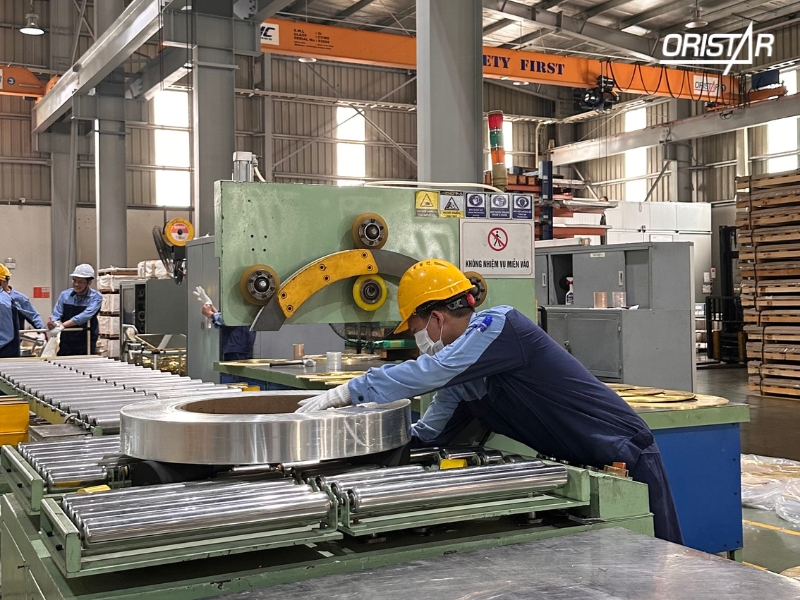
We provide stainless steel for precision mechanical production, electrical and electronic components and industrial equipment. With the need to manufacture sensor housings, Oristar focuses on supporting businessesSelect materials, prepare workpieces according to size and evaluate machining options in accordance with drawings, instead of providing a complete electronic sensor.
Related products and services include:
- Supply of stainless steel SUS303, SUS304 and SUS316:Support in selecting grades according to corrosion resistance requirements, machinability and working environment. Product type and specifications of each label are checked according to actual orders.
- Supply of stainless steel round bars:Suitable for consideration for cylinder body parts, caps and threaded parts. SUS303 round bar is one of the material groups we have introduced in the catalog.
- Cut sheets and bars to size:Prepare workpieces close to processing specifications, helping customers limit unnecessary residue and making it convenient to put materials into production.
- Check workpiece quality:Supports checking size, flatness, perpendicularity and surface condition to the extent consistent with agreed requirements.
The ability to meet requirements is confirmed according to each stainless steel grade, workpiece type, tolerance, quantity and actual processing plan. Requirements such as IP tightness testing, pressure testing, completing the sensor assembly or verifying sensor function need to be considered separately and are not automatically included in the workpiece supply service.
Is your business in need of stainless steel billets to manufacture industrial sensor housings?Please send drawings, material labels, dimensions and quantities to Oristar. We will support checking supply specifications, advise on embryo preparation plans and quote prices according to production needs.
Oristar - Vietnam's leading metal and material solutions supplier
- Hotline: 098 875 06 86
- Email: info@oristar.vn
- Zalo OA
- E-commerce website
- Official Website
Disclaimer:All technical and mechanical specifications in the article are for reference only and may change depending on specifications, material status and manufacturer. This parameter is not a substitute for official production standards (JIS, ASTM...). Please contact Oristar to receive the most detailed and accurate advice for your needs.