 vi
 en
 kr
 jp
 cn




Switchgear may experience heat-generating terminals, loss of elasticity in contacts or cracked components when machining if the material is not properly selected. At Oristar, we share how to choose copper, aluminum, and stainless steel for each detail and the technical requirements that need to be controlled to limit risks in production.
What is electrical switchgear?
Electrical switchgear is a group of devices that perform the function of turning on, off or controlling the current in the system. Common products include MCB, MCCB, ACB and contactor, used in electrical cabinets, power distribution systems and industrial lines.
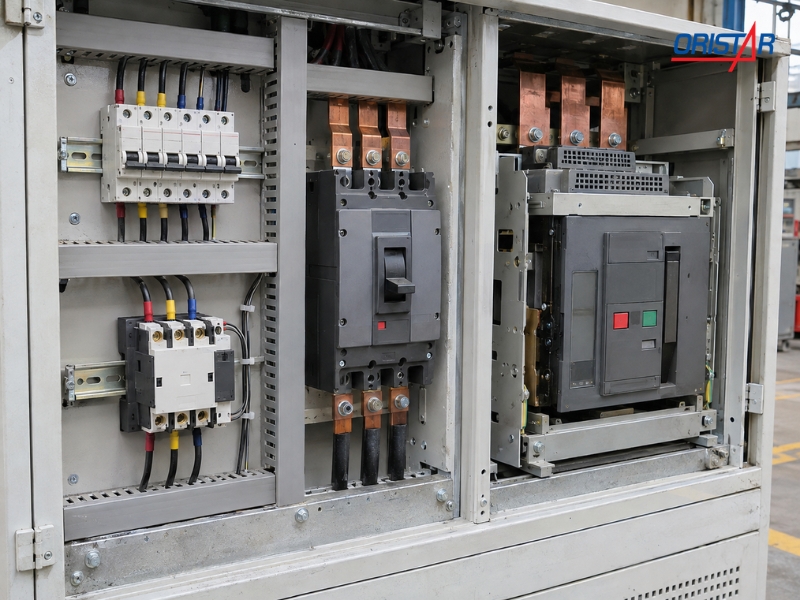
Each type of device has its own operating principle and functions. MCB, MCCB and ACB are often used for protection functions by design, while contactors mainly serve control switching. However, many devices have current guides, contacts, connectors and mechanical mechanisms that require suitable materials.
For manufacturers, choosing the right materials right from the design stage helps control machinability and component quality before assembling the finished product.
5 important groups of details in switching equipment
Each part in a switchgear performs a different function, so materials cannot be selected based solely on electrical conductivity or mechanical strength. We recommend that businesses clearly determine the location of use, load and operating conditions before choosing the metal grade.
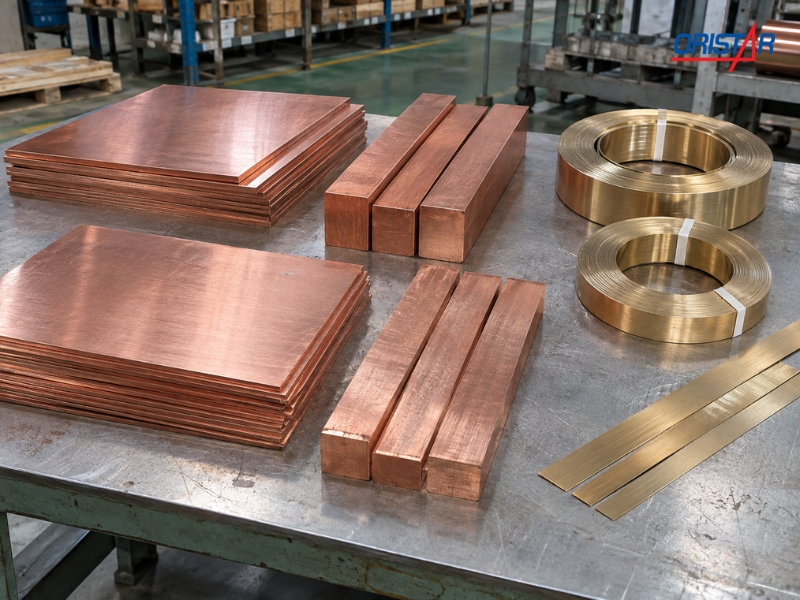
Conductor bar and terminal plate
Conductor bars and terminal plates are responsible for transmitting current between parts of the device or connecting to an external electrical system. These details need good electrical and thermal conductivity, while ensuring the size and quality of the contact surface.
Copper C1100 and C1020are two brands worth considering for this group of applications. However, the bar cross section, hole distance and connection plan must still be determined according to the current, temperature rise and design drawings.
The body carries the contact and current guide
The contact bearing body connects the electrical contact area with other current-conducting parts. The substrate material needs to meet the requirements for current transmission, durability and ability to bond to the contact tip according to the design.
With some configurations, C1100 or C1020 may be considered for the conductive substrate. Particularly, the surface that directly switches under load may require specialized contact materials to limit the impact of the arc; pure copper is not used by default.
Contact leaves and elastic details
The contact leaf is responsible for creating or maintaining pressure at the contact position. If the material deforms or loses elasticity, contact resistance may increase, affecting device operation.
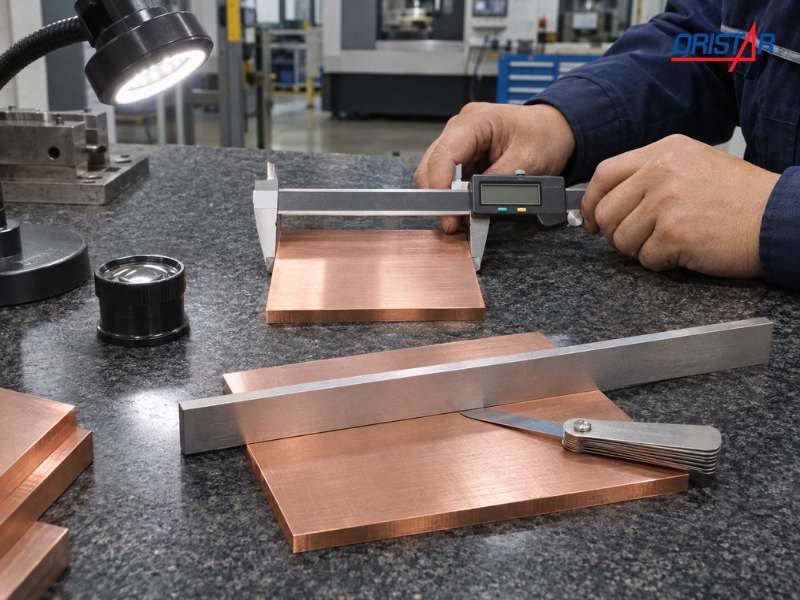
C5191 and C5210belongs to the phosphorus bronze group, considered for parts that need to combine durability, elasticity and formability. The selection must be based on hardness state, thickness, temperature and number of working cycles.
Terminals and connection accessories
The terminal is the location where the device connects to wires, busbars or other electrical components. In addition to the ability to conduct current, the material must also meet the requirements for durability, machinability and joint stability.
C19025 and C19210can be evaluated for connection details that require balanced electrical and mechanical properties. For some accessories, C2680 or C2801 may be considered if the design allows, but should not default to replacing the main flow guide material.
Cover panels, support frames and auxiliary mechanical details
In addition to the electrical conduction system, equipment and installation assemblies also include mounting plates, support frames, cabinet covers and protective covers. These details need to meet requirements for hardness, flatness, size and environmental conditions.
A5052, A6061 aluminum or SUS304 stainless steel can be considered for suitable mechanical parts. They should be distinguished from the specialized insulating cover of an MCB or MCCB, which must meet its own insulation and safety requirements.
Which material grade should be chosen for switchgear?
To avoid using the wrong materials, we recommend that businesses choose according to the function of each detail instead of just prioritizing the grade with the highest conductivity. Materials suitable for guide bars may not meet the requirements of elastic foil or load-bearing terminals.
Detailed group | Reference material mark | Requirements need priority |
Guide bar, pole connection plate | C1100, C1020 | Electrical conductivity, thermal conductivity, precision |
Elastic contact foil | C5191, C5210 | Durability, elasticity, bending ability |
Terminals, connection components | C19025, C19210 | Balanced mechanical and electrical properties |
Brass accessories | C2680, C2801 | Processing and shaping according to design |
Mounting plate, auxiliary support frame | A5052, A6061, SUS304 | Hardness, flatness, dimensional stability |
The above table supports the initial selection direction, does not replace the technical data of each grade and material state. For important details, businesses need to compare mechanical properties, electrical conductivity, processing requirements and acceptance conditions before changing materials.
5 common material and processing errors in switchgear components
During the production of electrical components, some errors may only appear during assembly or commissioning, forcing businesses to re-check the workpiece, change the design or adjust the processing process. We recommend identifying the following risks early in material selection.
The terminal generates heat even though good conductive copper is used
The temperature at the terminal not only depends on the conductivity of the copper grade but is also related to the cross-section, contact resistance, tightening force and surface quality. If the connection hole is in the wrong position or the contact surface is not suitable, the connection may become unstable.
Before replacing the copper grade, it is necessary to check the cause of heat generation and compare design parameters. Switching from C1100 to C1020 does not automatically fix problems caused by mechanical linkage.
The contact leaf loses its elasticity
When the contact foil does not maintain sufficient pressure, electrical contact may be affected. Causes to consider include material state, deformation level, operating temperature and number of operating cycles.
With C5191 or C5210, businesses should check the hardness state and mechanical properties as required instead of choosing based only on the brand name. The same alloy but in different supply states may have different formability and elastic properties.
Copper billet cracks when stamping and bending
Edge cracking or unintended deformation can be related to thickness, bending radius, rolling direction and material condition. Therefore, changing the copper grade without re-evaluating the die and forming method may not solve the cause.
To limit risks, customers should provide drawings and further processing requirements when ordering materials. This information helps us check the workpiece specifications and status in accordance with production needs.
Details do not match when assembled
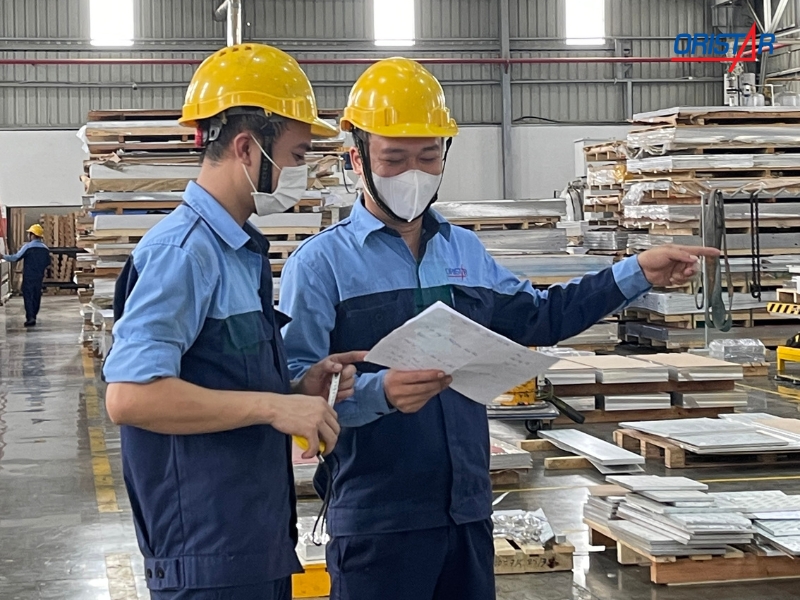
Deviations in length, width, hole location or flatness may cause the connecting rod and mounting plate to be incompatible with the instrument assembly. With roll materials, burrs and strip curl can also affect the feeding process into the mold.
Therefore, drawings need to clearly show dimensions, tolerances and surface requirements. Controlling input workpieces helps limit deviations that may arise at the next processing stage.
Mistaking the base material for the arc-resistant contact surface
Not every part in a contact assembly uses the same material. The base needs current guidance and mechanical bonding, while the surface directly subjected to the arc has its own requirements for erosion, heat and weld resistance.
We recommend that businesses distinguish two functional groups right from the drawing. Marks C1100, C5191 or C5210 are not intended to replace specialized contact materials of power switchgear.
Materials supply and processing solutions at Oristar
At Oristar, we provide aluminum, copper, copper alloys and stainless steel for the production of electrical and electronic components. With groups of details such as guide bars, terminals, contact leaves and mounting plates, customers can send drawings to check the material grade, product type and appropriate workpiece preparation plan.
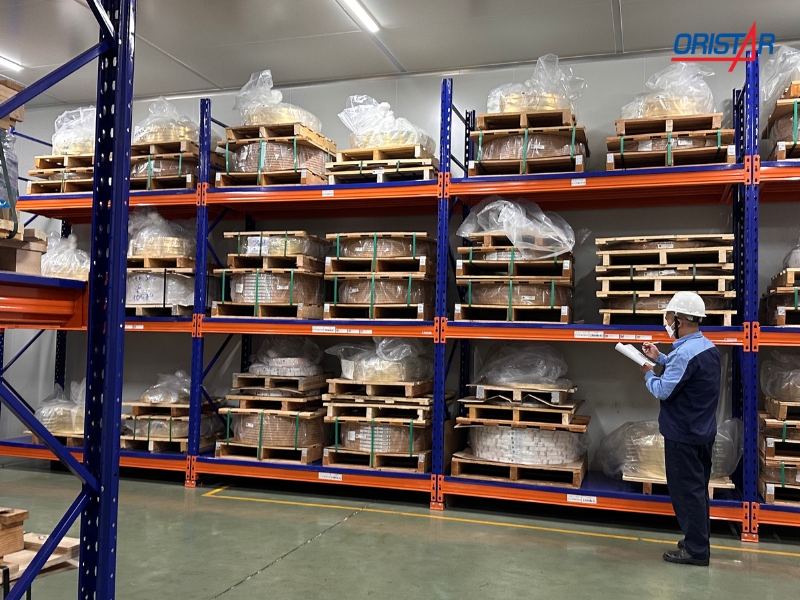
Roll billet control standards at Oristar. Slitting rolls at Oristar are controlled according to internal tolerance standards, with 3 main criteria:
- Strip width tolerance: for 0.08–1.0 mm thick copper, tolerance ranges from ±0.05 mm (6–50 mm wide strip) to ±0.12 mm (300–590 mm wide strip). Tolerances are gradually widened according to strip thickness and width.
- Strip camber (camber/1,000 mm): at a high standard, strips over 25 mm wide are controlled to only 1–2 mm. The narrow band of 6–9 mm was controlled at 5–6 mm.
- Cutting edge burr: standard level from ≤ 0.025 mm; High standard level from ≤ 0.010 mm (for materials 0.08–0.20 mm thick).
For high-speed stamping applications or demanding contact foils, customers can request a high level of standards. Oristar will confirm the ability to meet the material grade, thickness and specific specifications of the order.
Oristar - Vietnam's leading metal and material solutions supplier
- Hotline: 098 875 06 86
- Email: info@oristar.vn
- Zalo OA
- E-commerce website
- Official Website
Disclaimer:All technical and mechanical specifications in the article are for reference only and may change depending on specifications, material status and manufacturer. This specification is not a substitute for official production standards (JIS, ASTM...). Please contact Oristar to receive the most detailed and accurate advice for your needs.