 vi
 en
 kr
 jp
 cn




Aluminum billets for electronic assembly jigs need to meet the requirements for size, flatness and machinability to serve the process of positioning and clamping components on the production line. Among them, A6061, A5052 and A7075 are aluminum grades that can be considered according to each jig structure. Choosing the right materials and workpiece specifications from the beginning helps businesses reduce processing surplus, limit deviations and control manufacturing costs.
Where are aluminum billets for electronic assembly jigs used?
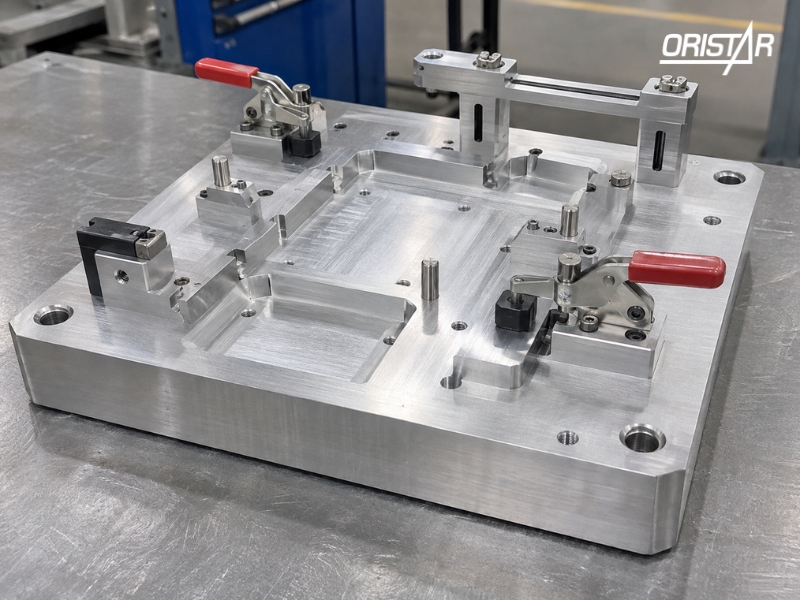
In the production of electronic components, jigs (Jig/Fixture) are responsible for positioning, supporting and stabilizing parts during assembly, inspection or machining. Jig parts are often made from aluminum due to their light weight, machinability and design flexibility.
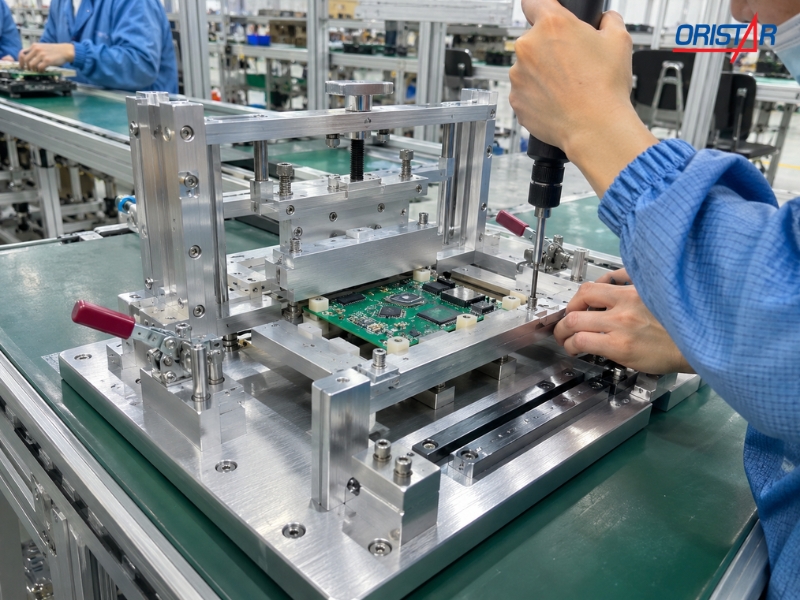
Depending on the structure, aluminum billets can be used to manufacture:
- Mounting base:As a foundation for mounting positioning pins, clamping mechanisms and guiding parts.
- Component positioning plate:Machining holes, grooves or recesses according to the required location on the drawing.
- Sensor holder:Fix the sensor to check the position, travel or presence of components.
- Frame and connecting rod:Assemble the parts of the jig into a unified structure.
- Clamp details:Supports product fixation during assembly and inspection stages.
For example, with an electronic circuit board positioning jig, the aluminum base can be milled to create a standard face, then holes are drilled to install locating pins and clamping mechanisms. The initial workpiece needs enough excess to perform these operations while still reaching finished product size.
Therefore, the selection of workpieces is not only based on length, width and thickness but also depends on the function of each detail in the jig.
Should I choose A6061, A5052 or A7075 aluminum to make electronic fixtures?
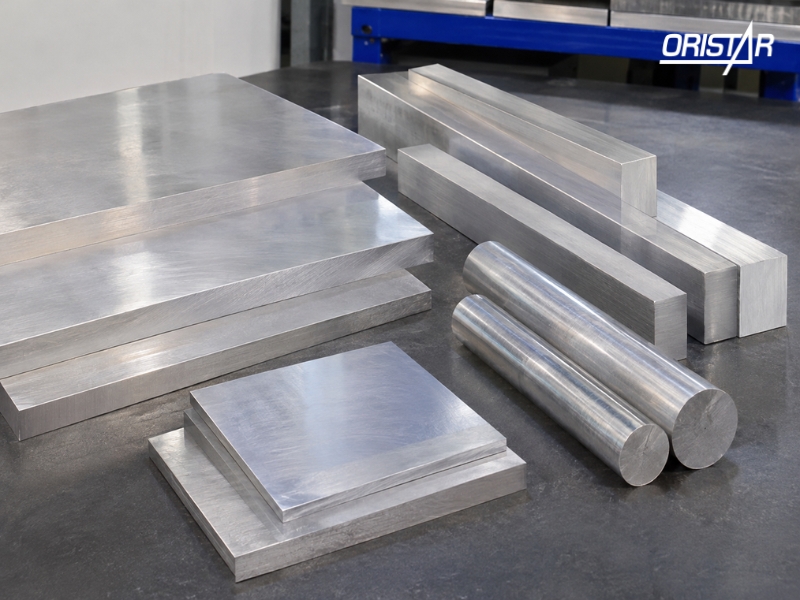
A6061, A5052 and A7075 can all be used in precision engineering, but not all grades are suitable for all types of jigs. Businesses need to compare load-bearing requirements, processing methods and actual structures before choosing.
Aluminum grade | Outstanding features | Application should consider |
A6061 | Balance between mechanical properties, machinability and corrosion resistance | Mounting base, positioning plate, CNC milling details |
A5052 | Good corrosion resistance, suitable for processing sheet and shaping details | Brackets, shields, bending details |
A7075 | High mechanical strength in suitable condition | Clamping details, high load-bearing parts |
A6061 Aluminum – Popular choice for mounting bases and positioning plates
Aluminum A6061 belongs to the aluminum-magnesium-silicon alloy group, widely used in mechanical processing thanks to its ability to combine durability and machinability.
For electronic assembly jigs, A6061 can be used as a jig base, jig plate and parts that need milling to create standard faces, drilling holes or machining positioning grooves. The material is suitable for many fixture structures with common durability requirements.
When ordering A6061 workpieces, businesses should clearly determine the material status, workpiece size and machining surplus. These are factors that directly affect the workpiece preparation plan and the quality of parts after machining.
A5052 Aluminum – Suitable for brackets and sheet parts
A5052 aluminum has good corrosion resistance and shaping ability, suitable for sheet parts that need to be cut, bent or bent according to design.
In an electronic fixture system, A5052 can be considered for auxiliary brackets, shields, protective covers and parts that do not require high durability such as heavy-duty clamping parts.
However, if the part requires milling many deep cavities, precise holes or requires a high machined surface, it is necessary to evaluate the machinability according to the specific material state. Do not replace A6061 with A5052 based on cost alone.
Aluminum A7075 – For parts requiring high durability
A7075 aluminum belongs to the aluminum - zinc - magnesium - copper alloy group, considered in applications requiring high mechanical strength.
For electronic fixtures, A7075 can be used for some clamping parts, load-bearing parts or parts with limited cross-sections but need to meet mechanical requirements according to the drawings.
Not every jig needs the A7075, though. Using materials with higher strength than necessary can increase the cost of the workpiece without providing corresponding efficiency.
Recommendation:With the popular CNC machined mounting base and positioning plate, businesses can start evaluating the A6061 - T651 and A7075-T651. A5052- H32 is more suitable for some plate structures that need forming, while A7075 should be chosen when load-bearing and durability are really needed.
Technical requirements for aluminum billets for jig manufacturing
Electronic assembly jigs often have many connection positions, positioning pins and mounting surfaces. If the input workpiece is not suitable, the processing unit may have to increase the amount of material removed, add additional steps or change the mounting plan.
Control size and machining residue
Aluminum billet needs to be selected according to finished product size and surplus for subsequent operations. For parts that have to be milled with multiple faces, the initial workpiece size is often larger than the finished size to have enough material to create standard faces.
The residual amount needs to be determined according to the drawing, processing method and workpiece condition. Workpieces that are too small may not have enough material to reach finished product size; On the contrary, a workpiece that is too large increases material removal time and the amount of scrap.
In particular, for large sized fixture bases or many cavity milling positions, the possibility of deformation after material removal needs to be considered.
Check flatness, perpendicularity and quality of workpiece edges
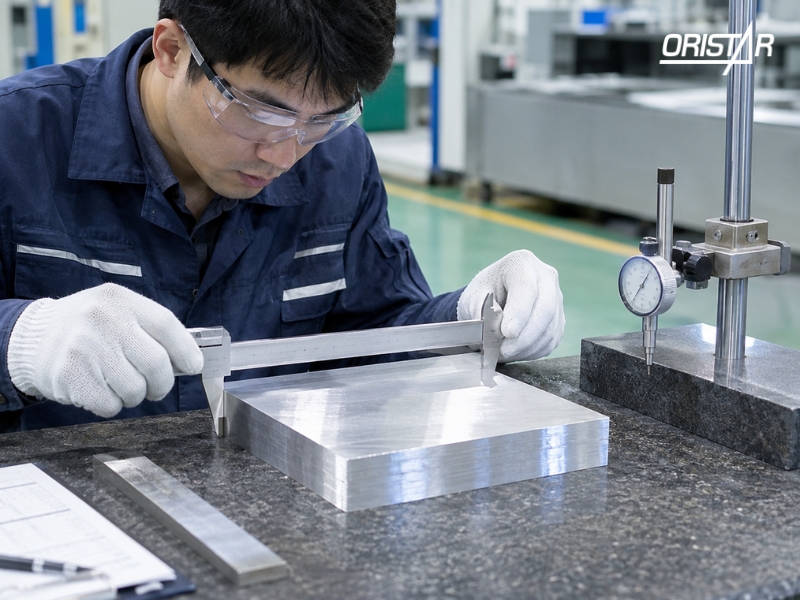
The flatness of the workpiece affects the ability to set and create a reference surface. However, the required flatness of the input workpiece is not necessarily the same as the flatness of the finished part.
Factors to check include:
- Dimensions of length, width, and thickness of the workpiece.
- Status of flatness and parallelism when required.
- Perpendicularity between machined faces.
- Burrs, scratches and back edge condition.
- Aluminum grade, material status and shipment information.
For parts that require high accuracy, businesses should provide drawings showing tolerances and inspection methods. A general tolerance level should not be applied to all types of aluminum fixtures.
Prepare aluminum billet before CNC jig processing
Cutting workpieces according to specifications and milling to create standard faces are two steps that can help jig manufacturers reduce material preparation time at the factory.
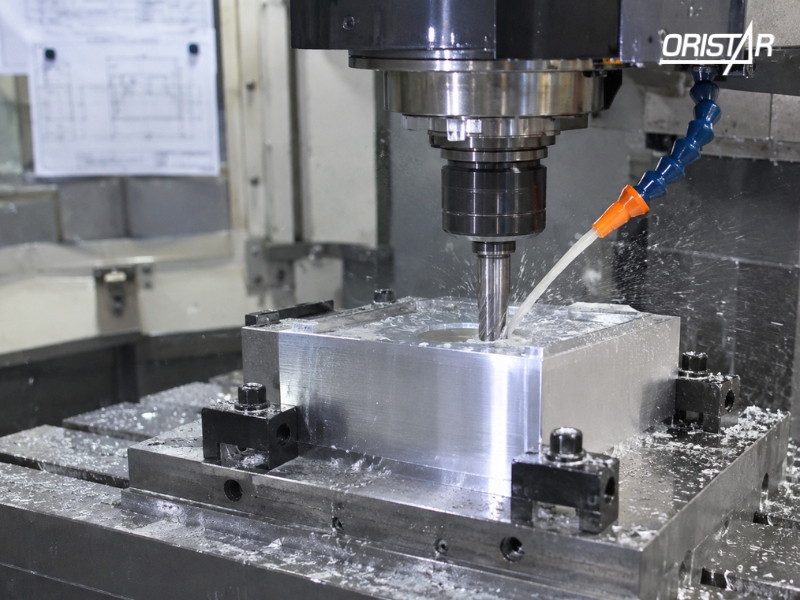
- Cut aluminum billets to size:The billet is cut from sheet or bar according to agreed dimensions. For orders with many details, preparing workpieces according to the size list makes it more convenient to classify, manage and supply materials for production.
- 4-sided or 6-sided milling:This step can be applied when it is necessary to create standard faces, improve perpendicularity and control the size of the blank before moving on to detailed machining.
However, a workpiece that has been milled on 4–6 sides is not synonymous with a finished jig. Operations such as drilling positioning holes, milling grooves, creating pockets, tapping threads or installing clamping mechanisms must still be performed according to the design drawings.
For parts with thin walls, deep cavities or large amounts of material removed, the material state, processing sequence and mounting options should be evaluated to limit the risk of deformation.
Note when cutting many small workpieces from one sheet:Each cut takes about 4 mm due to the blade width. For example, 10 100 mm long blanks are needed: 10 × 100 + 9 × 4 = 1,036 mm minimum. When quoting, Oristar calculates this loss into the number of blanks.
Oristar provides aluminum billet for electronic assembly jigs
With the need to manufacture jigs, jigs and fixtures for the electrical and electronics industry, we provide aluminum materials according to the product list and support the preparation of workpieces according to the technical requirements of the business.
Aluminum grades that can be considered include:A6061, A5052 and A7075, depending on the purpose of use, material status and required specifications.
Besides providing materials, we support:
- Cut aluminum sheets and aluminum bars to the required size.
- Prepare the workpiece close to the machined size.
- Milling 4 sides, 6 sides for workpieces 8-250mm, width and length from 40-88mm.
- Check the agreed dimensions and quality requirements.
- Support determining supply options based on drawings, quantity and order progress.
For aluminum cutting services, the published processing range includes thickness 1–150 mm, width 12–3,600 mm and length 12–4,000 mm. Actual responsiveness needs to be compared with each aluminum grade, material type, size and order conditions.
Combining material supply and workpiece preparation makes it more convenient for customers to organize processing, limit preliminary cutting steps at the factory and control the amount of input materials.
Are you in need of aluminum billets for electronic assembly jigs according to drawings?Please contact Oristar, providing material grade, size and expected quantity. We will check the supply capacity and appropriate cutting or milling options to support businesses in preparing materials for production.
Oristar - Vietnam's leading metal and material solutions supplier
- Hotline: 098 875 06 86
- Email: info@oristar.vn
- Zalo OA
- E-commerce website
- Official Website
Disclaimer:All technical and mechanical parameters in the article are for reference only and may change depending on specifications, material status and manufacturer. This parameter is not a substitute for official production standards (JIS, ASTM...). Please contact Oristar to receive the most detailed and accurate advice for your needs.