 vi
 en
 kr
 jp
 cn




Non-magnetic materials are used in many industrial fields thanks to their properties of being less affected by magnetic fields compared to conventional ferromagnetic materials. Among them, copper and many copper alloys are notable choices thanks to their ability to conduct electricity, heat and meet different mechanical requirements. However, not all materials that are not attracted to magnets are suitable for all applications. The selection should be based on the material grade, processing status, working environment and technical standards of the equipment.
What are non-magnetic materials?
Non-magnetic materials are a common term for materials that do not have obvious ferromagnetic properties or have very weak magnetic responses under certain conditions of use.
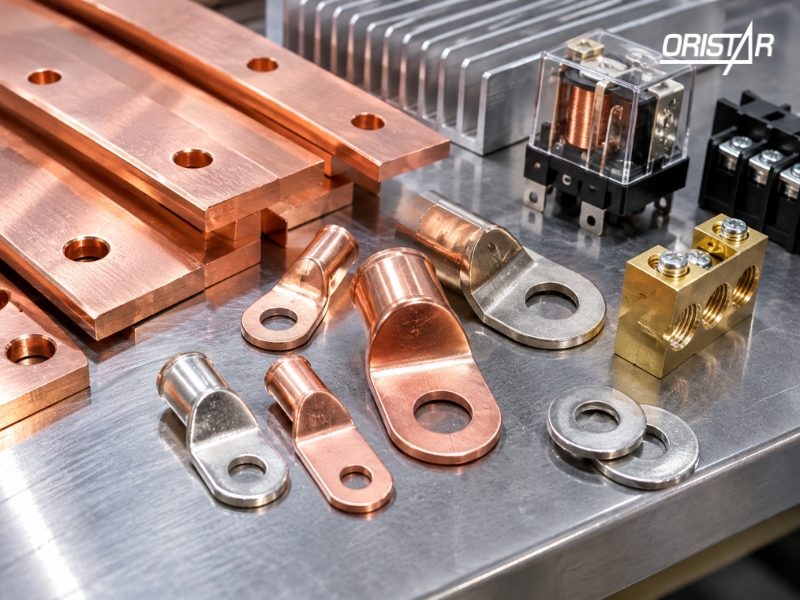
Unlike iron and many common steels, these materials are not strongly attracted to magnets. However, the ability to respond to a magnetic field still depends on the chemical composition, material structure and processing state.
In industry, commonly considered material groups include:
- Copper and copper alloys:Has magnetic properties suitable for many applications requiring non-ferromagnetic materials, while also meeting electrical and thermal conductivity requirements.
- Aluminum and aluminum alloys:Light weight, suitable for many structures and mechanical details.
- Austenitic stainless steel:Some grades have low permeability in the right condition, but magnetic reactions may appear after machining.
- Non-metallic materials:Engineering plastics and ceramics are chosen in applications that require electrical insulation or have specific material requirements.
It should be noted that the concept of non-magnetic in technical practice does not mean that the material does not interact with magnetic fields at all. Applications requiring strict magnetic control require specific criteria and appropriate testing methods to be determined.
Why are non-magnetic materials used in industry?
The need to use non-magnetic materials appears in devices that require limiting the influence of ferromagnetic components. However, magnetic properties are only one of many factors to consider when selecting materials.
Limit impact on measuring equipment and sensors
In some measurement systems and electronic devices, ferromagnetic materials can affect the surrounding magnetic environment.
Therefore, mechanical parts located near measuring or sensor components may need to use materials with suitable magnetic permeability.
Copper, aluminum and some austenitic stainless steels may be considered for these parts depending on the design.
However, non-ferromagnetic materials do not mean complete immunity to electromagnetic interference. The effectiveness of the device also depends on its structure, installation location and operating conditions.
Meets electrical and thermal conductivity requirements
For many industrial devices, materials not only need to meet magnetic properties but also must ensure electrical or heat transmission functions.
Copper is a material widely used in electrical systems thanks to its high electrical conductivity. Product types such as copper sheets and copper bars can be processed into conductor plates, terminals or connection details.
Besides, copper's thermal conductivity is also suitable for heat transfer applications in industrial equipment.
Material selection requires simultaneous consideration of electrical conductivity, detailed cross-section, material state and assembly requirements.
Suitable for environmental and mechanical requirements
Industrial equipment can operate in humid environments, subject to vibrations or frequent temperature changes.
In addition to non-magnetic properties, the material also needs to meet requirements for durability, corrosion resistance and machinability.
For example, pure copper is highly conductive, while some copper alloys have been developed to improve durability, elasticity, or performance in specific environments.
Therefore, materials should not be selected solely based on whether they are attracted to a magnet or not.
Common applications of non-magnetic materials
Non-magnetic materials are used in many groups of electrical, electronic and precision mechanical devices. Each application requires different properties of the input material.
Electrical equipment and connection systems
Copper is commonly used in parts responsible for transmitting electricity.
Some typical applications include:
- Conductor bars and connection plates.
- Terminals, electrical equipment connectors.
- Connection details in electrical cabinet.
- Electrical transmission parts of industrial equipment.
In these applications, C1100 copper is a material worth considering due to its ability to conduct electricity and heat.
Precision electronic and mechanical components
For electro-mechanical components, materials may have to simultaneously meet requirements for durability, machinability and elasticity.
Some copper alloys, such as C1720, can be used to manufacture elastic contacts and specifications with suitable mechanical properties.
In addition, C3604 brass is known for its convenient machining and cutting capabilities, suitable for many turning parts and mechanical accessories.
The selection must be based on drawings, working conditions and standards of finished details.
Technical equipment for the marine industry
In the marine industry, copper and copper alloys are used in electrical systems, heat exchangers and mechanical components.
Some equipment may require non-ferromagnetic materials and require corrosion resistance and durability suitable for marine environments.
However, not all types of copper are suitable for direct contact with seawater. Specialized alloys need to be selected according to actual standards and conditions of use.
For devices with specific magnetic requirements, businesses need to compare material specifications and test results specified in technical documents.
Types of copper and copper alloys in the Oristar catalog
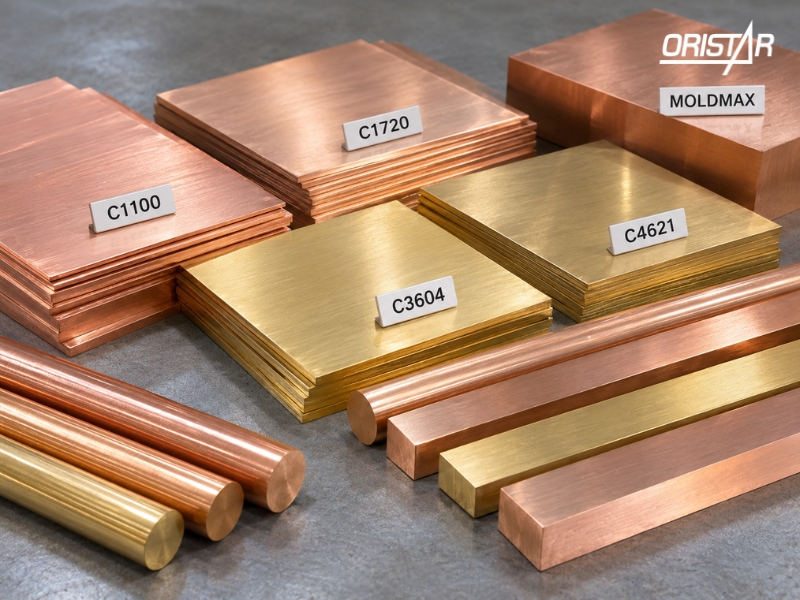
Oristar introduces copper grades C1100, C1720, C3604, C4621 and the MOLDMAX material line in the defense materials category. These are materials with different characteristics, serving the needs of supplying and processing industrial components.
Material grade | Outstanding features | Application direction |
C1100 | High electrical and thermal conductivity | Conductor bars, copper plates, electrical connectors |
C1720 | High durability and elasticity in the right state | Contacts, electro-mechanical components |
C3604 | Convenient cutting and machining | Turning details, mechanical accessories |
C4621 | Brass is resistant to corrosion in some marine environments | Details of suitable marine equipment |
MOLDMAX | The technical copper alloy family has properties depending on each family | Heat transfer details and specialized technical applications |
The table above shows the characteristics and reference applications. When there are strict requirements for non-magnetic properties, businesses need to check the magnetic parameters of the correct grade, alloy grade and material state, not assuming that all products meet the same level.
Copper C1100 – Priority for conductive parts
C1100 is copper with high electrical and thermal conductivity, commonly used in the electrical and electronics industry.
This is a material that can be considered for busbars, copper plates, terminals and power transmission details.
During the ordering process, businesses need to determine the workpiece type, size and material status to suit the next processing stages.
Copper C1720 – Suitable for components that require durability and elasticity
C1720 is a beryllium copper alloy, capable of achieving high strength and elasticity when properly treated.
The material is used in applications where electrical conductivity and mechanical properties need to be combined, such as elastic contacts and electro-mechanical components.
However, the properties of C1720 depend on the condition and processing of the material. Requirements for hardness, durability and magnetism must be compared to specific technical documents.
When processing materials containing beryllium, safety requirements should be followed to control the risk of exposure to dust or fumes that may arise.
Copper C3604 – Convenient for machining mechanical details
C3604 belongs to the easy-to-cut brass group, often used in the production of turned parts and mechanical accessories.
Materials may be considered for bearings, mechanical connectors, nuts and other parts that need to be machined according to drawings.
However, C3604 is not a material that specializes in anti-zinc corrosion. For seawater environments or particularly corrosive conditions, suitability should be confirmed before selection.
Copper C4621 – Alloy for some marine applications
C4621 is a tin-added brass, known for its corrosion resistance in marine environments that is more suitable than some commonly used brasses.
In the marine industry, the material may be considered for some plate parts and heat exchanger components.
The selection should be based on material standards, workpiece type, size and actual contact conditions.
MOLDMAX – Specialized technical copper material
MOLDMAX is the trade name of a family of technical copper alloys. Product lines may vary in composition, durability, hardness and thermal conductivity.
Some MOLDMAX lines are used in making molds and technical parts that require heat transfer.
Therefore, when choosing MOLDMAX for a specific application, customers need to clearly determine the alloy grade, specifications and usage requirements. The entire material line should not be equated with a single copper grade.
How to choose suitable non-magnetic materials
To choose materials that meet design requirements, businesses need to clearly determine detailed functions and operating conditions instead of just relying on the label.
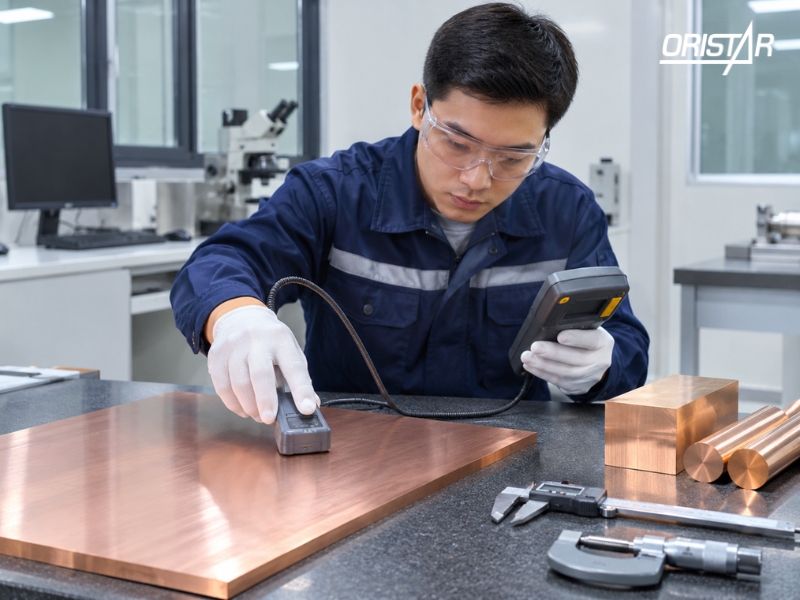
Important criteria include:
- Magnetic properties:Determine requirements for magnetic response level or permeability according to technical documents. For general applications, non-ferromagnetic properties may be the initial criterion; For specialized applications, clear measurement requirements are required.
- Mechanical durability:Select materials with mechanical properties that meet the load, structure and processing method.
- Ability to conduct electricity and heat:Evaluate according to the actual function of the component, avoid using alloys with higher mechanical properties but not suitable for transmission requirements.
- Corrosion resistance:Special attention should be paid to equipment working in humid environments, containing salt or exposed to chemicals.
- Workpiece form and specifications:Check length, width, thickness, diameter and machining allowance according to drawings.
In addition, some types of austenitic stainless steel may react after cold working. Therefore, strict magnetic requirements must be confirmed against the actual material state, not just based on the label.
Require inspection and documentation of materials
For enterprises manufacturing technical components, the quality of workpieces directly affects the processing and input inspection process.
When ordering materials, customers should provide the following information:
Information | Content needs to be determined |
Material grade | C1100, C1720, C3604, C4621, MOLDMAX or design mark |
Embryo form | Plate, bar or suitable material form |
Specifications | Size, quantity, tolerance |
Technical requirements | Mechanical properties, electrical conductivity, magnetic requirements if any |
Surface quality | Flatness, scratches, cut edges |
Document | Material certificates, batch traceability and inspection results as agreed |
Ordinary documents do not automatically prove that a material meets a specific non-magnetic requirement. If the project stipulates a magnetic permeability limit, it is necessary to agree on the method and confirmation documents with the supplier.
Oristar provides non-magnetic materials for industrial applications
For businesses manufacturing electrical, electronic and precision mechanical equipment, we provide metal materials for processing components according to technical requirements.
The copper and copper alloy group in the Oristar portfolio includesC1100, C1720, C3604, C4621 and MOLDMAX. Each material grade has its own characteristics in terms of electrical conductivity, mechanical properties, machinability and application.
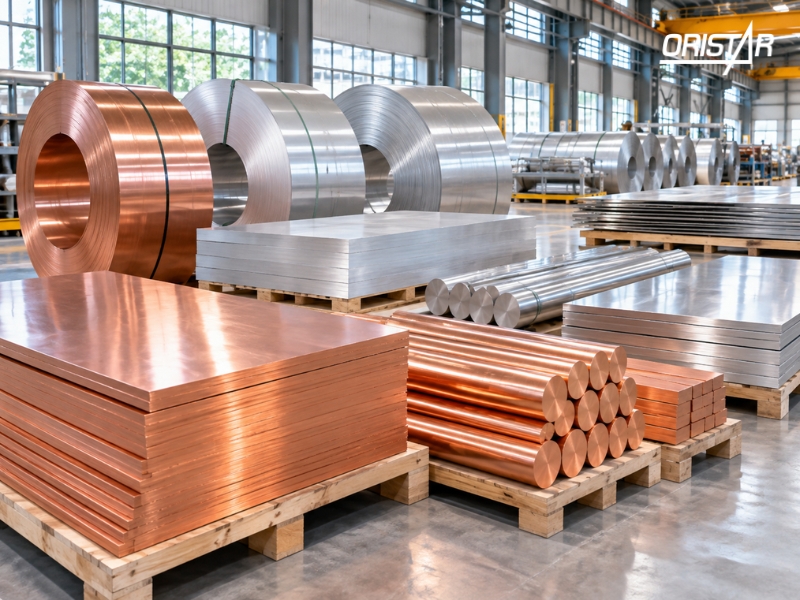
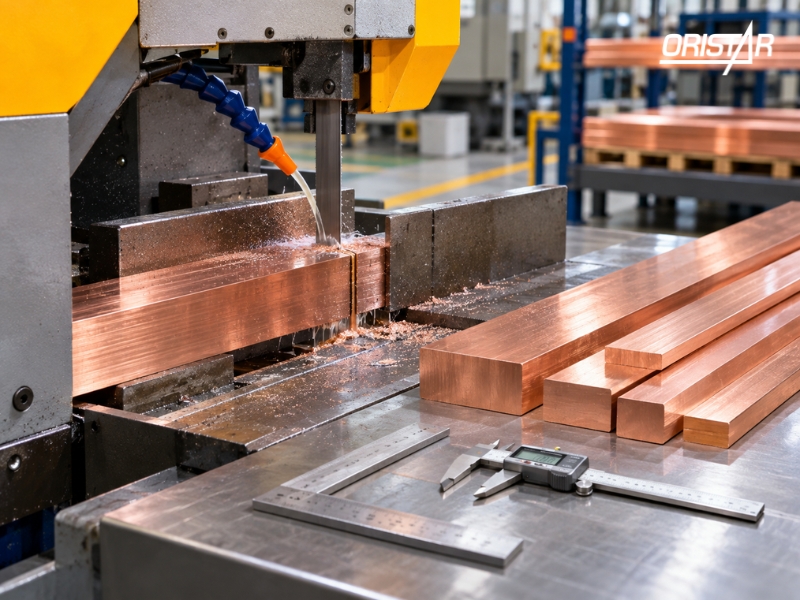
Besides providing materials, we support cutting sheets, bars and preparing workpieces to size within practical capacity.For orders with specific requirements regarding magnetism, material status or technical standards, we receive information to check the ability to meet each mark and source of supply.
We focus on providing input materials to manufacturing and processing customers, not conflating material supply with performance certification of finished equipment.
Contact Oristar for advice on suitable materials
Choosing non-magnetic materials requires simultaneous consideration of magnetic properties, mechanical requirements, electrical conductivity, working environment and workpiece quality.
If your business needs to source copper and copper alloys for electrical equipment, precision mechanics or specialized engineering applications, contact Oristar for assistance in comparing material lists.
When submitting a quote request, please provide material grade, condition, workpiece type, size, quantity and inspection requirements.
ORISTAR – Metal and material solutions supplier in Vietnam
- Hotline: 098 875 06 86
- Email: info@oristar.vn
- Website: https://oristar.vn/vi
Technical recommendations: Information on material properties and applications in the article is for reference only. Actual specifications may vary according to grade, material status, specifications and manufacturer. For specialized non-magnetic requirements, customers need to compare the corresponding standards and test records before choosing.
Oristar - Vietnam's leading metal and material solutions supplier
- EHotline: 098 875 06 86
- email: info@oristar.vn
- Zalo OA
- E-commerce website
- Official Website
Disclaimer: Mọi thông số kỹ thuật và cơ lý tính trong bài viết chỉ mang tính chất tham khảo và có thể thay đổi tùy thuộc vào quy cách, trạng thái vật liệu và nhà sản xuất. Thông số này không thay thế cho các tiêu chuẩn sản xuất chính thức (JIS, ASTM...). Quý khách vui lòng liên hệ Oristar để nhận tư vấn chi tiết và chính xác nhất cho nhu cầu của mình.