 vi
vi
 en
en
 kr
kr
 jp
jp
 cn
cn




In which parts of the vacuum system is stainless steel used?
Depending on the equipment design, stainless steel can be used for the chamber body, chamber lid, flanges, connection positions and many related details. Each part has different requirements for size, flatness, surface smoothness and machinability.
- Chamber body and chamber lid:need to meet requirements on structure, size and operating conditions. For designs with cavities or complex shapes, the machinability of the material is a factor that needs to be considered from the beginning.
- Flange and connection location:It is necessary to control the size, flatness and surface smoothness according to the design to meet assembly and sealing requirements.
- Connectors and auxiliary details:Needs to be suitable for installation location, contact conditions and connection requirements with other parts in the system.
Not all components of the vacuum chamber are required to use the same stainless steel grade. The choice of material should be based on the function of each detail, the contact environment and the technical standards of the device.
How are SUS304, SUS304L, SUS316 and SUS316L different?
SUS304, SUS304L, SUS316 and SUS316L all belong to the austenitic stainless steel group. The main differences lie in the alloy composition, specifically the molybdenum in the 316 series and the lower carbon content in the L grades.
Criteria | SUS304 stainless steel | SUS304L | SUS316 stainless steel | SUS316L stainless steel |
Component characteristics | Popular austenitic stainless steel | Carbon content is lower than SUS304 | Has molybdenum added | Carbon content is lower than SUS316 |
Corrosion resistance | Rather | Rather | Good | Good |
Welding ability | Good | Good | Good | Good |
Points to note | Not the optimal choice for all chemical environments | Need to evaluate according to environment and equipment requirements | Material cost is usually higher than SUS304 | Need to determine according to welding requirements, cleanliness and environment |
Directions for use | Structure and details meet requirements with SUS304 | Welded structures need to control the risk of sensitization | Environments requiring higher corrosion resistance | Welded structure and system have high requirements for cleanliness and anti-corrosion |
- Note:SUS316 contains molybdenum, so it has better corrosion resistance in many environments containing chloride than SUS304. SUS316L has a lower carbon content than SUS316, helping to reduce the risk of sensitization when welding. Similarly, SUS304L is the low carbon version of SUS304. However, it should not be understood that SUS316L or SUS304L is automatically better for every vacuum chamber. Stainless steel grade, material condition, surface quality and post-processing treatment all need to be determined according to the design.
When should you choose SUS304 or SUS304L?
SUS304 can be considered when the working environment does not impose too high requirements on corrosion resistance and the material meets the equipment criteria. This is a popular stainless steel grade, has good corrosion resistance and welding ability, suitable for many industrial structures.
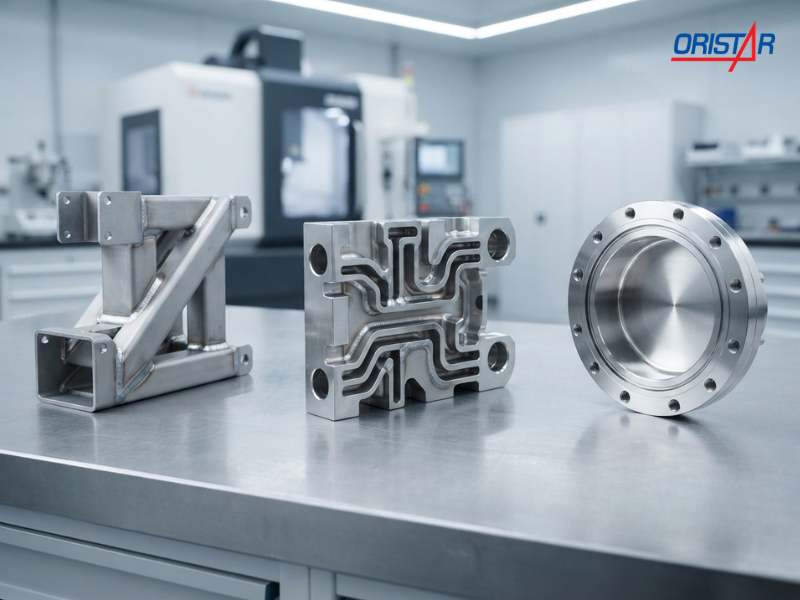
If the structure has many welds and it is necessary to limit the risk of post-weld sensitization, SUS304L can be considered instead of SUS304.
With vacuum chambers, additional requirements for cleanliness, surface quality, vacuum level and cleaning process need to be evaluated. You should not choose SUS304 just because this is a popular stainless steel grade.
When should you consider SUS316 or SUS316L?
SUS316 is more suitable when the working environment places higher requirements on corrosion resistance, especially when there is a risk of exposure to chloride or some corrosive agents.
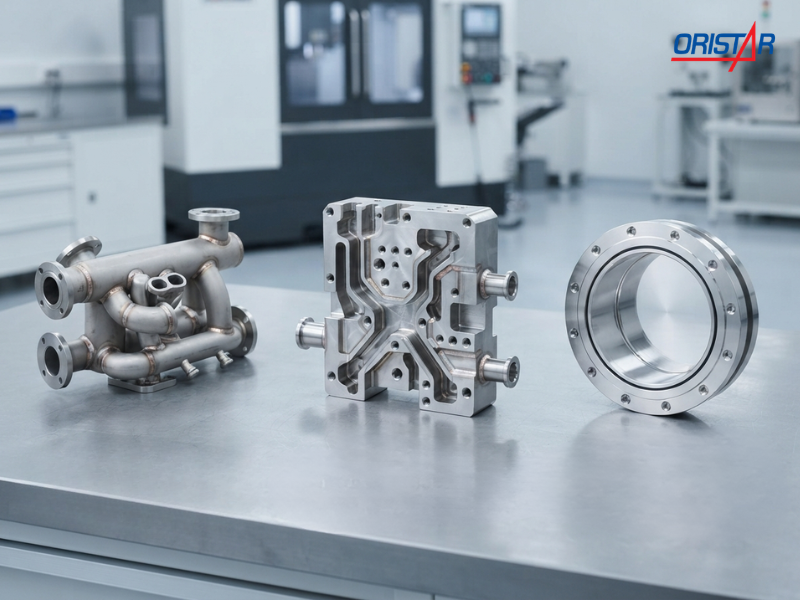
If the structure uses many welds, SUS316L can be considered due to its lower carbon content than SUS316. This grade is also used in many semiconductor systems with high requirements for cleanliness and surface treatment.
However, SUS316 or SUS316L should not be assumed to be suitable for all semiconductor processes. It is necessary to consider the chemical type, temperature, vacuum level, cleanliness requirements and processing method of each equipment before choosing.
Is SUS303 suitable for making vacuum chambers?
SUS303 is provided by Oristar for mechanical processing needs thanks to its good cutting ability. However, this is not a stainless steel grade, so priority should be given to the body of the vacuum chamber or the main surfaces of the vacuum system.
SUS303 is supplemented with sulfur to improve machinability. This characteristic is beneficial for turning and milling parts such as shafts, pins, bolts and machine parts. However, when designing a vacuum chamber, cleanliness, surface quality, and vacuum environment requirements should take priority over machinability.
Therefore, the fact that Oristar provides SUS303 does not mean that SUS303 is suitable for vacuum chamber applications. For the chamber body and details directly related to the vacuum environment, it is necessary to choose the stainless steel grade according to specific technical requirements.
Criteria that determine the quality of stainless steel for vacuum chambers
Choosing the right stainless steel grade is the first step. In order for the material to meet the requirements for manufacturing a vacuum chamber, businesses also need to consider factors related to the working environment, surface quality and post-machining accuracy.
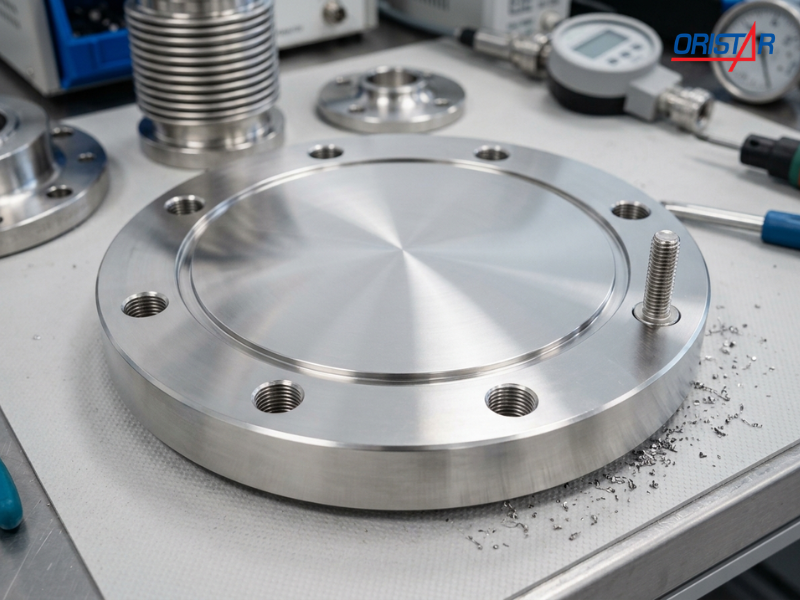
Corrosion resistance according to operating environment
In semiconductor systems, material contact conditions can vary depending on the equipment and processing stage. Some applications require corrosion resistance in chemical environments, while others focus on cleanliness and the ability to maintain surface quality.
When choosing stainless steel, it is necessary to determine the type of contact environment, chemical concentration if any, temperature and contact time. This information helps evaluate the level of compatibility between SUS304, SUS304L, SUS316 and SUS316L, limiting the choice of materials by brand name without considering the conditions of use.
Tightness at flange and gasket installation location
The ability to maintain a vacuum depends on the overall design and build quality, not just the materials. Flanges, sealing surfaces and gasket mounting locations need to meet flatness, smoothness and tolerances according to technical requirements.
If these surfaces are misaligned, assembly and sealing can be difficult. Important dimensions need to be clearly shown on drawings and inspected after processing.
With a complete vacuum chamber, the leak test method also needs to be determined according to the system's acceptance requirements.
Cleanliness and surface finishing requirements
For semiconductor devices, the metal surface needs to be controlled in accordance with the usage process. Machining oils, dust, metal filings and remaining residue can affect the cleanliness of the system.
Therefore, it is necessary to clearly determine the surface roughness, cleaning method and post-processing treatment requirements. For applications requiring very clean surfaces and few locations where dirt can be retained, electropolishing (EP) may be included in the specification if the equipment design and process require it.
EP should not be considered a mandatory requirement for every vacuum chamber. The finishing method should be determined based on the vacuum level, usage environment and system standards.
Air permeability of materials and surfaces
When putting materials into a vacuum environment, substances remaining on or in the surface can escape over time and affect the quality of the vacuum. This phenomenon is often called outgassing.
Therefore, for systems with high vacuum requirements, you should not only care about stainless steel grades. Surface quality, post-processing oils and dirt, cleaning methods, surface treatment and cleaning process before entering the equipment all need to be controlled.
Air release level requirements should be determined according to system standards instead of applying a general level to all equipment.
Dimensional accuracy after machining
Vacuum chambers often have many mounting surfaces, connection holes and details that need to be machined according to drawings. Therefore, the workpiece size, residual amount and machining sequence need to be calculated appropriately to limit deviations in important positions.
For large structures or complex shapes, special attention should be paid to deformation during machining. Choosing the right workpiece and determining tolerances from the beginning helps the manufacturing process be more proactive, while also limiting repair steps during assembly.
Should I choose stainless steel sheets, rolls or bars?
In addition to the material grade, the shape of the workpiece also affects the manufacturing plan and effective use of raw materials. Stainless steel sheets, coils and bars serve different needs; The choice should be based on the detailed structure and expected machining process.
Material form | Characteristic | Usage needs can be considered |
Stainless steel plate | The blank is flat and has many thickness specifications | Chamber body, cover, cover and plate details |
Stainless steel coil | Roll material, suitable for continuous slitting or forming processes | Details need to use rolled materials and have corresponding processing processes |
Stainless steel bar | Can be round, square or other cross-sectional bars | Shafts, pins, connectors and parts machined from bar stock |
- Note:For chamber bodies with complex structures, the workpiece shape needs to be determined based on drawings and manufacturing methods. You should not choose materials only based on available form but ignore the amount of residue, machinability and quality requirements of the finished product.
Process of selecting and ordering stainless steel for vacuum chambers
To limit discrepancies between purchased materials and production requirements, businesses should agree on technical specifications before requesting a quote.
- Step 1 - Determine operating conditions:Clarify the contact environment, temperature, cleanliness requirements and specific criteria of the vacuum system.
- Step 2 - Stainless steel fasteners and material standards:Choose SUS304, SUS304L, SUS316, SUS316L or other brands according to design; At the same time, determine the supply status and required documents.
- Step 3 - Determine workpiece specifications:Provide thickness, width, length, material type and quantity to buy. For complex details, drawings should be sent to determine specifications close to processing needs.
- Step 4 - Agree on processing requirements:Clarify the scope of cutting, milling or other processes if any, along with tolerances and surface requirements to be achieved.
- Step 5 - Determine testing and acceptance criteria:Agree on requirements to check materials, dimensions, surface quality and related documents. If ordering a complete chamber, the requirements for testing for tightness and vacuum maintenance should be separately determined.
This process helps clearly distinguish the requirements for stainless steel blanks from the requirements for finished parts or vacuum chambers, avoiding additional steps after the material has been put into production.
Oristar provides industrial stainless steel according to specifications
Oristar provides many types of industrial stainless steel with different grades and specifications. With the need to make a vacuum chamber, materials need to be selected individually according to the operating environment, cleanliness requirements, tightness, air release ability and processing plan.
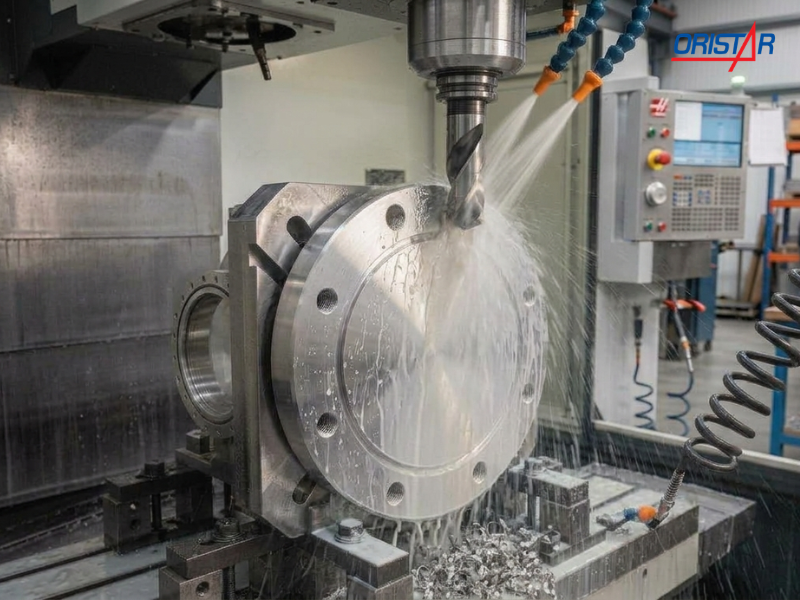
SUS304, SUS304L, SUS316 and SUS316L are grades that can be considered for vacuum system components depending on technical requirements. Among them, SUS316 and SUS316L are more suitable when the equipment works in environments with high requirements for corrosion resistance.
SUS303 alone has the advantage of machinability thanks to its sulfur content, but this is not a grade that should be prioritized for vacuum chambers. Therefore, when ordering materials for this application, it is necessary to clearly determine the stainless steel grade and technical requirements instead of just choosing according to machining ability.
For businesses looking for stainless steel to make vacuum chambers, determining the correct steel grade, billet size and material standards is the basis for checking supply capacity. Oristar receives requests according to stainless steel grade, specifications, quantity and technical specifications to compare with actual needs.
When contacting, businesses should prepare the following information:
- Stainless steel grades and required material standards.
- Workpiece form, size and quantity.
- Technical drawings if processing is required.
- Tolerances, surface requirements and documents need to be provided.
- Specific requirements related to the usage environment.
For applications with strict standards for cleanliness, surface finish or vacuum sealing, these criteria need to be clearly communicated to determine the scope of compliance. Providing complete information from the beginning helps the material consultation and quotation process go more smoothly.
Oristar - Leading metal supplier in Asia
Disclaimer:All technical and mechanical specifications in the article are for reference only and may change depending on specifications, material status and manufacturer. This parameter is not a substitute for official production standards (JIS, ASTM...). Please contact Oristar to receive the most detailed and accurate advice for your needs.