 vi
 en
 kr
 jp
 cn




The role of traction power connectors in railway systems
The traction power connector is the part that creates the electrical connection between components in the traction power supply and distribution system. Depending on the configuration, the connector can be used at traction power stations, distribution cabinets, switchgear or power electrical assemblies on trains.
Unlike the power busbar, which is mainly responsible for conducting and distributing electric current, the connector must also maintain a stable connection between the details. Connector design needs to simultaneously meet electrical conductivity, load-bearing, assembly and maintenance requirements.
Locations where traction electrical connectors are used:
Installation location | Function of connector |
Traction power station | Link wires, busbars and equipment in the power supply system |
Distribution cabinets and switchgear cabinets | Connect electrical conduits to switchgear, protection or distribution equipment |
Electrical power equipment cluster on board | Connect leads and power modules according to device design |
Connection point between conductors | Maintains electrical and mechanical connections between compatible conductors |
Dedicated connection cluster | Meets connection requirements according to specific structure and operating conditions |
Connector structures can vary in shape, cross-section, clamping mechanism, bolt holes and connection method. Therefore, choosing the traction power connector material should be based on the location of use, current, impact force and environmental conditions.
Note:It is necessary to distinguish between connectors in electric traction equipment and those used on contact lines or parts in direct contact with the ship's electrical receivers. Each application has its own requirements in terms of materials, geometry and testing methods.
Technical requirements for traction power connector materials
The connector needs to maintain low and stable contact resistance and withstand mechanical impacts during installation, operation and maintenance. These requirements directly affect the choice of pure copper or copper alloy.
Conductivity and contact resistance
The conductivity of the material affects the power loss and heat generated when current flows through the connector. Copper has high electrical conductivity so it is suitable for many power conductive parts.
However, the conductive performance of a connector does not only depend on the substrate material. The resistance at the contact surface is also influenced by the actual contact area, clamping force, surface flatness, oxidation state and bonding method.
If the contact resistance increases, the heat generated at the junction may increase. Therefore, the design needs to control the contact structure, tightening force, surface treatment plan and connection stability during operation.
Mechanical strength and bond retention
The connector can withstand bolt tightening force, wire pulling force, vibration and thermal impact during use. The material needs to have adequate strength to limit deformation at the clamping area, bolt hole or contact surface.
Pure copper has an advantage in conductivity but durability depends significantly on the material state. Some copper alloys can provide greater strength and wear resistance, making them suitable for heavy-duty or clamping connectors. In turn, the electrical conductivity of alloys is often different from pure copper and needs to be tested according to specific grades.
The choice needs to balance the ability to transmit current and the ability to maintain shape and contact force under working conditions.
Corrosion resistance and surface stability
Connectors in railway systems can be affected by humidity, dust, pollutants and temperature changes. Surface condition can affect the quality of electrical contact, especially at locations that are frequently disassembled or need to maintain stable contact resistance.
Depending on the usage environment, the design may require a protective coating or contact surface treatment. This option needs to be compatible with the base material and exposed metals, while also meeting the requirements for durability of the coating during operation.
Machining and assembly capabilities
Connectors may require cutting, milling, drilling, threading, stamping or shaping according to design. The machinability of a material affects dimensional accuracy, surface quality, and manufacturing efficiency.
For parts with many mounting holes or complex shapes, it is necessary to determine the material state and tolerances from the beginning. This helps limit machining distortion and ensures the connector fits into the device assembly when assembled.
Comparison of pure copper and copper alloys used for tensile electrical connectors
Pure copper and copper alloy have different advantages. Pure copper is often preferred when conductivity is a central requirement; Copper alloys may be more suitable when connectors need increased durability, abrasion resistance, or retention of clamping force.
Criteria | Pure copper | Copper alloy |
Electrical conductivity | High, suitable for details that need to transmit current effectively | Varies according to alloy composition and material state |
Mechanical durability | Depends on the grade and state of the material; need to be evaluated at the bearing area | Can be improved depending on alloy system and processing method |
Machining ability | Suitable for many mechanical processing methods; need to choose the appropriate state | Depends on the composition, hardness and processing characteristics of each grade |
Abrasion resistance | Needs to be evaluated according to load, movement and contact conditions | Some alloys are more resistant to wear |
Orientation application | Connectors and conductive parts require high conductivity | The connector needs to combine electrical conductivity with mechanical requirements |
Factors to check | Conductivity, material state, deformation and contact quality | Conductivity, durability, machinability and design compatibility |
There is no one material group that fits every type of traction power connector. Fixed connectors in electrical cabinets can prioritize conductivity and machinability; Connectors that are clamped or subjected to mechanical stress may require additional consideration of the copper alloy properties. The final decision should be based on drawings, current parameters, working conditions and testing requirements of the device.
Copper and copper alloy grades can be considered
When choosing materials for train traction electrical connectors, businesses need to clearly determine the grade of copper or copper alloy according to technical standards. Material group names are just the beginning; Components, supply status and physical and mechanical criteria are the basis for confirming the ability to meet the application.
Copper C1100 and C1020 for conductive parts
C1100 and C1020 are two copper grades with high conductivity, which can be considered for connector details where electrical conductivity is an important factor.
- C1100 Copper: Is an electrolytic copper whose oxygen is controlled according to material standards. This grade has high electrical conductivity and is used in many industrial electrical applications. When used as a connector, it is necessary to check the material condition, processing requirements and heat treatment conditions if any.
- C1020 copper: Is oxygen-free copper, with low oxygen content. This grade may be considered when the manufacturing process or conditions of use place requirements on the oxygen content of the material.
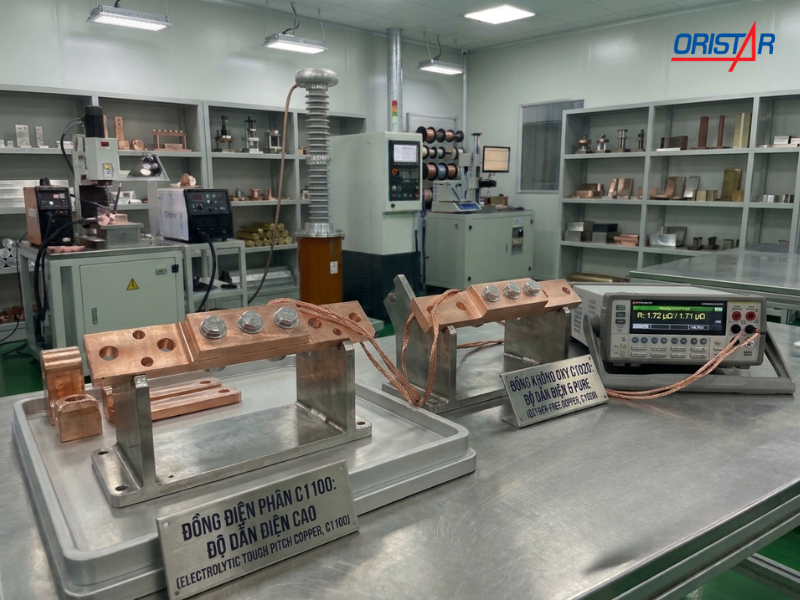
Both grades need to be evaluated according to the actual requirements of the connector. It should not be assumed that C1020 always has higher conductivity than C1100 or is more suitable in all conditions. If the part is subject to large clamping force, is frequently disassembled, or needs to be kept in contact for a long time, it is necessary to further check the durability and material condition.
Copper alloy for connectors requires mechanical strength
Several types of copper alloys were developed to improve strength, hardness, wear resistance or spring properties. These properties may be useful for connectors that have clamping mechanisms, elastic contacts, or mechanically loaded locations.
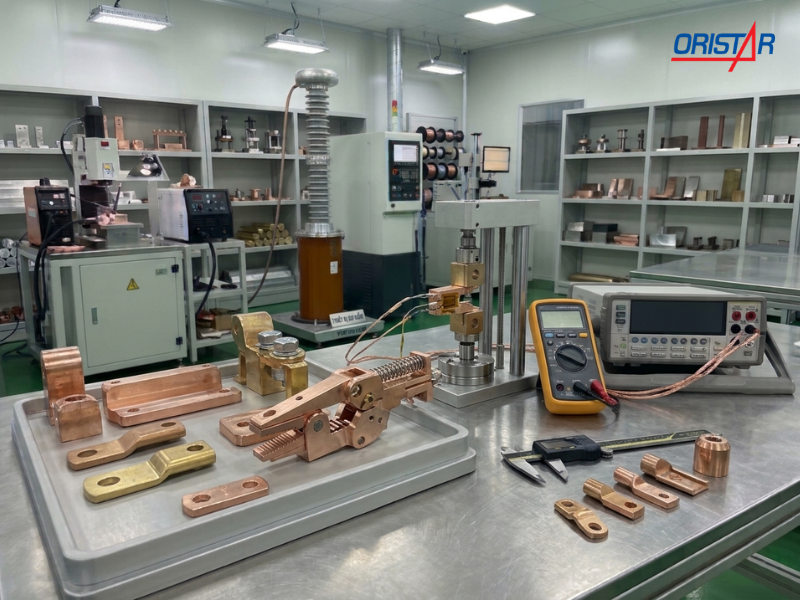
However, the alloy composition may reduce conductivity compared to pure copper. Therefore, it is necessary to determine the minimum conductivity, tensile strength, yield limit and processing conditions according to the requirements of the part.
An alloy should not be chosen solely based on high hardness. The traction electrical connector must simultaneously meet the requirements of electrical conductivity, contact stability and mechanical life.
Criteria for selecting railway traction power supply connectors
The choice of material needs to be linked to the working conditions of the complete connector, not just based on the characteristics of the copper billet. The criteria below help determine the technical requirements that need to be checked before purchasing materials or ordering processing.
Rated current and temperature rise
It is necessary to determine the continuous operating current, overload conditions and operating conditions that may affect the connector temperature. Materials, conductive cross-sections and contact structures must meet the temperature rise requirements of the device.
In locations with multiple connections, it is necessary to evaluate the contact resistance of each link. A connector with a large cross-section does not necessarily guarantee effectiveness if the contact surface, clamping force or assembly method are not suitable.
Connection structure and clamping force
Connectors can use bolt connections, clamping mechanisms or specialized connection methods. Each structure places different requirements on material strength, dimensional accuracy and contact force retention.
For bolted connectors, it is necessary to check hole location, edge distance, connection area thickness and tightening force requirements. With resilient connectors, the ability to retain clamping force and stability after multiple operating cycles should be further evaluated if the design requires it.
Environmental conditions and material compatibility
The connector can work in closed electrical cabinets, equipment compartments or environments with humidity and vibration. This condition affects the choice of materials, coatings and surface protection options.
If the connector connects conductors or bars of two different metals, the risk of galvanic corrosion in the contact area should be considered. When necessary, the design can utilize bimetallic connectors or suitable transition solutions. Do not directly join dissimilar metals without evaluating compatibility in the working environment.
Technical standards and testing capabilities
Connectors used in electric traction systems may have to meet the specific requirements of the equipment manufacturer, investor or project. Material standards, electrical testing requirements, mechanical testing requirements, temperature rise and applicable acceptance criteria should be clearly defined.
The standards for overhead contact wires do not automatically apply to all types of connectors in electric traction systems. Standards need to be selected according to the correct product type, location of use and design scope.
Processing and quality control of copper connectors
Pull-out electrical connectors can be machined from copper billet or copper alloy in bar, sheet or other form according to design. The manufacturing process depends on the part shape, tolerances, surface requirements and assembly method.
Operations may include cutting, milling, drilling, threading, shaping and surface treatment. For parts with high requirements for accuracy, it is necessary to check the dimensions at the assembly locations and contact surfaces after machining.
Some contents that need to be controlled include:
- Input materials: Correct grade, supply status and required standards.
- Dimensions: Meet tolerances, hole location, thickness and shape according to drawings.
- Contact surface: No defects affecting contact area and assembly ability.
- Mechanical properties: Meets requirements at the bolting area, clamping area or force-bearing parts.
- Surface treatment: Suitable for substrate material, operating conditions and connection method.
- Finished product inspection: According to technical specifications and acceptance criteria of the project.
For connectors with special requirements, testing procedures need to be agreed upon with the device manufacturer or design unit. Criteria such as contact resistance, temperature rise and bearing capacity need to be evaluated according to appropriate testing methods and cannot be replaced by visual inspection alone.
Oristar supplies copper materials for industrial electrical applications
Oristar provides industrial metal products according to marks and specifications. With the need to find copper or copper alloy sources for railway traction power connectors, businesses need to determine materials in advance according to drawings and technical standards of the equipment.
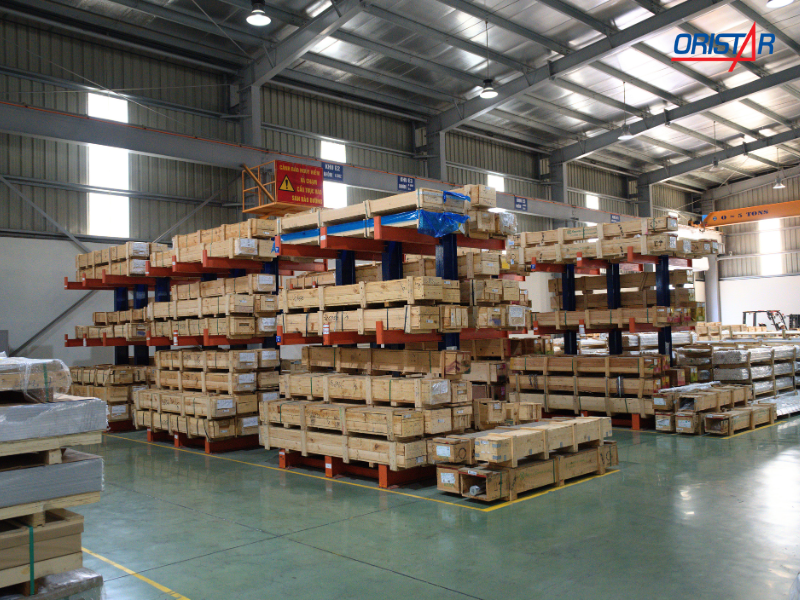
To check the ability to meet orders, customers should prepare the following information:
- Grade of copper or copper alloy is specified.
- Material form, dimensions and tolerances.
- Quantity or volume to be supplied.
- Connector drawings and machining requirements if any.
- Material standards, documents and inspection criteria.
- Special surface, heat treatment or coating requirements.
Complete information helps determine the correct workpiece specifications and clarify the requirements that need to be met before ordering. The ability to supply each mark, material type and size needs to be confirmed according to the actual product list.
Oristar - Leading metal supplier in Asia
- Hotline: 098 875 06 86
- Email: info@oristar.vn
- Zalo OA
- E-commerce website
- Official Website
Disclaimer:All technical and mechanical specifications in the article are for reference only and may change depending on specifications, material status and manufacturer. This specification is not a substitute for official production standards (JIS, ASTM...). Please contact Oristar to receive the most detailed and accurate advice for your needs.