 vi
 en
 kr
 jp
 cn




Aluminum ship bottom plates are a material considered in manufacturing bottom structures of some types of ships, thanks to their light weight, corrosion resistance and flexibility when processing. However, the ship's bottom is an area that is frequently exposed to seawater and is subject to loads and impacts from the operating environment. Therefore, choosing aluminum plates is not only based on corrosion resistance but also must consider durability, weldability and structural requirements. In particular, the use of A5052 aluminum needs to be evaluated according to each specific application.
What is marine aluminum bottom plate?
Marine aluminum bottom plate is a flat-rolled aluminum material used to make Bottom Shell Plating in ship hull designs using aluminum alloy. The bottom shell is located at the bottom of the ship's hull, creating a watertight cover and participating in load-bearing with the internal reinforcement structure system.
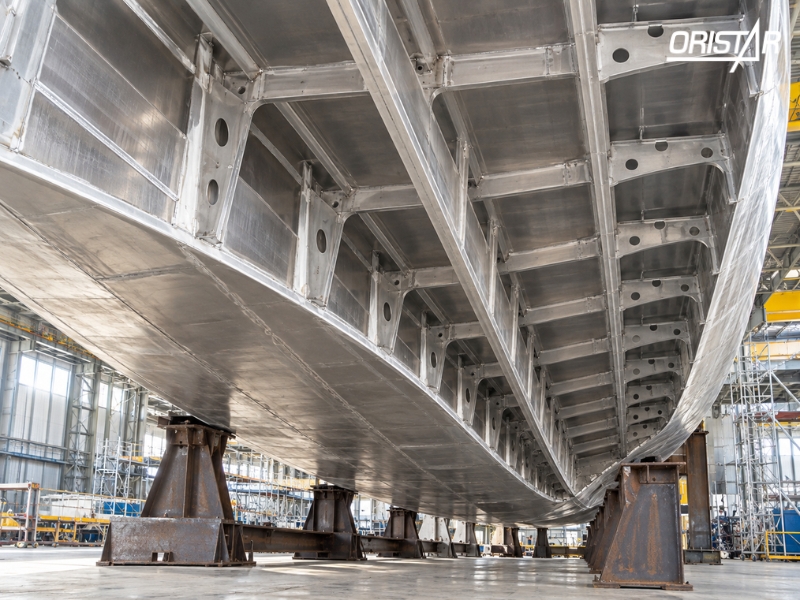
Unlike the floor plate or equipment cover, the bottom shell is an important structural part, which can be directly affected by water pressure, waves and hull deformation. Therefore, material selection should be based on design drawings, mechanical properties requirements, thickness and actual operating conditions.
Ship bottom structure and related parts
The ship's bottom structure includes not only jointed metal plates but also a system of beams, ribs and reinforcing details. These components work together to maintain rigidity and load distribution.
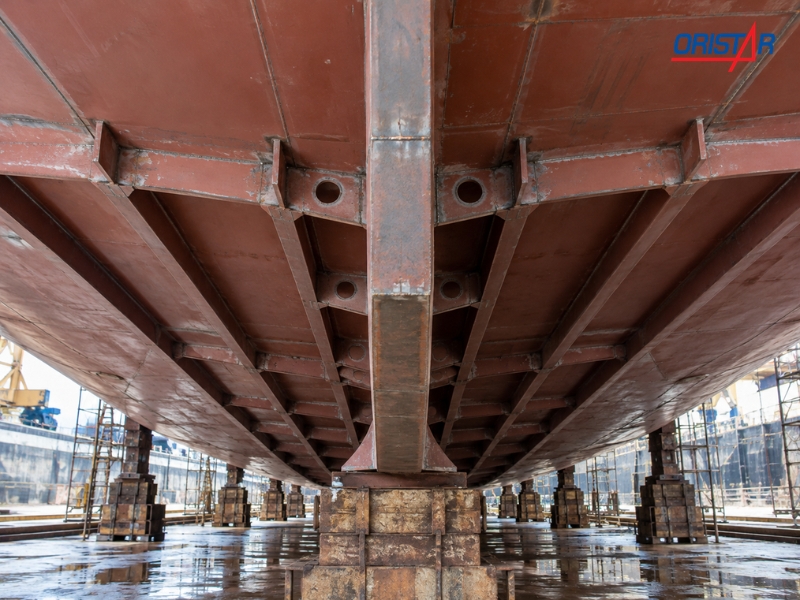
Ship's bottom shell – The part directly in contact with seawater
Bottom Shell Plating forms the outer surface of the bottom of the hull. This is an area that requires materials that are resistant to corrosion, load-bearing and that meet appropriate bonding methods. Thickness, material condition and weld quality must be determined according to the design.
Bottom keel and longitudinal beams on the bottom of the ship
The bottom keel and longitudinal beams have the function of reinforcing the length of the hull, helping to increase stiffness and limit deformation of the hull panels. These components can be used in the form of plates, bars or shaped sections according to design. Materials should be selected based on load-bearing requirements and manufacturing methods.
Bottom transverse rib and ship side connection position
The bottom horizontal rib helps increase the stability of the structure, while also supporting load distribution among related parts. At the connection area between the bottom and side of the ship, attention should be paid to weld strength, deformation and corrosion resistance. Bonding locations must be controlled according to the technical requirements of each project.
Is A5052 aluminum suitable for ship bottom panels?
Aluminum A5052belongs to the aluminum-magnesium (Al-Mg) alloy group, outstanding with its corrosion resistance, ductility and good formability. In the marine sector, A5052 is a material to consider for a number of sheet parts, shrouds, service covers and ancillary components.
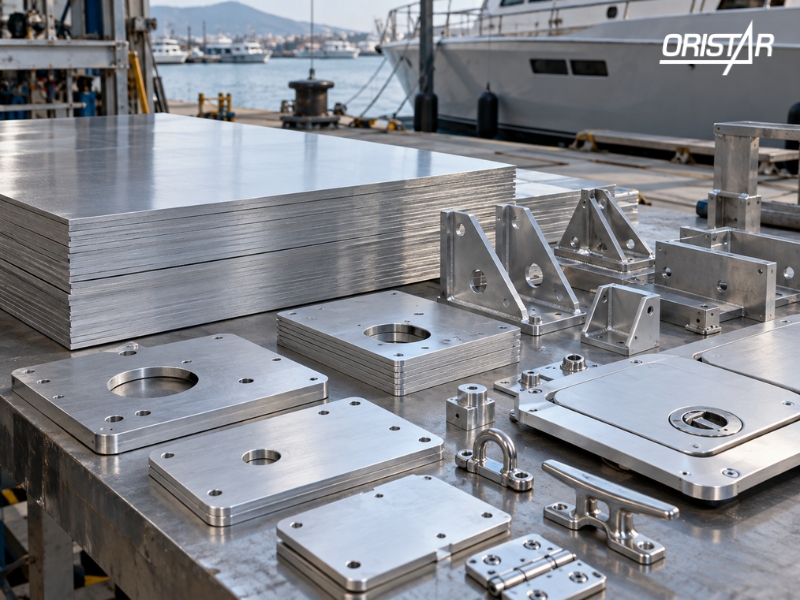
Notable advantages include:
- Good corrosion resistance in humid environments and suitable marine environments.
- Light weight, convenient for designs that need to reduce weight.
- Ability to bend, shape and process sheets.
- Can be welded using appropriate welding methods and materials.
However,A5052 cannot be assumed to be suitable for all load-bearing ship bottom structures. For vehicles requiring high durability or operating in harsh conditions, materials must be evaluated for mechanical properties, supply status, thickness and design approval requirements.
Businesses can refer to products aluminum alloy sheet A5052 at Oristarto learn more about material properties and submit specification requests.
5 technical requirements when choosing aluminum ship bottom plates
The bottom of the ship is an area subject to many impacts during operation. Therefore, engineers and shipbuilders need to simultaneously evaluate the five requirements below before deciding to use materials.
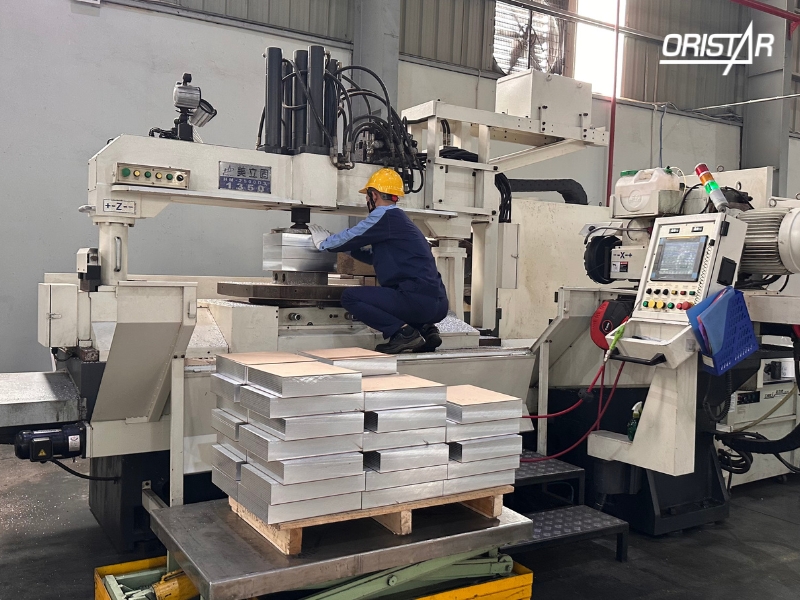
Mechanical strength and load-bearing capacity
Aluminum panels need to meet the loads determined in the design, including water pressure, wave loads and impacts arising during operation. The thickness and mechanical properties must be consistent with the bottom structure and reinforcement system.
Fatigue tolerance
Ships are frequently subjected to variable loads due to waves and hull movements. Connection locations, especially weld areas, need to be evaluated for fatigue resistance to limit the risk of crack formation.
Resistant to seawater corrosion
Salt water environments can cause corrosion at surfaces, gaps and bond positions between different metals.
Although A5052 aluminum has good corrosion resistance, the selection still needs to consider contact conditions, joint design and surface protection options.
Welding and shaping capabilities
The bottom shell plate may need to be bent to the hull profile and bonded to the reinforcing structure. Therefore, it is necessary to evaluate the formability, welding method, post-weld deformation and the influence of heat on material mechanical properties.
Material quality and dimensional tolerance
Thickness, flatness, workpiece size and surface quality affect assembly capabilities. In addition, alloy grades, material status and quality records need to be consistent with ordering and acceptance requirements.
How to choose aluminum sheet specifications according to shipbuilding drawings
To choose the right aluminum ship bottom plate, businesses need to clearly determine the function of the detail and technical requirements before ordering.
Information to prepare includes aluminum grade, material status, thickness, width, length, tolerance, quantity and quality records.
For workpieces that need to continue bending, welding or mechanical processing, it is necessary to determine the appropriate size and residual amount.
In particular, it is necessary to distinguish the raw material sheet specifications from the finished product size after cutting to avoid discrepancies when ordering.
Solution for supplying and processing aluminum panels at Oristar
Oristar provides industrial metal materials and processing solutions on demand, supporting businesses in preparing aluminum billets for production and manufacturing of marine parts. Ntoday A5052is one of the suitable grades to evaluate for applications requiring corrosion resistance and shaping.
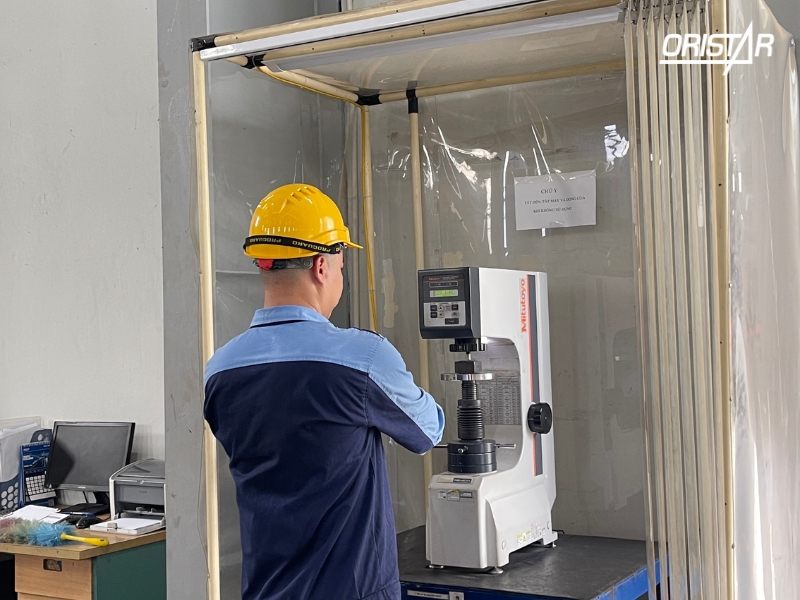
With aluminum sheet and bar cutting service, the range of product sizes after processing includes:
- Thickness:1–150 mm.
- Width:12–3,600 mm.
- Length:12–4,000 mm.
- Tolerance:According to Oristar standards or technical requirements agreed with customers.
Oristar also has a system of equipment to check curvature, perpendicularity, roughness, hardness, flatness and dimensional tolerance, supporting workpiece quality control before delivery.
The above parameters represent the scope of processing and do not mean that all A5052 specifications are available or approved for use in load-bearing ship bottom structures.
Businesses that need aluminum panels to serve the maritime industry can contact Oristar to provide drawings, material labels and technical requirements to check supply capabilities, advise on appropriate specifications and processing plans.
Oristar - Leading metal supplier in Asia
- Hotline: 098 875 06 86
- Email: info@oristar.vn
- Zalo OA
- E-commerce website
- Official Website
Disclaimer:All technical and mechanical specifications in the article are for reference only and may change depending on specifications, material status and manufacturer. This specification is not a substitute for official production standards (JIS, ASTM...). Please contact Oristar to receive the most detailed and accurate advice for your needs.