 vi
vi
 en
en
 kr
kr
 jp
jp
 cn
cn




What requirements do semiconductor chassis need for aluminum materials?
The chassis is not simply a covering part. Depending on the design, the frame may be required to hold equipment assemblies in place, create mounting points, connect components, or serve as a foundation for precisely machined and positioned parts.
Therefore, the aluminum material used for the chassis needs to be evaluated on many factors instead of just looking at light weight.
- Stiffness is an important requirement when the frame must withstand loads from equipment assemblies or maintain a relatively stable position between components.
- Weight also needs to be controlled so that the frame does not add unnecessary load to the entire device, especially with large structures.
- Machining ability determines the convenience of cutting, milling, drilling, making holes or machining assembly surfaces according to drawings.
- Dimensional stability needs to be considered when frames have multiple connection locations or require control of tolerances between components.
In addition, material condition, workpiece size and surface requirements also need to be determined in accordance with the design. Therefore, the same aluminum grade but different specifications or states can still lead to different processing options and choices.
Why is aluminum used for semiconductor chassis?
For machine structures, reducing weight while still maintaining the necessary rigidity is one of the important problems when designing materials. Aluminum has an advantage in volume compared to many other structural metals, and can be supplied in many forms such as plates, bars and specifications for mechanical processing.
Machinability is also a factor why aluminum is considered for the chassis. Depending on the structure, the material can be cut to size, milled to create standard faces, drilled holes or further processed into connected details.
With frames with complex designs, using suitable aluminum billet from the beginning also helps to be more proactive in the processing and assembly process. However, the aluminum grade needs to be chosen based on the actual requirements of the frame instead of assuming that all machine structures use the same material.
Which aluminum grade should I choose to make a semiconductor chassis?
There is no single aluminum grade suitable for all types of semiconductor chassis. Although it is the same machine frame, the structure, load capacity, manufacturing method and assembly requirements may differ significantly.
With a frame machined from aluminum billet, A6061 is often a grade worth considering thanks to its machinability and balance between usage requirements. A5052 is more suitable for structures that need shaping or require corrosion resistance. Meanwhile, A7075 can be considered when the design places emphasis on durability and mechanical properties. Therefore, material selection should start from the frame structure and technical requirements, then determine the aluminum grade, state and billet specifications.
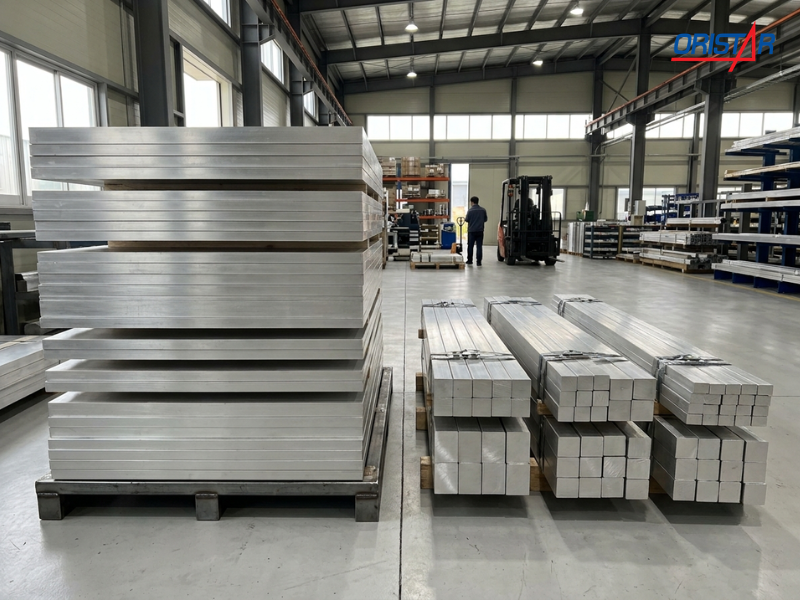
A6061 for mechanical processing machine frames
A6061 is one of the aluminum grades widely used in mechanical details and structures. The material has a balance between machinability, durability and corrosion resistance, so can be considered for machine frames, fixtures or parts that need to be machined according to drawings.
With a semiconductor chassis, the A6061 is especially worth considering when designing with many locations that require milling, drilling, hole making or mounting surface machining. At that time, the machinability of the workpiece has a direct impact on the time and manufacturing plan.
However, it is necessary to clearly determine the material status before ordering. The same A6061 but different states can lead to differences in mechanical properties and selection for each structure.
A6063 and A6061 profile for quick assembly modular chassis
Shaped aluminum (mainly grade A6063 or A6061) is a very popular material when manufacturing industrial machine frames and semiconductor devices. Thanks to being pre-extruded into standard slots and hollow cavities, aluminum profiles allow for quick assembly of modular frames through connecting accessories without having to go through many complicated milling and welding steps.
- A6063: Highly formable, very smooth and beautiful extruded surface, easy to anodize, suitable for light and medium load frame structures, partitions or cover frames.
- Profiled A6061: Chosen when the profiled frame structure requires higher rigidity, bearing capacity and mechanical durability.
A5052 for structures that need shaping
A5052 is an aluminum grade that is considered more in products that require bending or shaping. Compared to a frame machined primarily from thick stock by milling, structures in the form of panels, shells or parts that need to be formed may place different material requirements.
So, if the chassis has a lot of sheet parts or needs bending according to the design, the A5052 may be an option to consider.
On the contrary, if the structure is made up of thick billet and CNC machined with many mounting surfaces, A6061 is often the choice that needs to be evaluated first. The final decision still depends on the drawings, material status and technical requirements of the product.
A7075 for structures requiring high mechanical properties
A7075 belongs to the aluminum alloy group of choice when the mechanical properties requirements are higher than in common structural applications. Therefore, the material can be considered for some parts or machine parts that have specific requirements for load-bearing capacity.
However, A7075 should not be used by default for the entire chassis just because the material has high mechanical properties. With a structure that does not require this level, material selection needs to consider both machinability, workpiece specifications and material costs.
What controls are needed when processing aluminum to make semiconductor chassis?
Choosing the right aluminum grade only solves part of the problem. With machine frames, post-machining accuracy and uniformity between mounting surfaces are also very important.
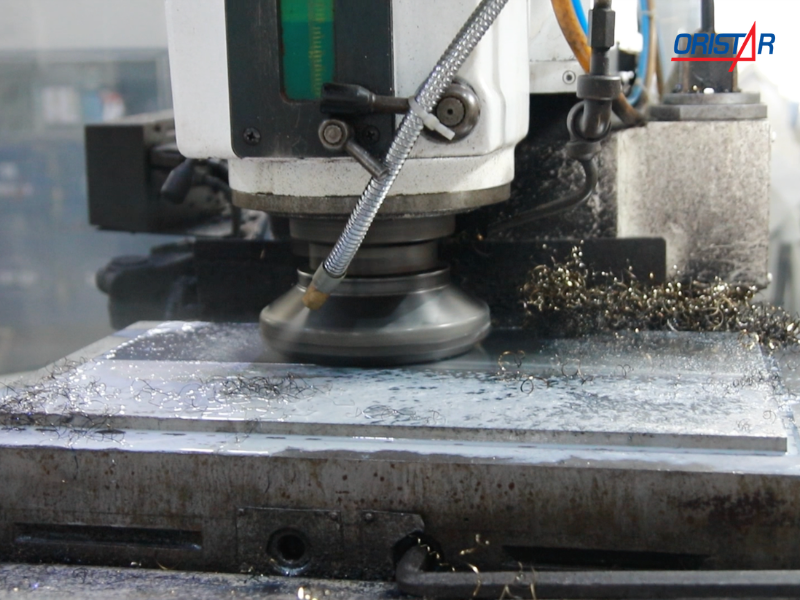
Cut the workpiece to size
The size of the workpiece needs to be calculated based on the size of the finished product and the amount of surplus needed for the next steps.
If the workpiece is cut too close to the finished size, processing standard faces or eliminating initial deviations may be difficult. On the contrary, a workpiece that is too large will increase the amount of material that must be machined and the processing time.
Oristar has the capacity to cut aluminum sheets and bars to required sizes. For aluminum and copper, the post-cut product range is provided according to Oristar's existing technical information, from thicknesses 1–150 mm, widths 12–3,600 mm and lengths 12–4,000 mm; Tolerances are made according to Oristar standards or customer requirements.
Milling to create standard faces
The chassis may require multiple milled surfaces to accommodate assembly, connections, or positioning of other components. Then, flatness, parallelism and perpendicularity need to be controlled according to drawing requirements.
Oristar has 4–6-sided precision milling capabilities for aluminum and copper products. The available machining range includes thicknesses 8–300 mm, widths 40–1,500 mm and lengths 40–1,500 mm; Tolerances comply with Oristar standards or customer technical requirements.
Tolerance and surface control
With a chassis with many connection points, deviations in one surface can affect the assembly of related parts. Therefore, the order request should clearly state the parameters to be controlled instead of just stating "precision machining".
Depending on the design, businesses may need to determine:
- Overall dimensions.
- Flatness.
- Degree of parallelism.
- Perpendicularity.
- Hole position tolerance.
- Surface roughness.
- Requires surface treatment or finishing.
These parameters need to be compared directly with technical drawings to determine appropriate material and processing options.
A6061, A6063 and A5052: Which one should I choose for the chassis?
A6061, A6063 and A5052 can all be used in industrial aluminum structures, but the direction of selection is not the same. The comparison needs to be in relation to the frame manufacturing method instead of just based on the brand name.
Criteria | A6061 | A6063 | A5052 |
Directions for use | Mechanical, structural, processing details | Shaped aluminum frame, quick assembly module | Plate structure, product needs shaping |
Mechanical processing | Good | Rather | Fit |
Ability to extrude and shape | Fit | Very good (beautiful surface) | More limited |
Shaping | Suitable depending on status | Good | Have more advantage |
Anti-corrosion | Good | Good | Good |
CNC machined frame | Worth considering | Need to evaluate by design | Need to evaluate by design |
Structure needs bending/shaping | Suitable (Used when high-strength profiled bars are needed) | Most optimal | Not suitable |
Factors to consider | Mark, status, specifications, tolerances | Groove specifications, wall thickness, aluminum grade | Mark, status, specifications, shaping method |
The actual characteristics of each grade also depend on the material state, thickness and processing requirements. Therefore, with semiconductor chassis, businesses should compare drawings and usage conditions before finalizing materials.
Parameters to consider when placing aluminum as a semiconductor chassis
For material orders for machine frame manufacturing, the more specific the information, the more convenient the process of checking specifications and quoting prices.
- Aluminum grade:Identify A6061, A6063, A5052, A7075 or other marks according to design.
- Material Status:Need to be consistent according to drawings or technical requirements.
- Material form:plate, bar or other specifications.
- Workpiece size:length, width, thickness or bar cross section.
- Tolerance:especially with dimensions directly related to the assembly process.
- Processing requirements:cutting, milling 4 sides, 6 sides or processing details according to drawings.
- Surface requirements:roughness, flatness or finishing requirements if any.
- Quantity:number of blanks or frames to be produced.
If there are technical drawings, businesses should provide them from the beginning. This is the basis for suppliers to check aluminum grades, billet specifications and processing plans instead of just quoting prices based on a single material parameter.
Oristar supplies aluminum for semiconductor chassis according to specifications
Oristar provides aluminum grades to serve many manufacturing and mechanical processing needs, including A6061, A6063, A5052, A7075 and A2017. This list allows businesses to choose materials according to each problem in terms of structure, processing and usage.
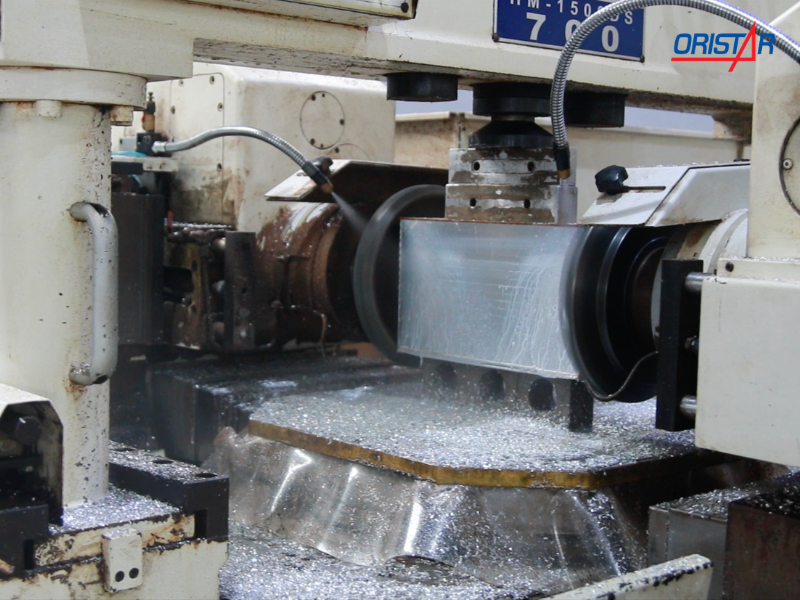
Not only providing blanks, Oristar also has the capacity to process plates, bars and 4-6-sided milling. These stages are suitable for orders that need to prepare workpieces according to size or process standard faces before entering the next manufacturing stage.
With the need for aluminum to make semiconductor chassis, businesses can send Oristar the following information:
- Aluminum grade and material state.
- Workpiece size or finished product size.
- Quantity to be provided.
- Tolerances and surface requirements.
- Technical drawings if available.
- Requires cutting or milling.
From this information, Oristar has the basis to check material specifications, processing capabilities and supply plans according to actual requirements.
Are you looking for aluminum to make semiconductor chassis according to drawings or specific specifications? Send parameters to Oristar to check aluminum grade, billet specifications and appropriate processing plan.
Oristar - Leading metal supplier in Asia
Disclaimer:All technical and mechanical parameters in the article are for reference only and may change depending on specifications, material status and manufacturer. This specification is not a substitute for official production standards (JIS, ASTM...). Please contact Oristar to receive the most detailed and accurate advice for your needs.