 vi
vi
 en
en
 kr
kr
 jp
jp
 cn
cn




Airplane wing ribs are not only responsible for maintaining the shape of the wing. This is also part of the load-bearing structural system, receiving and transmitting load between the shell, reinforcing bars and wing beam system. Therefore, aluminum for the wing ribs must simultaneously meet the requirements for strength, toughness, weight and stability after processing. In the aviation aluminum alloy group, A7050 and A7475 are two notable grades. In addition, depending on the design and specification, marks such as A7040, A7140 or A7160 may also appear in the wing rib structure.
How much load do airplane wing ribs actually carry?
To choose the right aluminum for an airplane wing rib, you first need to understand that the rib is not simply a metal plate built inside the wing. It directly participates in the transmission system of the entire wing structure and must maintain its aerodynamic shape during aircraft operation.
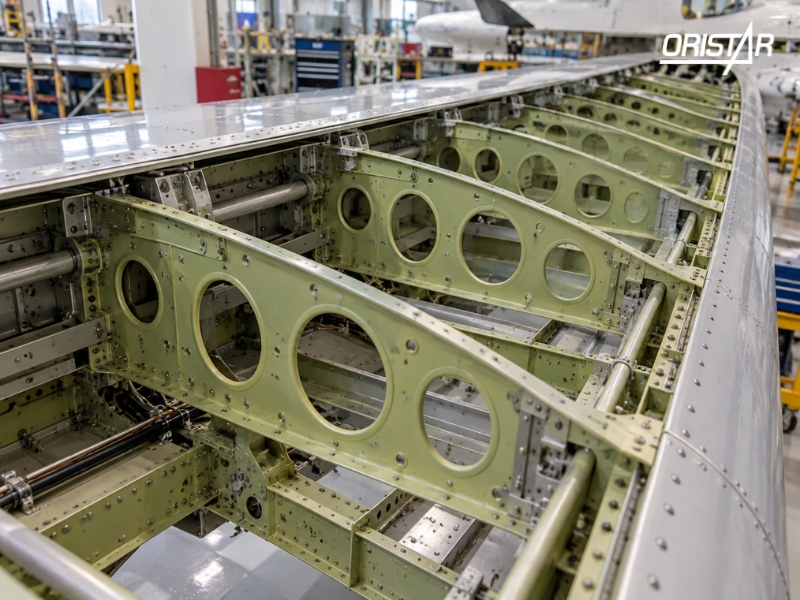
According to the FAA, ribs are the horizontal structures that make up the wing's skeleton, helping to maintain its aerodynamic curved shape and transmit load from the skins and stringers to the spars.
In practice, the wing flank may have to:
- keep the correct aerodynamic cross-section shape;
- supports and stabilizes the wing shell;
- transmission from skin and stringer to spar;
- bearing force at connection positions;
- work under repeated loads throughout the life of the aircraft;
- Maintains stiffness without increasing wing weight too much.
Not all ribs are subjected to the same load. Locations near the wing root, connection areas or areas of concentrated loading may impose different material requirements than ribs located in lower loading areas.
Therefore, material selection needs to start from the load and geometry of the part instead of just looking at the aluminum brand name.
Why do wing ribs often need high-strength aluminum?
The wing ribs must be stiff enough to hold their shape but at the same time need to be as light as possible. This makes the ratio between strength and mass one of the important factors when choosing materials.
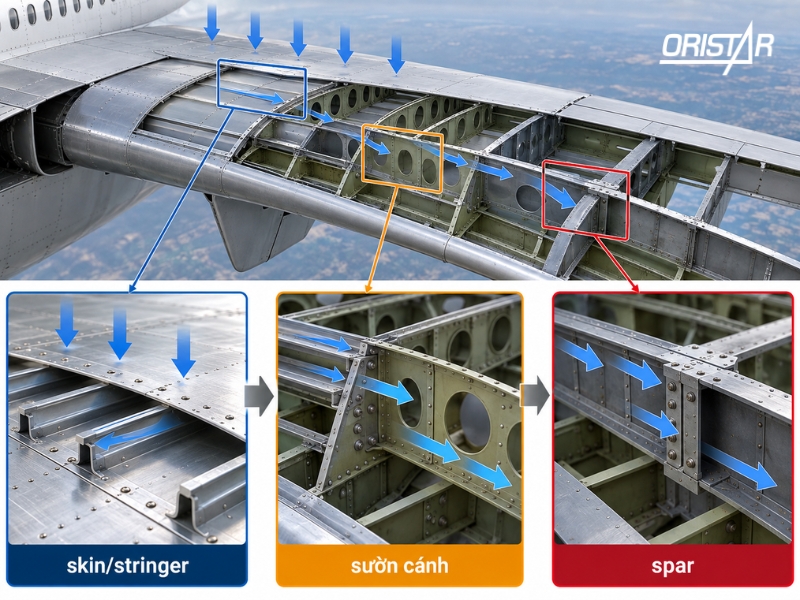
However, high intensity is only the first condition. A material used for wing ribs must also meet many other requirements:
Criteria | Implications for wing ribs |
Strength/weight ratio | Helps the structure bear the load but limits the increase in wing mass |
Destructive toughness | Limit the risk of cracks developing quickly when defects appear |
Resistant to stress corrosion cracking | Especially important with high load 7xxx alloys |
Ability to retain mechanical properties in thick sections | Important for CNC ribs from large plates or blanks |
Stability when machining | Reduces the risk of bending and twisting after peeling off multiple materials |
It is the combination of these requirements that makes the 7xxx alloy group such as A7050 and A7475 notable choices for load-bearing aerospace structures.
Why is the A7050 suitable for aircraft wing ribs?
A7050 belongs to the aluminum - zinc - magnesium - copper alloy system and is widely used in aerospace structures that require high strength.
The notable point of the A7050 is not simply "very tough". With wing ribs, what is more important is the ability to balance strength, toughness, resistance to stress corrosion cracking and stability at relatively thick sections. User-provided aerospace application data also identifies A7050 in the material group for wing ribs.
More notably, research on machining wing rib structures has directly used alloy 7050 for actual details. A study of ribs fabricated from 7050 extrusion focused on the influence of residual stress on deformation during machining; The final amount of material removed can be up to about 95% of the original blank.
That shows that the A7050 is suitable for the very specific problem of wing ribs: large billet → CNC with many pockets → thin walls and ribs → requires high deformation control.
Advantage of A7050 with wing ribs
The A7050 is especially worth considering when details require:
- high intensity;
- good toughness;
- Ability to work with relatively thick plates;
- stress corrosion cracking control;
- CNC machining from large billets;
- Maintains dimensions after peeling off multiple materials.
Therefore, A7050 is often more suitable for a “monolithic machined aerospace structure” approach instead of just looking at tensile parameters.
When was A7475 used for wing ribs?
If A7050 is often mentioned for its balance between strength, toughness and ability to work with thick plates, A7475 stands out in its ability to withstand damage and high destructive toughness. This is a very notable characteristic for aerospace structures, where a small crack not only needs to be limited from forming but also has to control its growth rate.
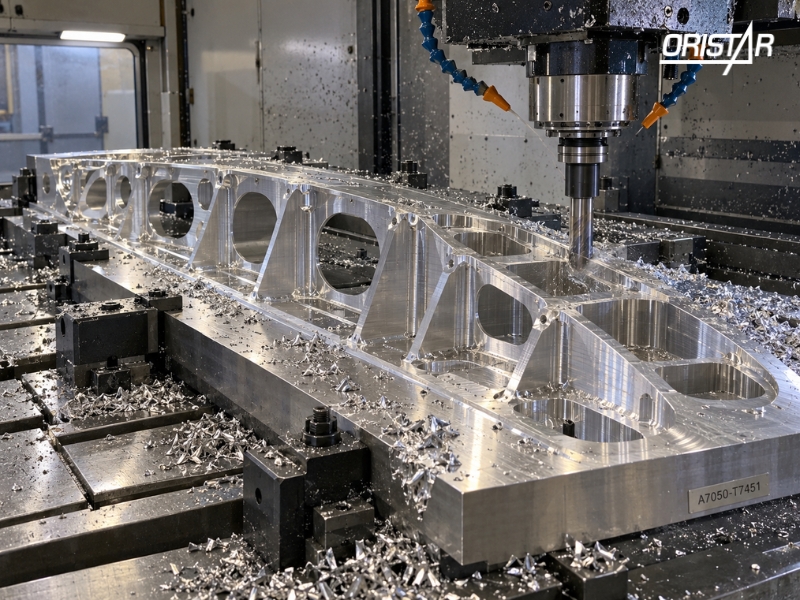
In industry data, A7475 is also in the material group used for wing ribs. Novelis 7475 in the aerospace plate category along with other high-strength and damage-tolerant aerospace alloys.
The A7475 may be suitable when the design prioritizes:
- high intensity;
- destructive toughness;
- long-term load-bearing capacity;
- Control the crack development process.
However, the A7475 should not be understood as always "better" than the A7050. The two grades solve different material problems and the final choice must comply with the specification of each part.
A7050 or A7475 is more suitable for wing ribs?
There is no single choice for every wing rib design. The correct way is to compare the material with its loading conditions, thickness, form of semi-finished product and processing method.
Criteria | A7050 | A7475 |
Intensity | Very high | High – very high |
Destructive toughness | Good | Notable strengths |
Ability to use on thick plates | Well worth considering | Depends on specifications and specifications |
Resists cracking due to stress corrosion | Good at the right temper | Depends on temper |
CNC rib from large billet | Fit | Can be used |
Damage tolerance | Good | Strengths |
Final choice | According to drawing/specification | According to drawing/specification |
Why do wing rib blanks bend easily after CNC machining?
This is one of the most notable problems when producing solid ribs. The original workpiece may be a relatively thick aluminum plate or block, but after processing most of the material is removed to create weight-reducing ribs, walls and pockets.
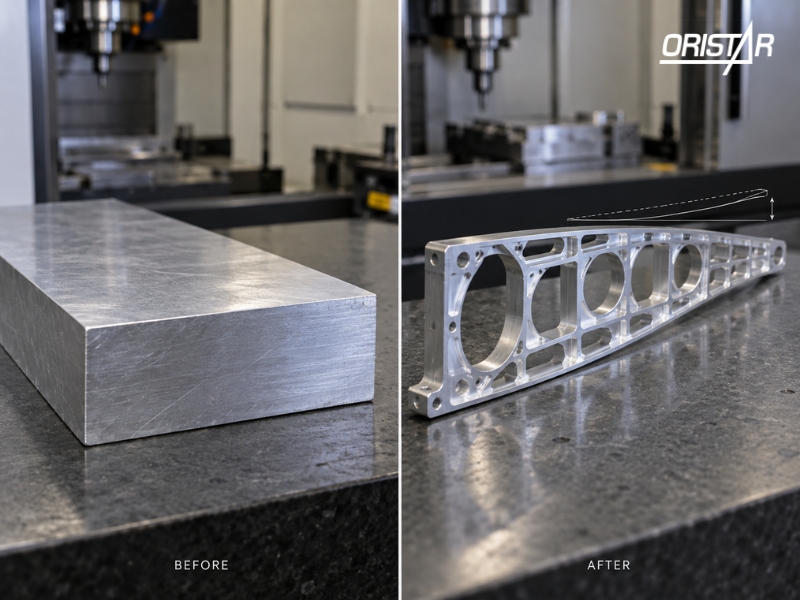
When the amount of material removed is too large, the stress equilibrium inside the workpiece changes.
Details may appear:
- curved;
- curly;
- loss of flatness;
- Wrong size after removing the fixture;
- Wrong position of bonding surfaces.
Studies on alloy 7050 ribs have shown a relationship between residual stress in the workpiece and deformation after machining. This is especially noticeable with parts that have a very large material removal rate.
Factors that need to be controlled
To limit deformation, the preparation and CNC process should consider:
- heat treatment state of the workpiece;
- residual stress;
- location of details on plate;
- rolling direction;
- rigging plan;
- amount of material peeled per step;
- rough milling strategy;
- Peel off material evenly on both sides;
- residual amount before finishing.
Therefore, buying the right grade of aluminum is just the first step. The input workpiece must also match the machining strategy.
How does temperature affect the aluminum used to make airplane wing ribs?
The same A7050 grade but different heat treatment status can give a different balance between strength, toughness, stress corrosion resistance and stability. Therefore, with high-load ribs, temper must be considered part of the material specification.
Temper | Points to note |
A7050-T7451 | Good balance between strength, toughness and stress corrosion cracking resistance; notable for its plate and CNC details |
A7050-T7651 | Aim for higher strength levels while maintaining adequate corrosion resistance |
A7475-T7351 | Noteworthy when designing requires high toughness and damage tolerance |
You should not change between tempers just because of the same alloy name.
For example, if a drawing requires A7050-T7451, replacement with another state requires appropriate technical approval. In aviation, the nameplate and temper must always be read together.
Is plate or extrusion more suitable for wing rib production?
Material morphology directly affects the amount of machining, residual stress and production costs. Therefore, the same aluminum grade but choosing plate or extrusion can lead to two completely different production options.
Wing ribs from plate
Plate is suitable when:
- details with complex geometry;
- need many pockets;
- The ribs are CNC monolithic;
- High precision required on many surfaces;
- Needs flexibility with many different geometries.
The A7050-T7451 is a notable choice in this direction.
Wing ribs from extrusion
Extrusion has the advantage that the original cross-section of the workpiece can be designed closer to the product shape.
This may help:
- reduce the amount of material that must be peeled;
- shorten CNC time;
- reduce the amount of chips;
- Optimize material usage efficiency.
However, extrusion also poses unique requirements for residual stress and stability after machining. The choice of plate or extrusion must be based on drawings, production scale, rib geometry and approved process.
Besides A7050 and A7475, what aluminum grades are used for wing ribs?
A7050 and A7475 are two grades worth focusing on when analyzing rib materials, but they are not the only options.
According to aviation application data, wing ribs can also be used:
- A7040
- A7140
- A7160.
These are more specialized labels and their use depends on the design and specifications of the manufacturer.
These grades should not be automatically replaced with A7050, A7475 or A7075 just because they belong to the same high-strength alloy group.
With aerospace components, the possibility of "equivalent replacement" must be evaluated and approved according to specific technical requirements.
What information should be provided when ordering aluminum for aircraft wing ribs?
For aerospace materials, simply sending information “need A7050 aluminum” is not enough. The more detailed it is from the beginning, the easier it is for the supplier to check the correct source of materials and responsiveness.
Businesses should provide:
- alloy grade;
- temper; temper;
- specification; specification;
- applicable standards;
- Material form: plate, extrusion or other form;
- thickness;
- workpiece size;
- quantity;
- material orientation if required by drawings;
- request documents;
- finished product size if necessary to prepare CNC workpiece.
If standard pre-CNC milling is required, additional:
- dimensions after milling;
- residual amount;
- number of faces to be milled;
- Flatness requirements;
- Dimensional tolerance.
This is the basis to limit the purchase of workpieces that are too large or require extensive reprocessing before being put on the machine.
Oristar supplies and orders aluminum for wing ribs according to specification
With aerospace parts such as wing ribs, material needs often do not stop at common commercial grades. Customers may need the correct alloy, temper, specification and set of documents according to project requirements.
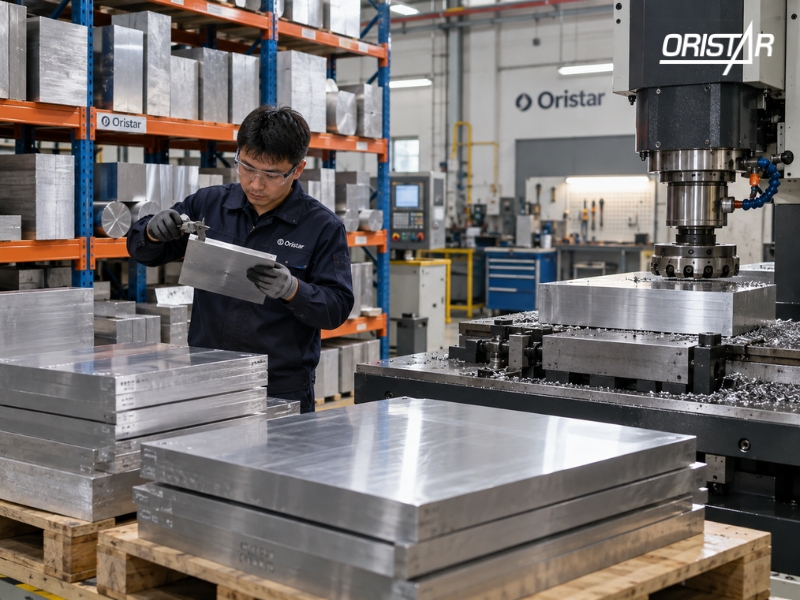
Oristar provides technical aluminum lines such as:
- A2024;
- A6061;
- A7075.
A7075 ứng dụng kết cấu hàng không, với các trạng thái như T6, T651 và T7351. Ngoài các mác có sẵn, Oristar nhận đặt hàng riêng các mác nhôm hàng không như A7050, A7475 hoặc các alloy khác theo:
- specification;
- temper;
- quy cách;
- số lượng;
- yêu cầu chứng từ của khách hàng.
For projects that need to control the origin of materials, customers can request documents such as:
- CO;
- CQ;
- Mill Test/Mill Cert;
- thông tin phục vụ truy xuất lô vật liệu.
Tùy yêu cầu, phôi có thể được:
- cắt theo kích thước;
- chuẩn bị lượng dư phù hợp;
- phay 4–6 mặt;
- kiểm soát độ phẳng và độ vuông;
- chuẩn bị gần kích thước thành phẩm để giảm lượng vật liệu phải bóc.
Kết luận
Nhôm làm sườn cánh máy bay không được lựa chọn chỉ dựa vào việc mác nào có độ bền cao nhất. Rib là một phần của hệ kết cấu truyền tải của cánh, đồng thời nhiều thiết kế còn yêu cầu gia công nguyên khối từ plate hoặc extrusion với lượng vật liệu bóc rất lớn. A7050 đáng chú ý nhờ khả năng cân bằng giữa cường độ, độ dai, khả năng chống nứt do ăn mòn ứng suất và tính phù hợp với các chi tiết có tiết diện lớn. A7475 lại có lợi thế đáng chú ý về độ dai phá hủy và damage tolerance. Ngoài ra, A7040, A7140 hay A7160 cũng có thể xuất hiện tùy specification.
Câu hỏi thường gặp
Phần dưới tập trung vào các truy vấn kỹ thuật thường phát sinh khi tìm kiếm nhôm làm sườn cánh máy bay, giúp làm rõ thêm lựa chọn vật liệu mà không mở rộng sang toàn bộ kết cấu cánh.
Sườn cánh máy bay thường dùng nhôm gì?
Một số mác có thể gặp gồm A7050, A7475, A7040, A7140 và A7160. Mác cụ thể phụ thuộc thiết kế, tải trọng, temper, dạng bán thành phẩm và specification.
A7050 có dùng làm sườn cánh máy bay không?
Có. A7050 được sử dụng trong các kết cấu hàng không chịu tải cao và đã được nghiên cứu trực tiếp trong các ứng dụng wing rib, đặc biệt với chi tiết CNC từ plate hoặc extrusion.
A7050 hay A7475 phù hợp hơn với sườn cánh?
Không có một lựa chọn tốt hơn trong mọi trường hợp. A7050 đáng chú ý với plate dày và sự cân bằng giữa cường độ, độ dai, chống nứt ứng suất; trong khi A7475 nổi bật về damage tolerance và độ dai phá hủy. Lựa chọn cuối cùng phải theo bản vẽ và specification.
Vì sao sườn cánh dễ cong sau khi CNC?
Sườn nguyên khối thường bị bóc một lượng vật liệu rất lớn để tạo các pocket và gân mỏng. Khi vật liệu bị loại bỏ, trạng thái ứng suất dư thay đổi và có thể gây cong hoặc xoắn chi tiết.
Khi đặt nhôm làm sườn cánh cần cung cấp gì?
Tối thiểu nên có mác vật liệu, temper, specification, kích thước, số lượng và yêu cầu chứng từ. Nếu cần chuẩn bị phôi CNC, nên bổ sung bản vẽ, kích thước thành phẩm, lượng dư và yêu cầu độ phẳng.
Oristar - Cung cấp kim loại hàng đầu khu vực Châu Á
- Hotline: 098 875 06 86
- Email: info@oristar.vn
- Zalo OA
- Website E-commerce
- Official Website
Khuyến cáo (Disclaimer): Mọi thông số kỹ thuật và cơ lý tính trong bài viết chỉ mang tính chất tham khảo và có thể thay đổi tùy thuộc vào quy cách, trạng thái vật liệu và nhà sản xuất. Thông số này không thay thế cho các tiêu chuẩn sản xuất chính thức (JIS, ASTM...). Quý khách vui lòng liên hệ Oristar để nhận tư vấn chi tiết và chính xác nhất cho nhu cầu của mình.