 vi
vi
 en
en
 kr
kr
 jp
jp
 cn
cn




What is C1100 copper? Important technical specifications
C1100 copper is ETP (Electrolytic Tough Pitch) refined electrolytic copper, with a minimum copper content of 99.90%. This is one of the red copper grades commonly used in applications requiring high electrical and thermal conductivity. C1100 has an electrical conductivity of about 100% IACS or higher and is used in many industrial, electrical and electronic applications.
Technical criteria | Value/Characteristics | Meaning in production |
Copper content (Cu) | ≥ 99.90% | Ensure uniform physical and mechanical properties, limit impurities that cause interruption of electric current or heat |
Electrical conductivity | ≥ 100% IACS | Transmits high-capacity current, minimizing power loss |
Thermal conductivity | ~386 - 390 W/(m·K) | Rapid heat dissipation for high heat generating device clusters |
Material status | O (Soft), 1/2H (Semi-Hard), H (Hard) | Easily choose between shaping or CNC milling methods |
Why is C1100 copper popular in the semiconductor industry?
In semiconductor devices, copper materials are often chosen for locations that need to transmit current or control heat. C1100 satisfies these two requirements thanks to its high electrical and thermal conductivity, while also having favorable plasticity for stamping, bending and machining.
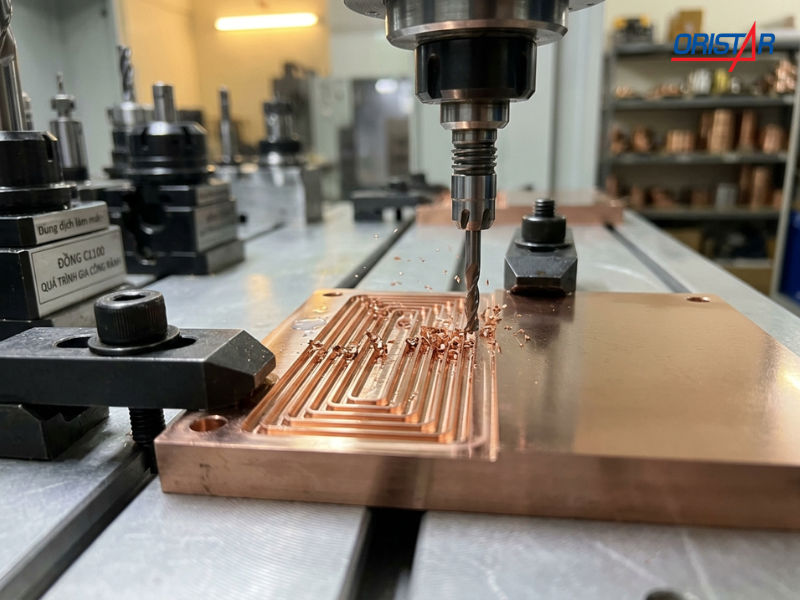
High conductivity for busbars and busbars
C1100 has high conductivity, helping to reduce resistance loss when used as a current path. This is an important characteristic for busbars, busbars and power distribution components in industrial equipment.
For systems requiring large currents, using materials with good conductivity helps limit the amount of energy converted into heat during transmission. C1100 is therefore suitable for conductive parts in semiconductor devices and auxiliary electrical and electronic systems.
Effective heat conduction for heat dissipation components
C1100 copper has a thermal conductivity coefficient of about 390 W/(m·K), significantly higher than aluminum and stainless steel. Depending on the grade of aluminum, the thermal conductivity is usually around 170–237 W/(m·K), while stainless steel has a much lower thermal conductivity.
Therefore, it can be considered that the thermal conductivity of C1100 copper is nearly twice that of aluminum and more than 20 times that of stainless steel in many comparison conditions. This characteristic makes C1100 suitable for parts that need to transfer heat or disperse heat in the device.
Easy to stamp, bend and process according to specifications
C1100 has good ductility, convenient for stamping, bending, cutting and mechanical processing. When selected in the right material state, C1100 blanks can meet many different types of parts without having to switch to higher strength copper alloy grades.
For mass production, choosing the right billet form such as sheet, coil or flat bar also helps reduce further processing steps before entering the line.
Application of C1100 copper in the semiconductor production chain
In the semiconductor production chain, C1100 is more suitable for electrical conduction, heat transfer and connection applications in equipment, especially in the Back-End group and auxiliary systems.
On the contrary, C1100 should not be defaulted to parts working in high-temperature vacuum environments. Since C1100 is an oxygen-containing ETP copper, these applications should consider an oxygen-free copper material such as C1020. Oristar also distinguished C1020 as oxygen-free copper and mentioned the material's potential use in applications requiring limited hydrogen embrittlement.
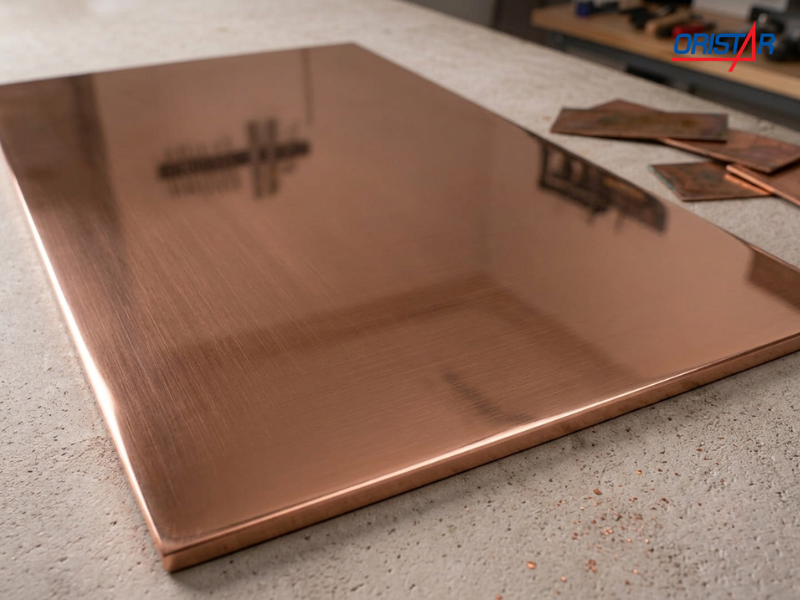
Guide bars and busbars in the device
C1100 can be processed into busbars or busbars to transmit and distribute power in equipment systems.
High electrical conductivity helps the material meet current transmission requirements, while machining and shaping capabilities allow the production of busbars in a variety of sizes.
Power guide in ATE test system
At the Back-End stage, the ATE (Automated Test Equipment) device uses many power supply and electrical connection systems to serve the component testing process.
C1100 can be used for busbars, power distribution components or connection components that require high electrical conductivity. Depending on the equipment design, workpiece specifications and material status, the requirements for current, size and processing method will be selected.
Heat dissipation details in test equipment and packaging
High thermal conductivity makes C1100 suitable for parts that need to transfer heat from the heat generating area to the heatsink or cooling system.
In the Back-End application group, the material can be processed into heat dissipation parts according to the design of the device, especially in locations that require heat transfer and electrical conductivity at the same time.
Conductive details in auxiliary equipment
In addition to the main applications mentioned above, C1100 can also be used for many connection and conduction details in electrical and electronic equipment systems serving semiconductor production.
The choice of C1100 or another copper grade should be based on specific requirements for conductivity, mechanical properties, working environment and processing method.
Compare C1100 copper with other copper brands
In semiconductor device design, choosing the wrong copper grade not only increases the cost of raw materials but can also lead to the risk of stopping the production line. Each copper grade is optimized for very specific operating conditions such as high-temperature vacuum environments, large current transmission areas or locations requiring continuous mechanical elasticity. Putting C1100 copper on the scale to compare with other popular copper grades such as C1020 or C5210 will help engineers determine the correct technical problem and optimize the business's budget.
Criteria | C1100 Copper (ETP) | Copper C1020 (OFC - Oxygen Free) | Phosphor Bronze (C5210 / C5191) |
Outstanding features | 99.90% purity, very good electrical and thermal conductivity | Purity ≥ 99.95%, does not contain Oxygen | Contains Sn and P, very high fatigue strength and elasticity |
Advantage | Good electrical and thermal conductivity; Cost and machinability suitable for many applications | More suitable for environments requiring limited oxygen, high temperature or vacuum | Good elasticity, withstands continuous stretching force |
Disadvantages | More limited than C1020 when welding at temperatures >370ºC in an environment containing Hydrogen | The billet cost is higher than C1100 | Lower conductivity (~11 - 15% IACS) |
Typical applications | Busbar, busbar, conductive parts, some heat dissipation parts | Vacuum equipment, parts require oxygen-free copper | Spring contacts, socket pins, electrical relays |
Parameters need to be clear when ordering C1100 coin
In order for the C1100 copper billet to be brought into the workshop to perfectly meet the processing requirements and operating standards of the semiconductor line, businesses need to clearly agree on the technical specifications right from the ordering stage. Simply labeling the material in general can easily lead to incorrect hardness status, causing cracking when bending or stamping or sticking to chips when CNC milling. Below are 5 technical parameters that must be clarified with the blank supplier:
- Heat treatment state (hardness): Select O (soft) state for details that need deep stamping or bending at small radius corners; Choose state 1/2H or H (hard and semi-hard) for CNC milling to keep the surface nice and flat, without scratches or sticking to the knife.
- Product specifications and forms: Unify the exact form of roll, thin sheet or flat bar, along with standard length, width and thickness to run the machine automatically.
- Thickness and flatness tolerance: Semiconductor heatsink parts require extremely high surface flatness to be absolutely close to the device, avoiding creating air gaps that reduce heat dissipation performance.
- Surface quality: The workpiece surface must be free of deep scratches, oxidation stains or heavy industrial grease to ensure adhesion for subsequent nickel or gold plating stages.
- Standard certification included: Required to have full CO/CQ certificates proving origin and RoHS/REACH certification on toxic substance control in the global electronics supply chain.
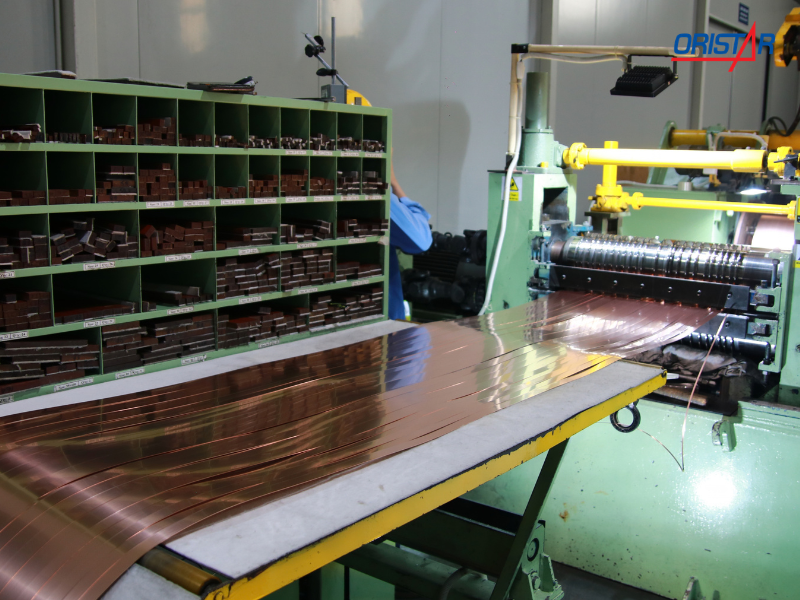
Oristar – Reputable supplier of C1100 copper for the semiconductor industry
Choosing the right C1100 copper billet supplier plays a decisive role in the stability and longevity of the entire semiconductor manufacturing machinery system. As a leading unit in the field of distribution of non-ferrous metals and technical materials in Vietnam, Oristar is proud to bring C1100 copper supply solutions that meet international standards, helping businesses optimize costs and ensure production progress. Outstanding advantages help Oristar become a trusted partner of B2B businesses:
- Transparent origin:C1100 copper billet is imported officially from reputable metallurgical corporations in Japan, Korea and Europe, has full CO/CQ certificates and meets RoHS standards.
- Precision roll slitting service:Modern thin roll slitting machine system produces flat, sharp, burr-free cutting edges, ready for automatic stamping lines.
- Cut the workpiece according to the drawing:Supports cutting plates and flat bars to the required size, helping customers save maximum processing time and minimize wasted workpieces.
- In-depth technical consulting:Oristar's team of engineers are always ready to review drawings to advise on the exact copper grade, heat treatment state and tolerances that best suit the project budget.
Are you looking for a source of C1100 copper ingot that meets technical standards for your semiconductor or auxiliary processing project?
Contact Oristar's engineering team immediately to receive advice on optimal material solutions, view workpiece samples and receive the most competitive quote according to drawing tolerances.
Oristar - Leading metal supplier in Asia
Disclaimer:All technical and mechanical specifications in the article are for reference only and may change depending on specifications, material status and manufacturer. This specification is not a substitute for official production standards (JIS, ASTM...). Please contact Oristar to receive the most detailed and accurate advice for your needs.