 vi
vi
 en
en
 kr
kr
 jp
jp
 cn
cn




Which brass group do C2680 and C2600 belong to?
C2680 and C2600 both belong to the brass group, in which copper and zinc are the two main components. According to JIS H3100, both marks are used for sheet, foil and strip products, meeting many shaping needs in industrial production. Different Cu-Zn composition creates differences in material properties, thereby affecting the stamping, bending and shaping capabilities of each mark. The addition of zinc significantly changes the properties of copper compared to pure copper, especially in strength, hardness, machinability and formability.
In manufacturing, brass is used for many types of parts such as stamped components, connectors, accessories, mechanical parts and products that need to be shaped from sheet or roll materials.
Although they belong to the same brass group, C2680 and C2600 can be selected for different machining requirements. Therefore, when ordering materials, businesses should not just write "brass" but need to clearly identify the grade, thickness, width, material status and processing method.
This is also important information for the supplier to check properly before quoting a price.
Compare C2680 and C2600 in terms of material properties
The difference between the two grades needs to be seen in the relationship between material composition, formability and part requirements. The table below helps businesses have an overview before delving into each usage option:
Criteria | C2680 | C2600 |
Material group | Brass | Brass |
Main ingredients | Cu 64.0–68.0%, remaining Zn | Cu 68.5–71.5%, remaining Zn |
Shaping ability | Good, suitable for many types of shaping processing | Good, especially used for details that need shaping |
Stamping ability | Can be used for stamping parts depending on the state | Can be used for stamping and shaping depending on the state |
Material status | O, 1/4H, 1/2H, H, EH and other states according to specifications | Need to determine according to shaping requirements and product characteristics |
Mechanical properties | Can balance between durability and formability depending on the state | Prioritize deformability when choosing the right state |
Appropriate needs | In normal stamping/bending, the part needs to keep its shape and meet its mechanical properties | Deep stamping, complex shaping, large degree of deformation |
Factors to check | Mark, state, thickness, bending radius, stamping method | Mark, condition, thickness, stamping depth, shaping method |
Note:The above table should not be used to conclude which brand always has better stamping ability. Actual properties also depend on the material state, thickness, stamping method, bending radius and degree of deformation of the part.
Why is C2600 suitable for deep drawing stamping?
C2600 70/30 has a higher copper content than C2680 and is often chosen in applications requiring high formability. Technical documents about C2600 also describe this material as having good cold forming capabilities, including deep drawing stamping.
Deep drawing creates a significant degree of deformation in the workpiece. During this process, the material must continuously move and deform to form the depth of the part without cracking or serious forming defects. Therefore, materials for deep drawing need to be evaluated differently from materials that only perform simple bending or shaping steps.
C2600 is often considered for parts with high shaping requirements thanks to its deformation ability suitable for this group of applications. However, it should not be understood that just choosing C2600 can satisfy all types of deep stamping. Workpiece thickness, material condition, drawing ratio, die radius, punch and die design and number of punches all affect the result.
For details with complex shapes, businesses should determine shaping requirements right from the design stage. At that time, the choice of C2600 with suitable status and thickness will have a clearer technical basis.
What stamping and bending needs is C2680 suitable for?
C2680 65/35 is a brass grade commonly used in plate, sheet and strip products, especially when the manufacturing process requires stamping, bending or forming to a normal degree. Compared to just focusing on maximum deformability, C2680 is often considered when businesses need a balance between formability and mechanical properties of the part.
In production, the C2680 can be chosen for:
- Stamping details have a relatively simple shape.
- Bending and shaping details from plates, sheets or strips.
- Metal accessories need shaping.
- Mechanical components and details.
- Some electrical and electronic parts are designed from brass strips or plates.
The point to note is that C2680 has many material states. With the O state, the material has a higher elongation than the stiffer states; When switching to 1/4H, 1/2H, H or EH, the strength increases but the deformation capacity decreases. JIS H3100 clearly demonstrates this change through the requirements for tensile strength and elongation for each state.
Therefore, if a C2680 part needs more bending or stamping, businesses should not just request “C2680” but need to determine the material state corresponding to the production process.
How does material state affect the formability of C2680?
This is a factor that needs to be emphasized when choosing C2680 for production. The same material grade but different states can give very different deformation capabilities.
C2680 status | Feature orientation | Shaping ability | Needs are often considered |
O | Soft, high flexibility | High | Stamping, bending and shaping require large deformations |
1/4H | Harder than O | Still capable of shaping | Stamping/bending requires more balance |
1/2H | Hardness and durability increase | Lower soft state | Details need to balance shape and stability |
H | Harder | More limited when deformation is large | Details prioritize mechanical properties |
EH | High hardness and durability | Large deformations are not preferred | Details need higher mechanical properties |
The table above should be used for guidance only. The specific physical and mechanical value also depends on product thickness and specifications. According to JIS H3100, C2680 in the O state has a minimum tensile strength of 275 MPa and a minimum elongation of 35–40% depending on thickness; When moving to harder states, the strength increases and the elongation limit decreases.
This explains why the C2680's stamping ability cannot be evaluated solely by its name. If the part requires large deformation, the O state or softer state may be considered; If the product requires higher shape retention and mechanical properties after machining, a harder state may be more suitable.
C2680 and C2600 in stamping process
Stamping is a processing method commonly used with brass in sheets, foils and rolls, especially in the production of uniformly shaped parts in large quantities. During this process, the workpiece is deformed under the impact of the punch and die, so the material properties have a direct impact on the shaping ability and quality of the product after stamping.
- C2680 is used for many products that need to be stamped and shaped from brass. When the design has a moderate degree of deformation, choosing the correct thickness and material condition helps the workpiece respond better to the mold shape. For parts with large deformation areas or complex shapes, it is necessary to carefully evaluate the deformability of the workpiece before putting it into mass production.
- C2600 is also used in stamping and forming products, especially when part requirements require a balance between formability and mechanical properties of the material. Depending on the status, C2600 can be selected for bending, stamping and forming processes with different degrees of deformation.
In fact, it should not be concluded that C2680 or C2600 is always more suitable for all forms of stamping. Stamping capacity is also influenced by workpiece thickness, material condition, corner radius, stamping depth, degree of deformation and die design. If the selected workpiece does not suit the shaping requirements, the product may have problems such as cracking, wrinkles, deformation, or difficulty controlling the size.
Therefore, with mass stamping products, businesses should determine in advance the detailed shape and shaping process so that the supplier has a basis to propose appropriate marks, status and material specifications.
Bending and shaping capabilities determine material selection
Bending and forming often place higher requirements on the deformability of the material, especially for parts with small bending radii or that require multiple shaping times. The same type of brass but if the material state is different, the response during bending can also change significantly.
Before choosing C2680 or C2600, businesses should clearly determine the parameters related to the shaping process:
- Material thickness:Affects the forming force, bending radius and deformability of the workpiece.
- Bending angle:The larger the bending angle, the more carefully the material's deformability requirements need to be considered.
- Bending radius:Small radius creates a larger degree of deformation in the bending zone, so it is necessary to choose the appropriate material and condition.
- Bending direction compared to rolling direction:For some products, the rolling direction and bending direction can affect the formability and quality of the bending area.
- Number of bending or shaping times:Products that go through many shaping steps need to be evaluated differently than parts that only undergo one bending process.
- Bonded requirements:Parts that require a uniform surface, no cracks or no defects after forming require strict control of both materials and processing processes.
In particular, if the part has a small bending radius or a large degree of deformation, the material state needs to be determined from the beginning. A workpiece with higher hardness does not always mean it is suitable for shaping, because the deformability of the material needs to be balanced with the geometric requirements of the product. On the contrary, if too soft a state is chosen for a part that needs to maintain its shape and mechanical properties after machining, the product may not meet design requirements. Therefore, material selection needs to be based on the relationship between brass grade - condition - billet specifications - shaping method.
Common applications of C2680 and C2600
C2680 and C2600 are used in the same group of brass products that need stamping, bending and shaping, but the application orientation is different. C2680 is suitable for many common stamping/bending needs and is a preferred grade when the market needs materials with a balance between shaping and mechanical properties. C2600 is more prominent in high shaping requirements, especially deep drawing stamping.
C2680 in industrial production
C2680 in sheet, foil or strip form can be used for many groups of parts that need to be stamped and formed. Depending on status and specifications, materials can meet the following needs:
- Stamping and bending details.
- Metal accessories.
- Mechanical components.
- Details formed from sheets or strips.
- Some electrical and electronic components.
For products produced in large quantities, C2680 needs to be determined simultaneously in terms of brand, condition, thickness and width. If the part has multiple stamping steps or requires large deformations, it is necessary to evaluate the material along with the mold design instead of relying solely on the nameplate.
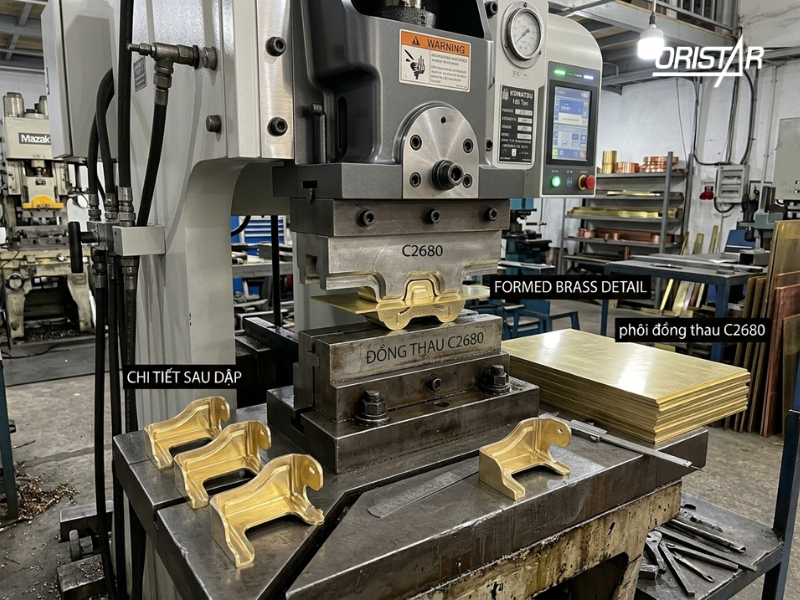
C2600 for details requiring high shaping
C2600 is often chosen for products that require higher shaping capabilities, including deep drawing details. The good cold formability of C2600 is one of the reasons this material is used in products where significant deformation is required.
Some product groups that can consider the C2600 include:
- Claw embossed details.
- Electrical and electronic components.
- Bending and shaping details.
- Connectors, accessories.
- Brass products need to be deformed through many stages.
With C2600, the selection of condition and thickness still needs to be done according to the requirements of each detail. The high formability of the mark should not be considered the sole basis for ignoring the elements of the die and stamping process.
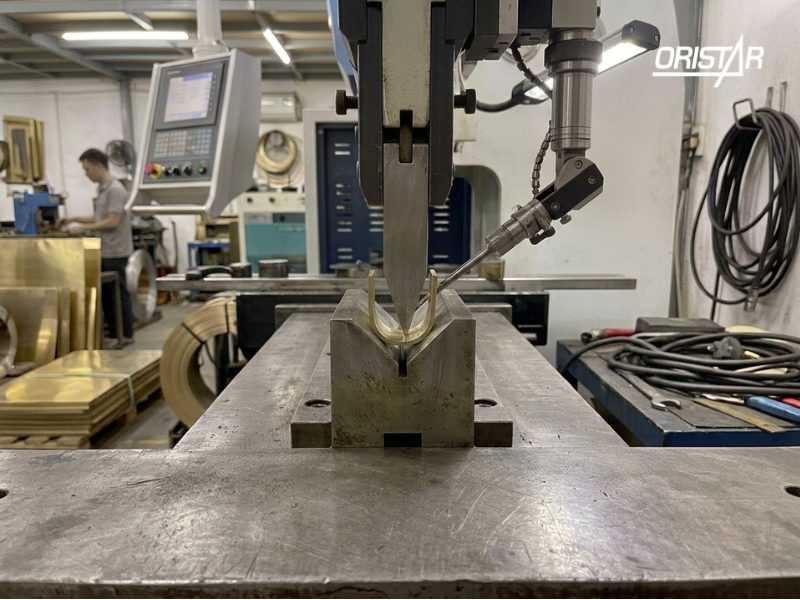
Choose C2680 or C2600 according to production requirements
The question C2680 or C2600 does not have a fixed answer for all products. Both grades can be used in stamping, bending and forming parts, but selection criteria will vary according to the specific requirements of each design. Instead of simply comparing two grades according to one characteristic such as hardness or formability, businesses should determine which characteristic needs to be prioritized throughout the entire production process.
Demand | Marx should be given priority consideration | Reason |
Regular stamping | C2680 | Balance between formability and mechanical properties |
Bending and shaping normally | C2680 | Suitable for many shaping needs from sheets, leaves, and strips |
Multi-step stamping | C2680 or C2600 | It is necessary to evaluate according to the degree of deformation and condition |
Deep claw stamping | C2600 | Outstanding in shaping ability, suitable for large deformation requirements |
Large distortion details | C2600 | Prioritize high shaping ability |
With popular market needs such as stamping, bending and regular shaping, C2680 is the choice that should be given priority consideration. C2600 should be brought up before the design moves into a group of parts that have a high degree of deformation or require deep drawing.
If the business already has drawings, it should provide thickness, bending radius, stamping depth, detailed shape, material state and shaping method. This information helps choose materials that are closer to production conditions than just comparing labels.
Parameters to confirm before ordering C2680 or C2600
Đối với đồng thau dùng cho dập, uốn và tạo hình, xác định đúng C2680 hoặc C2600 mới chỉ là bước đầu. Nhà cung cấp cần nhiều thông tin hơn để xác định đúng loại vật liệu, quy cách và phương án cung ứng. Nếu đơn hàng chỉ ghi tên mác nhưng thiếu kích thước, trạng thái hoặc yêu cầu gia công, nguy cơ lựa chọn đúng vật liệu nhưng không đúng điều kiện sử dụng vẫn có thể xảy ra. Doanh nghiệp nên chuẩn bị các thông tin sau trước khi yêu cầu báo giá:
- Material grade and status:Clearly identify C2680 or C2600 in the same material state according to drawings, standards or technical requirements. This is important information because the condition can affect the stamping, bending and properties of the workpiece during machining.
- Product form:Determine whether the material needs to be supplied in the form of sheets, sheets or rolls. With a continuous stamping line, roll form and roll specifications need to be determined in accordance with the equipment; while the machined parts of each workpiece can use sheet or foil materials.
- Thickness and width:These are two parameters that need to be determined accurately to check the ability to put materials into molds and equipment. If the product requires a separate blank size, the business should provide both the blank size and the finished product size.
- Yêu cầu tạo hình: Nếu vật liệu được dùng để dập hoặc uốn, nên cung cấp thông tin về bán kính uốn, góc uốn, độ sâu dập, số lần tạo hình và mức độ biến dạng. Những thông tin này giúp đánh giá vật liệu sát với điều kiện gia công thực tế hơn.
- Tolerances and surface requirements: Với các sản phẩm yêu cầu độ chính xác cao hoặc ngoại quan đồng đều, dung sai chiều dày, khổ rộng và yêu cầu về bề mặt cần được thống nhất từ đầu. Điều này đặc biệt quan trọng với các chi tiết được đưa trực tiếp vào khuôn hoặc sử dụng cho sản phẩm có yêu cầu ngoại quan.
- Số lượng và tiến độ giao hàng: Khối lượng cần mua và lịch giao hàng giúp nhà cung cấp kiểm tra khả năng đáp ứng, quy cách tồn kho và phương án cung ứng cho từng đơn hàng.
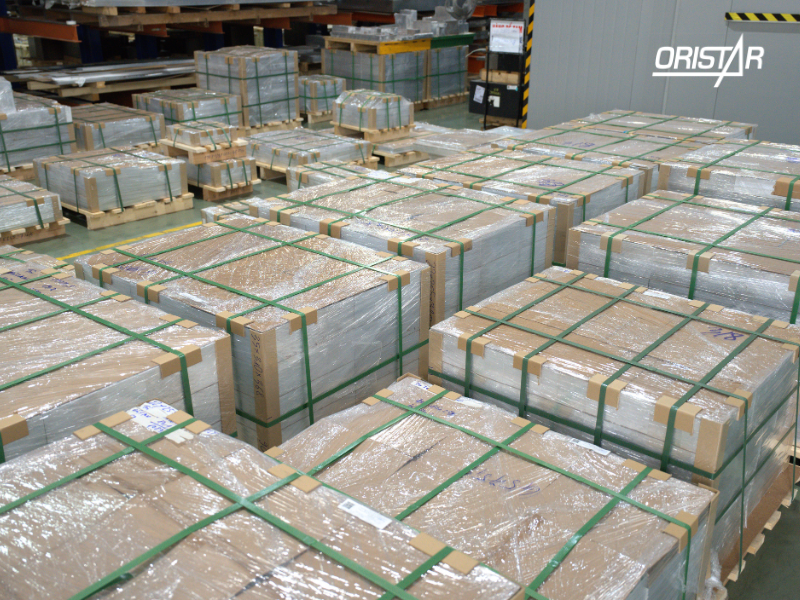
Việc chuẩn bị đầy đủ các thông tin trên giúp quá trình kiểm tra vật liệu, báo giá và chuẩn bị hàng diễn ra thuận lợi hơn. Quan trọng hơn, doanh nghiệp có thể hạn chế tình trạng vật liệu đúng mác nhưng không đáp ứng được yêu cầu của khuôn, thiết bị hoặc quy trình sản xuất.
What factors does the price of C2680 and C2600 depend on?
Giá C2680 và C2600 không chỉ được xác định bởi tên mác vật liệu. Trong thực tế, cùng một mác đồng thau nhưng khác dạng sản phẩm, độ dày, khổ rộng, trạng thái hoặc số lượng đặt hàng có thể có mức giá khác nhau. Nếu vật liệu cần xử lý thêm trước khi giao, chi phí cũng cần được tính theo phương án cung ứng cụ thể.
Trong đó, mác, trạng thái và quy cách là những thông tin cần xác định đầu tiên khi yêu cầu báo giá. Doanh nghiệp không nên chỉ gửi yêu cầu “báo giá C2680” hoặc “báo giá C2600” nếu chưa xác định rõ sản phẩm cần mua là tấm, lá hay cuộn và có quy cách như thế nào.
Chi phí cũng có thể thay đổi khi vật liệu cần xẻ cuộn hoặc cắt theo kích thước riêng. Với những đơn hàng yêu cầu dung sai chặt, quy cách đặc biệt hoặc xử lý thêm trước khi giao, nhà cung cấp cần kiểm tra khả năng đáp ứng và phương án gia công trước khi xác định giá.
Khối lượng đơn hàng cũng là thông tin quan trọng. Đối với nhu cầu sản xuất số lượng lớn, việc cung cấp trước mác, trạng thái, quy cách, khối lượng dự kiến và lịch giao hàng giúp nhà cung cấp có cơ sở kiểm tra nguồn hàng và xây dựng phương án cung ứng phù hợp hơn.
Vì vậy, để nhận được báo giá sát với nhu cầu thực tế, doanh nghiệp nên gửi đầy đủ mác vật liệu + trạng thái + dạng sản phẩm + kích thước + số lượng + yêu cầu gia công thay vì chỉ yêu cầu báo giá theo tên mác.
Oristar cung cấp C2680 và C2600 theo quy cách sản xuất
Oristar cung cấp các sản phẩm đồng và hợp kim đồng phục vụ nhu cầu sản xuất công nghiệp, gia công cơ khí và chế tạo linh kiện. Với C2680 và C2600, doanh nghiệp có thể xác định vật liệu theo mác, dạng sản phẩm, kích thước và yêu cầu kỹ thuật của từng đơn hàng.
Đối với các sản phẩm cần dập, uốn hoặc tạo hình, thông tin về mác vật liệu, độ dày, khổ rộng, trạng thái và phương pháp gia công là cơ sở để kiểm tra quy cách trước khi báo giá. Khi doanh nghiệp đã có bản vẽ hoặc thông số kỹ thuật của chi tiết, việc trao đổi về vật liệu sẽ cụ thể hơn thay vì chỉ lựa chọn dựa trên tên mác.
Với đơn hàng sản xuất hàng loạt, doanh nghiệp cũng nên xác định trước yêu cầu về quy cách, dung sai, số lượng và tiến độ giao hàng. Đây là những thông tin cần thiết để kiểm tra khả năng cung ứng và lựa chọn phương án vật liệu phù hợp với quy trình sản xuất.
Nếu doanh nghiệp đang phân vân C2680 hay C2600, có thể cung cấp bản vẽ, quy cách phôi và yêu cầu gia công của chi tiết để Oristar có cơ sở trao đổi về mác, trạng thái và quy cách vật liệu phù hợp.
Thông tin liên hệ:
Khuyến cáo (Disclaimer): Mọi thông số kỹ thuật và cơ lý tính trong bài viết chỉ mang tính chất tham khảo và có thể thay đổi tùy thuộc vào quy cách, trạng thái vật liệu và nhà sản xuất. Thông số này không thay thế cho các tiêu chuẩn sản xuất chính thức (JIS, ASTM...). Quý khách vui lòng liên hệ Oristar để nhận tư vấn chi tiết và chính xác nhất cho nhu cầu của mình.