 vi
vi
 en
en
 kr
kr
 jp
jp
 cn
cn




Which material group does A6061 and A2017 belong to?
A6061 and A2017 are both aluminum alloy grades used in the field of mechanical engineering and detail manufacturing. Although they have the same aluminum base, different alloy compositions create differences in properties and scope of application.
- A6061 is an aluminum alloy whose main components include aluminum, magnesium and silicon. This material grade is widely used thanks to the balance between durability, machinability, formability and corrosion resistance.
- A2017 belongs to the group of aluminum alloys that have copper as the main alloying element. The material is used in applications that require durability and good mechanical machinability, especially when the product is created by cutting and machining methods.
The difference in ingredients makes the two labels have different usage orientations. A6061 is often considered when a balance between many factors is needed, while A2017 may be prioritized in parts that place a heavy emphasis on durability and mechanical processing. When choosing, businesses should first determine:
- Aluminum grade required.
- Size and material thickness.
- Machining method.
- Requirements for durability of details.
- The level of shaping that needs to be done.
- Working environment.
- Material status and applicable standards.
Compare A6061 and A2017 in terms of composition and properties
Two grades can be used for the same mechanical parts, but the difference in alloy composition leads to different priorities when choosing.
Criteria | A6061 | A2017 |
Material group | Al-Mg-Si aluminum alloy | Al-Cu aluminum alloy |
Main alloying element | Magnesium (Mg), Silicon (Si) | Copper (Cu) |
Durability | Good, balanced with machinability | Good, suitable for details requiring durability |
Machining and cutting | Good | Good |
Shaping ability | Relatively good, depending on status | Lower than A6061 in many cases |
Corrosion resistance | Good | Lower than A6061 |
Welding ability | Relatively good | More difficult, need to consider welding method |
Directions for use | Mechanical, structural, machined parts and many industrial applications | Mechanical details and components require durability and precision machining |
When choosing | There needs to be a balance between processing, durability and the usage environment | Prioritize durability and cutting machining |
- Note: Actual properties of A6061 and A2017 also depend on material state, such as T6, T4 or other states, as well as dimensions and machining conditions. Therefore, two marks should not be compared solely based on the material name and ignoring the supply status.
Differences in machining capabilities of A6061 and A2017
Processing is one of the most important factors when businesses consider between A6061 and A2017. They are both aluminum alloys, but the two grades' ability to meet each cutting, shaping or bonding method is different.
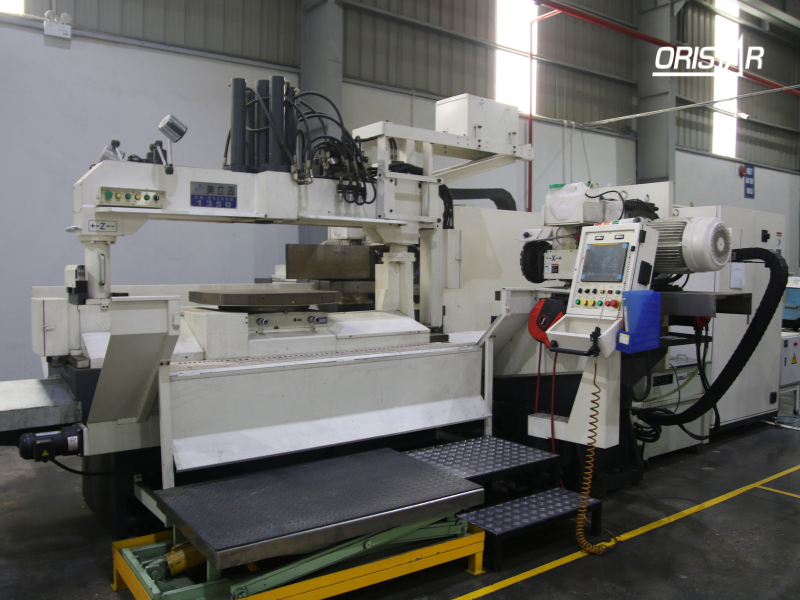
A6061 in mechanical processing
A6061 has relatively good machinability and is commonly used for many types of mechanical parts. Materials can be cut, milled, turned, drilled and other processing operations are performed depending on the state.
A notable advantage of the A6061 is its ability to balance machining and subsequent usage requirements. For parts that require both precision machining and working in environments with humidity or risk of corrosion, A6061 is often a choice worth considering.
A2017 for cutting and machining
A2017 also has good machining and cutting capabilities and is suitable for mechanical parts that need precise machining. The material's properties allow the creation of many complex parts by turning, milling, drilling or similar machining methods.
However, when using A2017, businesses need to pay more attention to the product's working environment. The material's corrosion resistance is not as prominent an advantage as A6061, so design, surface treatment or usage conditions need to be considered simultaneously.
How do durability requirements determine the choice?
Durability is one of the reasons the A2017 is chosen among many mechanical components. However, “higher durability” does not mean that A2017 is always more suitable than A6061.
In practice, the machined part may simultaneously require strength, corrosion resistance, low weight, and machinability. At that time, businesses need to balance characteristics instead of prioritizing only one criterion.
A2017 can be considered when the part needs high durability and is mainly processed by cutting method. This is a suitable choice for products where load-bearing properties are one of the important requirements.
A6061 has the advantage of a balance between durability, machinability and corrosion resistance. Therefore, if the product does not require a very high level of resistance but must work in diverse environmental conditions, A6061 may provide a more suitable usage option.
More importantly, durability cannot be evaluated separately from the state of the material. The same aluminum grade but A6061 in different states can have significantly different properties. When ordering materials for production, businesses need to clearly determine the status according to drawing requirements or applicable standards.
Formability and corrosion resistance need to be considered
If the product not only requires cutting, but also requires bending, shaping or working in the environment, the difference between A6061 and A2017 needs even more attention.
A6061 has relatively good shaping ability, especially when choosing the appropriate material state for the processing method. This helps the material be considered for products that require a combination of shaping and mechanical processing.
A2017 favors cutting and machining applications that require durability. For products that need to be deformed or shaped, it is necessary to carefully evaluate the material condition and degree of deformation before choosing.
In terms of corrosion resistance, A6061 generally has an advantage over A2017. This becomes important when parts have to work in humid environments, outdoors or are at risk of exposure to corrosive agents.
However, material selection must still be based on the specific environment. If the product works in severe corrosive conditions, businesses need to consider surface treatment options, detailed designs and material protection requirements instead of just changing the aluminum grade.
Is A6061 or A2017 suitable for each production need?
Instead of determining a "better" grade in every case, businesses should compare the material's characteristics with the actual product requirements.
Production needs | A6061 | A2017 |
Milling, turning, drilling | Fit | Fit |
Details require high durability | Can be selected depending on status | More suitable in many cases |
Details need corrosion resistance | Fit | The environment needs to be carefully considered |
Needs bending and shaping | Can be selected by status | Need to evaluate carefully |
Precise mechanical details | Fit | Fit |
Work outdoors | Has more advantage in anti-corrosion | Appropriate protection solutions are needed |
Need to balance many requirements | Fit | Priority should be given to durability and machining requirements |
The above table is for guidance only. For parts that require high durability or tolerance, the selection should be based on the material status and specific specifications instead of just the mark.
Common applications of A6061 and A2017
The difference in properties means that two aluminum grades can be used for different product groups.
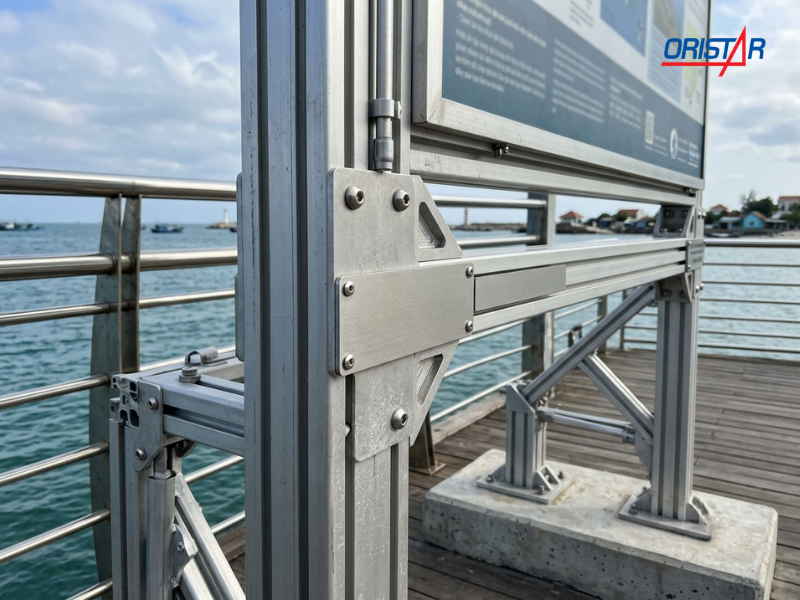
A6061 in mechanical and structural details
A6061 has a relatively wide range of applications thanks to its ability to balance durability, machinability and corrosion resistance. The material can be used in mechanical details, components, structures and products that need to be processed to specific dimensions.
For CNC machining businesses, A6061 is also a worthy choice when creating parts with complex shapes but still must meet durability and environmental requirements.
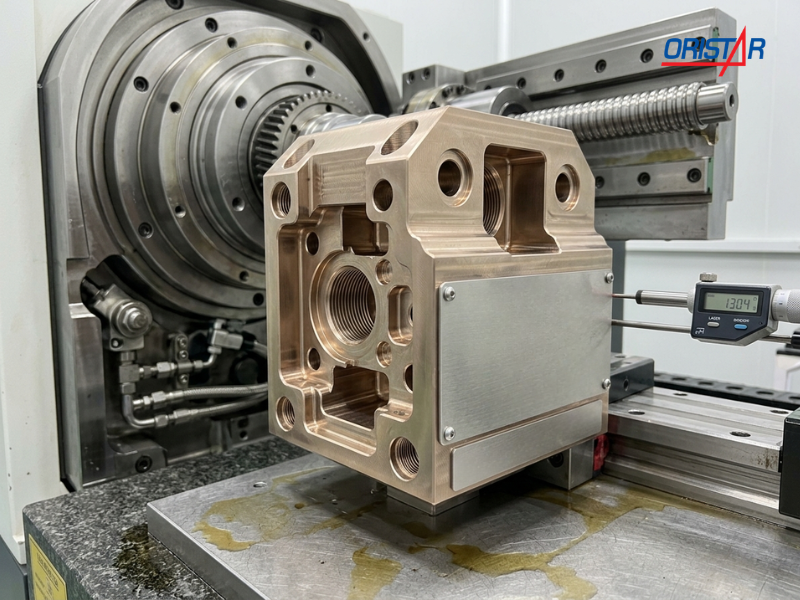
A2017 in precision machining details
A2017 is often considered for mechanical parts that require durability and machinability. The material can be used in components and machine parts that need to be shaped by turning, milling or drilling.
When using A2017, special attention should be paid to the working environment of the part and surface protection plan if the product is at risk of corrosion.
Information to determine before ordering A6061 or A2017
One of the reasons why businesses choose the wrong material is that they only send the label name without fully defining the specifications. With A6061 and A2017, status and dimensional information can directly impact the ability to meet production requirements.
Before requesting a quote, you should determine the aluminum grade, material condition, workpiece thickness or size, tolerance and quantity. If the product is CNC machined, detailed drawings will help the supplier better understand size and material requirements.
Processing methods also need to be informed. A workpiece intended for CNC milling may have completely different requirements than the material to be bent, stamped or shaped. If the part must work outdoors, in a humid environment or at risk of corrosion, information about the usage environment should also be included in the requirements from the beginning.
In particular, if the drawing specifies a status such as A6061-T6 or A2017-T4, businesses should set the correct status instead of just writing "A6061" or "A2017". This is important information to avoid discrepancies between requested and actual materials.
What factors does the price of A6061 and A2017 depend on?
Material prices not only depend on the brand name but also on the status, specifications, size and quantity of each order.
With A6061 and A2017, material grade and supply status are two pieces of information that need to be determined first. Next is the thickness, plate or bar size, tolerance and volume to buy.
If a business needs materials cut to size or processed to specifications, costs may vary depending on the processing plan. For large quantity orders, accurately determining the size and volume from the beginning also helps the supplier calculate a more suitable supply plan.
In addition, aluminum prices may fluctuate depending on the raw material market, exchange rates and logistics costs. Therefore, the reference price at one point in time should not be considered a fixed price for subsequent orders.
Oristar supplies A6061 and A2017 aluminum for production needs
Oristar provides aluminum and aluminum alloy products to serve the needs of production, mechanical processing and detailed fabrication. With marks such as A6061 and A2017, businesses can request specific materials, sizes, status and specifications depending on their needs.
To identify the right product, Oristar can rely on information such as aluminum grade, material status, thickness, size, tolerance, quantity and processing method. If a business is not sure whether to choose A6061 or A2017, providing drawings or technical requirements of the details will help the consulting process be more grounded.
For orders for CNC machining, businesses should send in advance the workpiece size, material requirements and status to be used. Oristar can check the specifications to suit your needs before quoting a price.
Contact information:
Disclaimer:All technical and mechanical specifications in the article are for reference only and may change depending on specifications, material status and manufacturer. This parameter is not a substitute for official production standards (JIS, ASTM...). Please contact Oristar to receive the most detailed and accurate advice for your needs.