 vi
vi
 en
en
 kr
kr
 jp
jp
 cn
cn




What material is SUS316?
SUS316 belongs to the Austenitic stainless steel group, in the 300 series. The typical alloy composition of SUS316 includes chromium (Cr), nickel (Ni) and molybdenum (Mo). Among them, Mo is one of the elements that helps improve the corrosion resistance of materials in environments containing chloride.
Compared to SUS304, SUS316 is often chosen when equipment must work in environments with higher corrosion resistance requirements. This is also the reason why SUS316 appears in many fields such as chemical, medical, marine and industrial applications with harsh working conditions.
For the semiconductor industry, the value of materials lies not only in their ability to resist corrosion. Surface cleanliness, dimensional stability and the ability to meet machining requirements also need to be considered for each equipment assembly.
Why is SUS316 used in the semiconductor industry?
The semiconductor manufacturing process involves many mechanical systems, vacuum equipment, gas systems and auxiliary assemblies. Materials used in these systems need to limit the risk of generating substances that affect the production environment.
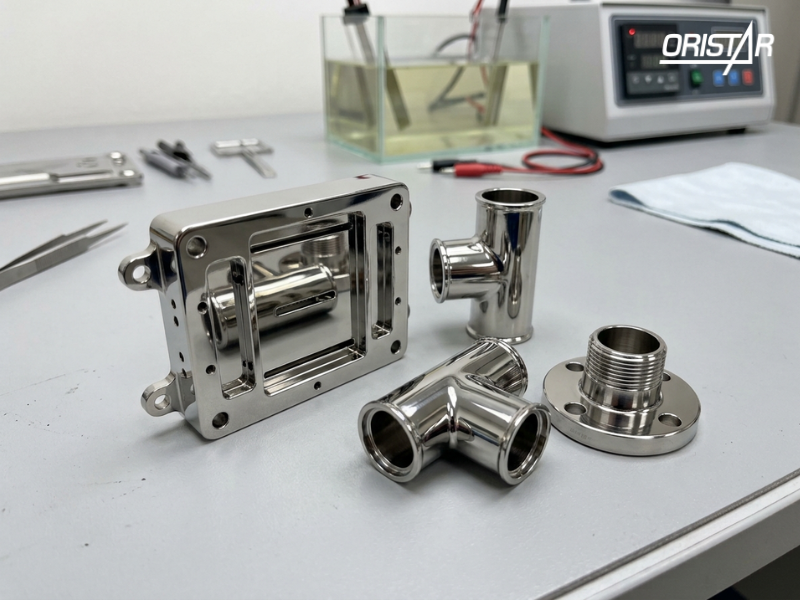
Gas distribution systems typically use 316L stainless steel, where purity and material handling requirements are strictly controlled.
With SUS316, some of the characteristics that make this steel grade of interest in the industry include:
- Corrosion resistance:The Mo content helps SUS316 have better corrosion resistance than SUS304 in many environments containing chloride.
- Material stability:Suitable for many industrial equipment clusters that require stable materials during operation.
- Machining ability:SUS316 can be processed by cutting, shaping and mechanical processing methods in accordance with detailed requirements.
- Ability to meet environmental cleanliness requirements:316L variants are used in many semiconductor systems that require high cleanliness and surface control.
Application of SUS316 in semiconductor industry
SUS316 and especially SUS316L can be considered for many equipment assemblies serving semiconductor manufacturing. However, the specific steel grade and treatment level need to be determined according to the requirements of each system.
Equipment systems and structures in corrosive environments
Some semiconductor manufacturing equipment may be exposed to chemicals, moisture or corrosive environments. In these cases, corrosion resistance is one of the important criteria when choosing materials.
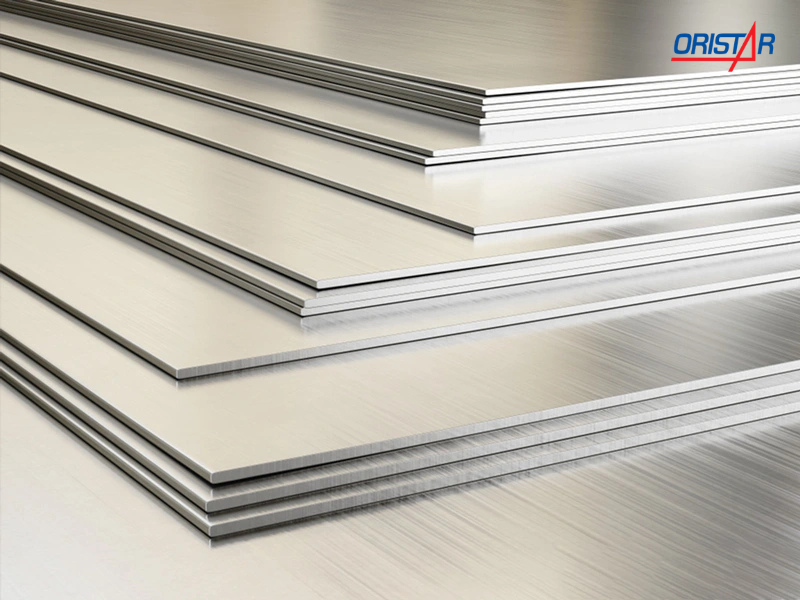
Oristar currently lists SUS316L in the stainless steel group serving industrial applications that require corrosion resistance, and also offers material forms such as stainless steel coils for production processing.
Gas systems and related equipment
In semiconductor manufacturing, gas distribution systems have high requirements for impurity control. Research documents on stainless steel corrosion in this industry show that 316L after electrochemical treatment is commonly used in gas pipelines and some components of the gas distribution system.
With UHP systems, the material should not only be specified at “SUS316”. Actual requirements may include 316L, purity grade, surface treatment and cleaning procedure corresponding to the system design.
Precision mechanical equipment and details
In addition to systems exposed to the technological environment, stainless steel is also used in many details, fixtures and equipment assemblies for semiconductor production.
Oristar currently aims to provide materials and processing services for the semiconductor industry, in which metal materials are used for equipment, components and precision mechanical systems.
How are SUS316 and SUS316L different when used in the semiconductor industry?
SUS316 and SUS316L belong to the same 316 stainless steel series but have differences in carbon content. SUS316L is the lower carbon version and is often chosen for applications that require welding or high hygiene requirements. Oristar also describes SUS316L in this direction in its stainless steel catalog.
Criteria | SUS316 | SUS316L |
Material group | Austenitic | Austenitic |
Characteristic ingredients | Cr-Ni-Mo | Cr-Ni-Mo, lower carbon |
Corrosion resistance | High | High |
Welding ability | Suitable according to processing conditions | Usually preferred when welding is required |
Semiconductor applications | Need to determine according to equipment requirements | Used in many systems with high requirements for cleanliness and surface treatment |
Material selection | According to drawings and working conditions | According to drawings, welding conditions and cleanliness requirements |
The important point is not to assume that SUS316 and SUS316L are interchangeable in every detail. For semiconductor devices, the technical requirements of each assembly can directly determine the type of material and level of processing that needs to be used.
Requirements to consider when choosing SUS316 for the semiconductor industry
For materials for semiconductor production, fixing the correct steel grade is the first step. Businesses should determine full information before placing an order to avoid cases where the material has the correct label but does not meet production specifications.
Steel grades and material standards
First, it is necessary to clearly identify SUS316 or SUS316L, the applicable standard and additional requirements in drawings or technical documents.
If the material used in the system has special requirements for cleanliness, it is not recommended to simply write "stainless steel 316" but need to accurately determine the material grade and accompanying treatment requirements.
Specification and condition of materials
Thickness, width, length, sheet/bar form and material condition can all influence the processing option.
Determining the correct material specifications (plate or bar) and the appropriate material status (smooth surface, suitable hardness) is the decisive factor for Oristar to advise on the most optimal cutting, retail processing and blank supply options, helping businesses save excess amounts and production time.
Surface and machining requirements
For parts used in systems that require high cleanliness, the material surface needs to be considered along with the machining and cleaning process.
In ultra-clean gas systems of the semiconductor industry, technical documents note the use of 316L after electrochemical treatment to achieve a highly smooth surface and limit the ability to retain impurities.
Therefore, when ordering SUS316/SUS316L for the semiconductor industry, businesses should clearly determine the final surface requirements of the part, instead of just fixing the steel grade.
Is SUS316 suitable for all applications in the semiconductor industry?
In the semiconductor industry, each device cluster has different working conditions. A typical structural part will have different requirements than an ultra-clean gas pipe, a vacuum chamber, or a part in direct contact with chemicals. Therefore, material selection should be based on at least four groups of information:
Information group | Content needs to be determined |
Working environment | Gases, chemicals, humidity, temperature and exposure |
Material requirements | Steel grades, standards, status |
Surface requirements | Smoothness, surface treatment, cleanliness |
Production requirements | Thickness, gauge, tolerance, workpiece shape and processing method |
This approach helps businesses avoid choosing materials based solely on the brand name and ignoring the actual requirements of the device.
Oristar provides SUS316 and stainless steel for industrial production
Oristar currently provides stainless steel grades to serve many industries, including SUS316/SUS316L, along with grades such as SUS301, SUS304, SUS420J2 and SUS430 depending on the product category. Oristar also identifies semiconductors as one of the high-tech industries that the business is targeting.
For businesses that need materials for semiconductor production, Oristar can support from determining steel grades, billet specifications to processing plans as required.
Needs that can be discussed with Oristar include:
- SUS316 or SUS316L according to technical requirements.
- Stainless steel plates, bars and suitable supply forms.
- Cut material to required size.
- Processing according to drawings and technical requirements for appropriate details.
Oristar currently has cutting services for popular stainless steel grades such as SUS304, SUS316 and SUS420, and also supports choosing cutting methods according to steel type, thickness and technical requirements.
If a business is looking for SUS316 in the semiconductor industry, please send Oristar the material label, specifications, drawings or actual usage conditions. The Oristar team can review material requirements with the business before finalizing the supply plan.
Oristar - Leading metal supplier in Asia
Disclaimer:All technical and mechanical specifications in the article are for reference only and may change depending on specifications, material status and manufacturer. This parameter is not a substitute for official production standards (JIS, ASTM...). Please contact Oristar to receive the most detailed and accurate advice for your needs.