 vi
vi
 en
en
 kr
kr
 jp
jp
 cn
cn




The explosion of AI is driving the rapid expansion of Data Centers, while also increasing the demand for electricity, power distribution systems and high-performance cooling solutions. In that context, copper becomes an important material in many items such as busbars, wires, connectors, grounding systems, transformers and cooling cold plates for GPUs. So how is copper demand for Data Center and AI infrastructure changing in 2026, what types of copper are commonly used, and what should businesses pay attention to when choosing materials? Join Oristar to find out details in the article below.
Copper demand for Data Centers enters a new growth phase
The rapid development of artificial intelligence is driving a large wave of investment in Data Centers, GPU servers, power systems and energy infrastructure. Behind AI server clusters with increasingly high computing density is a huge need for power transmission, power distribution, connectivity and cooling. These are also areas thatCopper became one of the most important materials.

Copper doesn't just appear in electric cables. This material is also used in busbars, transformers, connectors, grounding systems, server components, circuit boards, cold plates and many parts of liquid cooling systems.
According to BHP, global copper demand is forecast at approx34 million tons/year in 2026and could exceed 50 million tons/year by 2050. Copper demand related to Data Center investment alone is forecast to increase about 6 times from 2024 to 2050.
Therefore, Data Center and AI are gradually becoming a notable new demand group besides traditional copper-using industries such as electricity, electronics, construction, automobiles and renewable energy.
Why does AI increase copper demand for Data Centers?
AI does not directly "consume copper", but to operate AI on a large scale requires a very large physical infrastructure system. A Data Center serving AI must simultaneously solve three problems:
- Provides a huge amount of electricity.
- Stable power delivery to thousands of servers and GPUs.
- Fast cooling for equipment operating continuously at high power density.
All three of these problems are directly related to capable materialsHigh electrical and thermal conductivity. That is the great advantage of copper.
Data Center capacity is getting bigger and bigger
Traditional data centers often have significantly lower load densities than AI-powered Data Centers. As the number of GPUs in a rack increases, the power capacity per rack also increases sharply.
The IEA said that global Data Center electricity consumption is forecast to increase from about 460 TWh in 2024 to about945 TWh in 2030, equivalent to an average increase of about 15% per year during this period.
In 2025 alone, the power consumption of global Data Centers will increase by about 17%, equivalent to about 70 TWh more.
As electrical capacity increases, the system:
- Power cable
- Busbar
- Switchgear
- Transformer
- UPS
- PDU
- Connector
- Grounding
must also be upgraded accordingly.
That creates more demand for high-performance conductive materials like copper.
How much copper can a Data Center use?
There is no fixed number for every Data Center because the amount of copper depends on capacity, electrical design, rack density, cooling system, redundancy configuration and connection location to the grid.
However, actual projects show that the amount of copper used can be very large.

BHP leads a study of Microsoft's $500 million data center in Chicago. This work uses approx2,177 tons of copper, equivalent to approx27 tons of copper per MW of capacityof the project. This is data for a specific project and should not be used as a general standard for all Data Centers.
On a broader scale, BHP estimates that for every200 billion USD of additional Data Center investment each yearcan create a demand for copper for computer hardware and electrical infrastructure equivalent to the output of a copper mine of about 150,000 tons/year.
The notable point is that the demand for copper does not stop within the Data Center building.
An AI project also entails the following needs:Power plant → Transmission grid → Transformer station → Distribution system → Data Center → Server rack → GPU.
Therefore, the impact of AI on copper demand needs to be seen across the entire electricity infrastructure chain.
Where is copper used in the Data Center?
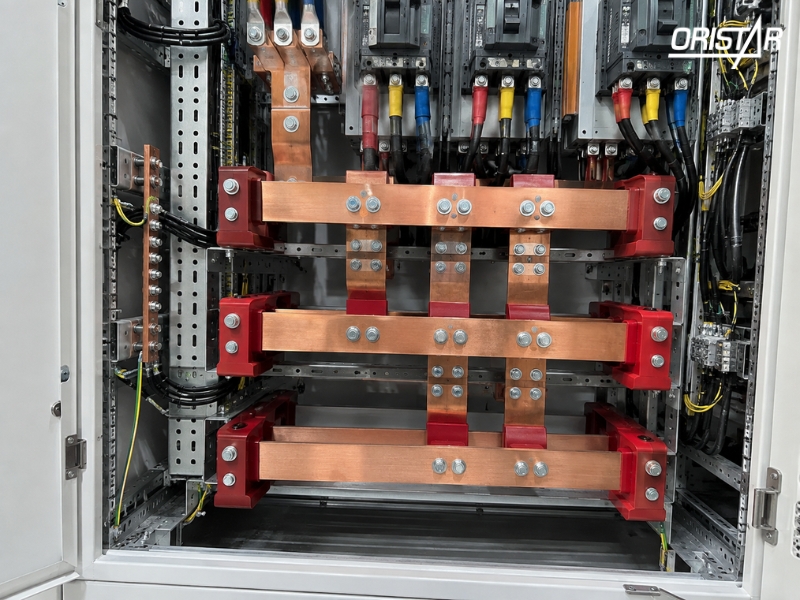
1. Copper Busbar - Copper Busbar
Copper Busbar is one of the most important applications of copper in the Data Center power distribution system.
Busbars are used at:
- General electrical cabinet
- Switchgear
- Busway
- UPS
- PDU
- Rack Power Distribution
- Power connection system
- Transformer station
The Copper Development Association says the electrical distribution system can account for the majority of copper used inside a data center.
For Data Centers with high power density, the cross-section, conductivity, operating temperature and surface quality of the busbar all need to be tightly controlled.
This is one of those areascopper C1100/C11000It is commonly used thanks to its high conductivity and good machinability.
2. Power cord and cable
Data Center needs a very large electrical cable network to connect:
- Mains power source
- Transformer
- Backup generator
- UPS
- PDU
- Rack
- Server
In high power systems, reducing power loss on the transmission line is an important issue.
The resistance of the conductor creates losses according to the formulaP = I²R
In there:
- P: power loss
- I: current
- R: resistor
As the current increases, heat loss increases as the square of the current. Therefore, materials with high conductivity help reduce resistance, reduce heat generation and increase the efficiency of the electrical system.
3. Connector, terminal and connector
A Data Center contains many electrical connection points.
Details such as:
- Terminal
- Electrical connector
- Contact
- Lug
- Power connector
- Server connector
need to maintain stable conductivity over a long period of time.
Copper and some copper alloys are often used because they combine the ability to conduct electricity with the ability to be machined, shaped and surface treated.
4. Grounding system
Data Center requires very high stability and uptime. Therefore, grounding is an important part of the power system.

Copper is used for:
- Grounding bar
- Ground wire
- Grounding busbar
- Equipotential bonding
- Lightning protection system
This system helps protect equipment, control fault currents and reduce the risk of affecting sensitive electronic equipment.
5. Copper in AI server
The need for copper does not end at the Data Center's power distribution system.
Inside the server, copper continues to appear in:
- PCBs
- Power connector
- Busbar
- Cable
- Interconnect
- Heat spreader
- Cold plates
- Heat dissipation components
BHP says an NVIDIA GB200 NVL72 system introduced in 2024 has more than5,000 copper cables, with a total length of more than 3.2 km. When hundreds or thousands of computing systems are deployed in an AI Data Center, the need for conductive materials and connections increases correspondingly.
Liquid Cooling is opening up another large market for copper
One of the most notable changes in Data Center AI in 2026 is the development ofliquid cooling – liquid cooling.
AI GPUs generate huge heat density. As chip and rack capacity continues to increase, using only airflow for cooling becomes increasingly difficult to meet requirements.
So solutions like:
- Direct-to-chip cooling
- Cold plates
- Coolant Distribution Unit – CDU
- Liquid-cooled busbar
- Heat exchanger
is being deployed more widely.
Copper Development Association evaluates copper cold plate as playing an important role in the direct cooling system for chips thanks to its high thermal conductivity. Many designs use microchannels inside the cold plate to increase the heat exchange area with the coolant.
Copper conducts both electricity and heat: This is the special advantage of copper in Data Centers. One material can simultaneously serve: Power Delivery and Thermal Management. In a new generation AI rack, copper can appear both in the power rails and in the system that collects and transfers heat away from the GPU.
Liquid-Cooled Busbar: a notable trend in 2026
Another new development direction isliquid cooled busbar. Instead of just cooling the GPU, the liquid cooling loop can be expanded to cool the power distribution system inside the rack as well.
According to the Copper Development Association, active cooling of the busbar can help the system handle higher current densities without having to proportionally increase the material cross-section.
This is especially important when the Data Center wants to:
- Increase capacity per rack
- Reduce the size of the power supply system
- Reduce heat emission
- Optimize space
- Nâng cao hiệu suất năng lượng
Therefore, the future demand for copper in Data Centers is not only determined bysố lượng Data Center, mà còn bởi kiến trúc điện và kiến trúc làm mát của từng Data Center.
Vì sao đồng vẫn quan trọng khi Data Center tăng công suất?
In some electrical items, aluminum may be considered to reduce cost or weight. However, copper still has a significant advantage in locations that require high current density and limited space.
Important factors include:
Độ dẫn điện cao
Độ dẫn điện cao giúp giảm điện trở và tổn thất điện năng. Điều này đặc biệt quan trọng đối với Data Center vì hệ thống hoạt động liên tục 24/7 và tiêu thụ lượng điện rất lớn.
Kích thước conductor nhỏ hơn
Khi yêu cầu truyền cùng một lượng điện, vật liệu có độ dẫn điện cao cho phép thiết kế conductor nhỏ gọn hơn.
Điều này rất có giá trị trong:
- Rack
- Busway
- PDU
- Switchgear
- Power connector nơi không gian lắp đặt bị giới hạn.
Khả năng dẫn nhiệt cao
Khả năng dẫn nhiệt của đồng giúp vật liệu phù hợp đồng thời với các hệ thống điện và các giải pháp quản lý nhiệt.
Độ ổn định kết nối
Đối với hệ thống cần uptime cao như Data Center, độ ổn định của các mối nối điện, đầu cực và busbar là yêu cầu rất quan trọng. Vì vậy, lựa chọn giữa đồng và nhôm cần dựa trên thiết kế kỹ thuật của từng hạng mục thay vì chỉ so sánh giá vật liệu trên mỗi kilogram.
Đồng C1100 có phù hợp cho Data Center không?
Có. C1100 là một trong những mác đồng đáng chú ý cho các ứng dụng dẫn điện. Trong hệ UNS, vật liệu tương ứng thường gặp là C11000 – Electrolytic Tough Pitch Copper (ETP).

Theo Copper Development Association, C11000 có hàm lượng Cu tối thiểu 99,90% và độ dẫn điện khoảng 101% IACS ở điều kiện tham chiếu; tiêu chuẩn ASTM B187/B187M cũng bao gồm sản phẩm copper bus bar, rod và shapes cho nhóm vật liệu này.
Ứng dụng C1100 trong Data Center có thể gồm:
- Copper busbar
- Thanh dẫn điện
- Terminal
- Electrical conductor
- Switchboard
- Busway
- Đầu nối
- Chi tiết truyền nhiệt
Ưu điểm của C1100 là sự cân bằng giữa: dẫn điện tốt + dẫn nhiệt tốt + khả năng tạo hình + khả năng gia công + tính thương mại cao.
Đồng C1020 được sử dụng khi nào?
C1020 thuộc nhóm đồng không oxy – Oxygen-Free Copper. Trong hệ UNS, mác tương ứng phổ biến là C10200. Copper Development Association ghi nhận C10200 có hàm lượng đồng tối thiểu 99,95%, hàm lượng oxy được kiểm soát rất thấp và độ dẫn điện khoảng 101% IACS ở điều kiện tham chiếu.
C1020 đặc biệt phù hợp với những chi tiết yêu cầu:
- Độ sạch vật liệu cao
- Khả năng dẫn điện cao
- Khả năng dẫn nhiệt tốt
- Gia công chính xác
- Môi trường chân không
- Các quá trình nhiệt hoặc hàn đặc thù
- Thiết bị điện tử có yêu cầu độ tin cậy cao
Trong chuỗi cung ứng Data Center và AI, C1020 có thể được xem xét cho những chi tiết điện tử hoặc quản lý nhiệt có yêu cầu cao hơn so với ứng dụng busbar thông thường.
C1100 và C1020: nên chọn loại nào?
Tiêu chí | C1100 | C1020 |
Nhóm vật liệu | Đồng ETP | Đồng không oxy |
Hàm lượng Cu | Cao | Cao |
Dẫn điện | Rất tốt | Rất tốt |
Dẫn nhiệt | Rất tốt | Rất tốt |
Busbar thông dụng | Phù hợp | Có thể sử dụng |
Terminal/đầu nối | Phù hợp | Phù hợp |
Yêu cầu chân không/độ sạch cao | Cần xem xét điều kiện | Ưu thế hơn |
Chi tiết tản nhiệt chính xác | Phù hợp tùy thiết kế | Phù hợp |
Chi phí | Thường tối ưu hơn | Thường cao hơn |
Điểm quan trọng là không nên lựa chọn mác đồng chỉ dựa trên hàm lượng Cu.
Bản vẽ Data Center cần xác định đồng thời:
- Tiêu chuẩn vật liệu
- Mác đồng
- Trạng thái vật liệu
- Độ dẫn điện
- Độ cứng
- Kích thước
- Dung sai
- Độ phẳng
- Bề mặt
- Phương pháp gia công
- Điều kiện vận hành
Đông Nam Á cũng đang mở rộng hạ tầng Data Center
Không chỉ Mỹ, Trung Quốc hay châu Âu, Đông Nam Á đang trở thành khu vực đáng chú ý trong làn sóng phát triển Data Center.
IEA dự báo điện năng tiêu thụ của Data Center tại Đông Nam Á có thể tăng hơn gấp đôi vào năm 2030.
IEA cũng đánh giá nhu cầu điện của Đông Nam Á đang tăng nhanh, trong đó Data Center trở thành một nguồn phụ tải mới có tính tập trung cao, tạo thêm yêu cầu đầu tư vào nguồn điện, lưới điện và khả năng linh hoạt của hệ thống.
Đây là yếu tố có thể tiếp tục thúc đẩy nhu cầu đối với:
- Đồng thanh
- Đồng tấm
- Busbar
- Dây dẫn
- Linh kiện điện
- Thiết bị trao đổi nhiệt
trong chuỗi cung ứng khu vực.
Việt Nam có cơ hội gì từ làn sóng Data Center và AI?
Việt Nam đang thúc đẩy xây dựng hạ tầng số, điện toán đám mây, dữ liệu và AI.
Các định hướng chính sách hiện nay bao gồm phát triển Data Center, cloud computing và thu hút doanh nghiệp đầu tư xây dựng hạ tầng dữ liệu tại Việt Nam. Nghị quyết về phát triển khoa học, công nghệ, đổi mới sáng tạo và chuyển đổi số cũng đề cập việc hỗ trợ doanh nghiệp trong nước đầu tư Data Center, cloud computing và thu hút doanh nghiệp nước ngoài xây dựng các trung tâm tương tự tại Việt Nam.
Luật Đầu tư 2025 của Việt Nam cũng đưa các dự án trung tâm dữ liệu lớn, hạ tầng cloud và AI Data Center vào nhóm có thể nhận cơ chế ưu đãi, hỗ trợ đầu tư đặc biệt nếu đáp ứng các điều kiện theo quy định.
Điều này mở ra cơ hội không chỉ cho doanh nghiệp công nghệ mà còn cho toàn bộ chuỗi cung ứng: Điện – cơ khí – HVAC – vật liệu – busbar – tủ điện – linh kiện – gia công chính xác – hệ thống làm mát.
Oristar – Cung Cấp Đồng Theo Yêu Cầu Gia Công
Đối với các doanh nghiệp sản xuất thiết bị điện, busbar, linh kiện cơ khí – điện tử hoặc các chi tiết phục vụ hạ tầng Data Center, lựa chọn đúng vật liệu ngay từ đầu giúp giảm đáng kể rủi ro trong quá trình gia công và sản xuất.
Oristar cung cấp nhiều dòng vật liệu đồng phục vụ các yêu cầu kỹ thuật khác nhau, đồng thời hỗ trợ cắt vật liệu theo kích thước để doanh nghiệp chủ động hơn về quy cách phôi và kế hoạch sản xuất.
Liên hệ Oristar để được tư vấn mác đồng, quy cách và kích thước phù hợp với yêu cầu bản vẽ của từng dự án.
Thông tin liên hệ:
- Hotline: 098 875 06 86
- Email: info@oristar.vn
- Zalo OA
- Website E-commerce
- Official Website
Khuyến cáo (Disclaimer): Mọi thông số kỹ thuật và cơ lý tính trong bài viết chỉ mang tính chất tham khảo và có thể thay đổi tùy thuộc vào quy cách, trạng thái vật liệu và nhà sản xuất. Thông số này không thay thế cho các tiêu chuẩn sản xuất chính thức (JIS, ASTM...). Quý khách vui lòng liên hệ Oristar để nhận tư vấn chi tiết và chính xác nhất cho nhu cầu của mình.